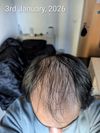
Minoxidil and finasteride are being considered for hair loss due to seborrheic dermatitis and male pattern baldness. The user is also using ketoconazole and zinc pyrithione shampoo.
Hair loss from seborrheic dermatitis can be temporary. Treatments discussed include Minoxidil, finasteride, and RU58841, along with collagen and biotin supplements.
The user is experiencing a greasy and dandruff-prone scalp from using RU58841 with glycerin and is seeking alternative carriers for seborrheic dermatitis. They are also using dutasteride 0.5mg.
The user started using minoxidil foam daily after two years on finasteride and is managing seborrheic dermatitis with antifungal shampoo. They seek advice on moisturizing products that won't worsen their condition, with suggestions including gentle shampoos and light ceramide serums.
The user treated seborrheic dermatitis and hair loss with a routine including sulfate-free tea tree oil shampoo, ketoconazole shampoo, minoxidil foam, microneedling, and supplements like Omega-3 and Vitamin-D. They experienced significant hair shedding initially but saw improvement over a year.
A 21-year-old has been using daily oral finasteride, minoxidil, biotin, and vitamins since January 2026 for hair loss, adding topical treatments and microneedling in May. They observed initial shedding and scalp issues but noted significant progress after adjusting their routine.
A user successfully regrew hair using oral finasteride (1mg daily for 3 years) and topical minoxidil (5% twice daily for 15 years) with no side effects. They highlighted the importance of consistency and patience, crediting finasteride for significant hair improvement.
A 26-year-old reported significant hair regrowth using finasteride daily for six months and topical minoxidil for four months, with no side effects. Others shared mixed experiences, mentioning additional methods like dermarollers and tretinoin.
Switching from finasteride to dutasteride and oral minoxidil led to thicker hair and reduced hairline recession. Occasional flushing from minoxidil will be managed by lowering the dose.
Oral Dutasteride and topical Minoxidil significantly improved hair regrowth over nine months. Other users shared mixed results and side effects with treatments like oral Minoxidil and Finasteride.
Finasteride is humorously blamed for causing car problems and bizarre side effects. Users joke about switching to treatments like dutasteride and minoxidil.
The user achieved significant hair regrowth using oral finasteride for 2 years, then switched to topical minoxidil with rosemary oil and biotin oil. They reported no side effects and found topical minoxidil more effective than oral minoxidil.
The user improved hair health by using a topical spray with Minoxidil (7%) and Finasteride (0.3%), switching to Nizoral shampoo with 1% ketoconazole, and applying a multi-peptide serum for hair density. They emphasize the importance of maintaining a healthy scalp for effective hair regrowth.
Young men experiencing hair loss are frustrated with advice to embrace baldness without exploring treatments. They advocate for using finasteride and minoxidil, considering hair transplants, and hope for future advancements in hair restoration.
Young men experiencing hair loss should consult a dermatologist and consider treatments like finasteride and minoxidil. Shaving is an option, but medications can help maintain and regrow hair, though results vary.
Combining oral and topical minoxidil for hair loss may enhance results, but opinions vary on its effectiveness. Some users report benefits, while others see no added value; side effects like insomnia and increased body hair are noted.
A 47-year-old has been using finasteride for 25 years for hair loss, but it's less effective now. Suggestions include switching to dutasteride, stopping anastrozole, and trying minoxidil, microneedling, and possibly TRT.
A 17-year-old is experiencing hair loss despite using 5% topical minoxidil, 0.05% tretinoin, and oral minoxidil, and is considering starting oral finasteride after a dermatologist suggested a hair growth spray with Capixyl, Redensyl, Anagain, and Saw Palmetto. Users advise caution with finasteride at a young age, suggesting starting with topical finasteride and consulting an endocrinologist.
Finasteride improved the user's hair texture and growth, with some initial side effects like libido loss that eventually subsided. The user advises considering lifestyle factors alongside treatment and encourages others to start finasteride if hesitant.
Finasteride and dutasteride are discussed as preventative treatments for hair loss, with some advocating for early use and others concerned about side effects, especially before full maturity. Many regret not starting these treatments earlier due to their effectiveness in preventing or slowing hair loss.
Creatine is believed by some to cause hair loss, potentially by increasing DHT levels, despite conflicting evidence. Users report mixed results when combining creatine with treatments like finasteride, dutasteride, and minoxidil.
Switching from finasteride to dutasteride can improve hair regrowth with fewer side effects for some users. Concerns about shedding, lack of improvement, and the long-term safety of oral minoxidil remain.
Switching from finasteride to dutasteride can cause initial shedding, but many see long-term hair regrowth and stabilization. Responses vary, with some experiencing fewer side effects and others finding it less effective.
Topical dutasteride 0.05% is more effective for hair growth than oral finasteride 1mg, with minimal DHT reduction. The formulation uses castor oil and MCTs for better absorption but is not widely available until 2028.
The user experienced worsening hair thinning despite using finasteride, minoxidil, and ketoconazole shampoo, and switched to dutasteride five months ago. They are considering adding tretinoin and microneedling to their routine for better results.
Dutasteride is often seen as more effective than finasteride for hair regrowth, but it may cause initial shedding and takes longer to work. Combining it with treatments like minoxidil can improve results, though experiences vary.
Rosemary oil is claimed to slow hair loss and improve hair thickness, but its effectiveness is debated, with some users preferring proven treatments like minoxidil and finasteride. Lifestyle factors and consistent use are suggested to enhance results, though skepticism about natural remedies remains.
The user had a hair transplant and uses oral minoxidil, a red laser therapy helmet, fish oil, collagen, and sardines for hair thinning but avoids finasteride due to side effect concerns. Many suggest these methods may not be effective long-term without a DHT blocker.
Homelessness is humorously proposed as a solution to hair loss due to less grooming and stress. Treatments like Minoxidil and Finasteride are discussed, with genetics and lifestyle also considered important factors.
Stopping finasteride increased sex drive and improved mood but caused hair shedding and scalp irritation. Users discussed balancing hair preservation with side effects, considering alternatives like topical finasteride and minoxidil.