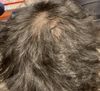
The conversation is about a user's hair loss treatment routine, which includes RU58841 for 9 months and Dutasteride for 6 months, with other unspecified treatments considered extra. One user inquired about the source of RU58841.
The conversation is about the safety and effects of using pyrilutamide for hair loss. One person reported severe negative effects, another experienced minor side effects without much benefit for hair, and a third found the anecdote helpful in making a decision.
The conversation is about the potential effectiveness of a hair loss treatment called pyrilutamide. One person has been using it since September and reports positive results.
The conversation discusses the storage and use of pyrilutamide for hair loss, where one user advises against keeping it in the freezer as it may crystallize the active compounds.
The conversation discusses using topical melatonin as a treatment for hair loss, with one person considering adding it to their minoxidil solution and another sharing their experience of no hair shedding, possibly due to melatonin.
The conversation discusses the potential availability of GT20029 for hair loss treatment, with one user noting promising Phase 1 results and inquiring about gray market access. Another user humorously suggests it will take 50 years to become available.
The conversation discusses a last-resort hair loss treatment combining topical finasteride, minoxidil, melatonin, and progesterone, with claims that topical finasteride can inhibit up to 52% of scalp DHT. One reply clarifies that progesterone is not an anti-androgen but has anti-androgenic properties because it competes with androgens for receptors.
The conversation is about creating homemade topical melatonin for hair loss, with one person suggesting adding melatonin to stemoxydine as a potential treatment.
The user's progress after using dutasteride for hair loss treatment, and how minoxidil is also a helpful part of this process which can take up to one year to see full effects.
The user's progress in treating their hair loss using finasteride, minoxidil, vitamins, and microneedling, with one person suggesting to wait six more months before considering a hair transplant. The other person agreed that a hair transplant would be nice.
Flax seeds may block DHT and prevent hair loss. Users discuss its potential benefits, with one noting it likely has negligible effects on hair but is good for the diet.
The conversation discusses the potential benefits of castor oil for hair thickening, with one user noting it may increase prostaglandin E2 and decrease PGD2. The original poster plans to take 1-2ml orally daily.
The conversation is about creating a topical hair loss treatment with B6, zinc, and azelaic acid, which is claimed to inhibit 90% of scalp DHT. One user is skeptical about the effectiveness of this treatment and its comparison to other treatments without side effects.
The conversation discusses the potential of a new hair loss drug, CB-03-01, with users sharing their experiences and seeking advice on dosages and application methods. One user mentions using topical finasteride, minoxidil, dermarolling, and a clean diet for hair maintenance but is interested in CB-03-01 due to side effects from finasteride.
People are discussing the effectiveness of Breezula for hair loss maintenance. Some individuals are using Breezula alone, avoiding finasteride, and one plans to use Breezula after a hair transplant.
People discussed their experiences with peppermint oil for hair loss, with mixed results. Some users reported no hair loss after stopping peppermint oil, while others experienced shedding; one user noted improved scalp health when mixing it with minoxidil.
The conversation discusses using topical finasteride for hair loss, with concerns about its safety around family members, especially pregnant women and infants. One user plans to try topical finasteride due to side effects from the pill.
The discussion revolves around the need for future oral DHT blockers for hair loss treatment that don't have the side effects of current options like Finasteride and Dutasteride. One user suggests that the future of hair loss treatment will likely be topical anti-androgens, as they can target hair follicles without affecting the entire system.
The user is seeking opinions on their hair loss, specifically the receding of their right temple. They are considering switching to Dutasteride but are unsure if it will help. Other users suggest that their hairline has improved with the use of Finasteride and Minoxidil. One user mentions using RU58841 to thicken their hairline.
A 24-year-old person who is worried about their hair loss after 14 months of taking finasteride and 11 months of minoxidil. Replies to the post suggested sticking with their current regimen, that shedding from one part may not be telogen effluvium, and that shedding is normal with these drugs and they should evaluate in two to three months.
The conversation is about a user's three-year progress in reversing hair loss using daily Dutasteride 0.5 mg and topical Minoxidil, with no side effects. The user emphasizes patience, as significant results were noticed after one year, despite a strong family history of early baldness.
Switching from finasteride to dutasteride improved erections, sex drive, and mood for one user, though experiences vary widely. Some users report fewer side effects with dutasteride, while others experience more severe issues or hair loss.
The conversation discusses the use of topical peptides ahk-cu and ghk-cu for hair loss. One user reported that while these peptides made their hair look thicker and improved scalp health, they did not notice significant hair growth.
KY19382, a promising compound for hair loss, is not widely discussed or used. One user is currently testing it and plans to share results in a few weeks.
The conversation discusses using tretinoin as an additional treatment for hair loss alongside minoxidil, with plans to test its effectiveness by applying it to only one side of the scalp. The user intends to start this experiment after using minoxidil for a year.
A 32-year-old male shared progress pictures after one year of using oral finasteride 1 mg and 10 months of oral minoxidil 5 mg for hair loss. He seeks advice on whether to continue treatment or consider a hair transplant.
Pelage Pharmaceuticals' PP405, a new hair loss treatment, was recognized by Time Magazine as one of the best inventions of 2025. The conversation expresses optimism about the recognition of this in-development treatment.
A 25-year-old shares progress on hair regrowth using finasteride, ketoconazole shampoo, Alpecin caffeine shampoo, and topical minoxidil, noting improved hair health but persistent temple thinning. They consider switching to oral minoxidil, adding microneedling, and possibly a hair transplant after one year.
A 19-year-old shares positive results after one year on finasteride, minoxidil, micro-needling, and Nizoral shampoo, reporting no side effects and improved hair density despite initial shedding. Others discuss mixed experiences with finasteride, some considering alternatives like dutasteride or hair transplants.