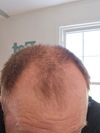
Hair loss is influenced by multiple genetic factors, not just maternal lineage. Treatments like finasteride, minoxidil, and nizoral are suggested if male pattern baldness progresses.
The conversation discusses the positive effects of taking finasteride (Propecia) for hair loss, with users sharing experiences of minimal side effects and improved hair growth over several years. The original poster emphasizes the importance of consistent use and mentions using Nizoral shampoo occasionally.
The user shares their hair growth progress using topical and sublingual minoxidil, dutasteride, hormone replacement therapy, and a laser comb. They report thicker hair and reduced hairline shedding, seeking advice for further thickening.
The user is addressing hair loss with finasteride, dutasteride, oral and topical minoxidil, dermarolling, and shampoos. They are considering adding essential oils to improve circulation.
Kintor Pharma completed enrolling subjects for a Phase III trial of KX-826 for male hair loss treatment. The trial includes a 24-week treatment period and a 4-week safety follow-up, with results expected in about 6-7 months.
Hairline shows new growth, and hair quality and thickness have improved significantly after 10 months of oral Minoxidil and topical finasteride. The user also switched from a 0.5mm to a 1mm dermaroller.
The user experienced significant hair regrowth after switching from topical minoxidil to oral minoxidil and finasteride, later transitioning to dutasteride and continuing with oral minoxidil. They reported no side effects and are optimistic about further improvements.
A 17-year-old is using Finasteride and Minoxidil for hair loss, experiencing hair shedding and cystic acne. They are considering Dutasteride for acne but are concerned about potential side effects on genital development.
The conversation discusses positive initial trial results for GT20029, a topical compound for hair loss that degrades androgen receptors, potentially requiring only weekly application. Participants express hope for this treatment to be more effective and convenient than current options like Minoxidil, Finasteride, and RU58841.
The user successfully regrew thick hair using minoxidil, finasteride, and biotin, starting at age 19, and expresses gratitude to the community for support. They experienced minimal side effects and emphasize the importance of personal research and a healthy lifestyle.
ET-02 showed significant hair growth in five weeks, outperforming minoxidil, with a non-hormonal mechanism that avoids side effects of treatments like finasteride. A phase 2 trial is planned to further assess ET-02's efficacy and safety.
A user's one-year progress in hair loss treatment using finasteride and minoxidil. The user shared their experience and advice, including adjusting the amount of sprays used based on individual needs and the importance of patience and positivity in the process.
A 25-year-old has been using finasteride since around age 22 and is considering starting oral minoxidil due to scalp issues. They are concerned about the effectiveness of starting minoxidil at their current age and the impact of scalp redness on hair growth. Another person suggests that starting minoxidil at any time is fine but warns about the commitment required, as stopping it will result in losing regrown hair, unlike finasteride which slows hair loss progression.
A user created a tracker for hair loss treatments in clinical development, including compounds like Dermaliq, RU58841, and Pyrilutamide. The tracker updates with new information and allows filtering by conditions like androgenetic alopecia (AGA) and alopecia areata (AA).
Cold shock therapy may promote hair growth by stimulating follicular muscles and affecting stem cells. The exact mechanisms and full range of elements involved are not yet fully understood.
The user started balding at 16/17 and tried various treatments including minoxidil, finasteride, and dutasteride with little success. They recently started applying diclofenac gel to their bald areas and noticed some hair regrowth, attributing this to diclofenac's ability to lower prolactin levels and its anti-inflammatory effects.
A 21-year-old male diagnosed with telogen effluvium and male pattern baldness started taking finasteride, which initially slowed hair shedding and slightly thickened hair. The doctor recommended iron and vitamin D supplements, and the user is considering minoxidil but wants to stabilize shedding first.
The conversation discusses hair regrowth using oral minoxidil and RU58841, with visible baby hairs appearing after two months. One user questions the choice of RU58841 over finasteride.
A 30-year-old male with androgenic alopecia shows progress after using dutasteride (0.5 mg daily) and topical minoxidil (5% twice daily) for 3.5 months. Users suggest adding dermastamping for better results.
A user shared impressive hair regrowth results after 4 months using topical minoxidil and dutasteride but is concerned about slow-growing baby hairs. Responses suggest patience, as full results can take up to 2 years.
Transitioning from finasteride to dutasteride for hair loss, with suggestions to either slowly transition or frontload dutasteride. The user is also using minoxidil, nizoral, needling, and LLLT.
Hair loss treatments are being tested on mice, with methods like minoxidil and stem cell therapy showing promising results. However, human trials are still years away, leading to humorous frustration about mice benefiting first.
Dihydrotestosterone (DHT) impacts various skin conditions, including Androgenetic alopecia and seborrheic dermatitis, by causing overactivity in sebaceous glands. Topical medications Tacrolimus and Clobetasol can reduce these inflammatory conditions, and treatments like RU58841, Minoxidil, and Finasteride may also be beneficial.
A 43-year-old male seeks advice on hair regrowth options, considering treatments like Minoxidil, finasteride, and RU58841, or possibly a hair transplant. He has low testosterone and a family history of balding.
The conversation is about Jordan Peterson allegedly getting a hair transplant, with various users mocking his way of speaking and debating the ethics of him potentially hiding the procedure. Some users discuss the natural look of the transplant and the implications of getting one at an older age.
The conversation is about a user's progress with hair regrowth using oral minoxidil and finasteride over two years. The user experienced significant improvement without side effects, except for increased libido, and plans to continue treatment.
Longitudinal partial follicular unit transplantation involves extracting part of the donor follicular unit, allowing the donor area to be overharvested without noticeable hair loss. The conversation questions if this method is practiced in clinics or if it's theoretical, and whether it relates to hair cloning or multiplication.
The conversation is about a 21-year-old seeking advice on managing hair loss, considering options like shaving, hair implants, or using treatments like finasteride and minoxidil. The user is concerned about self-image and the social implications of being bald at a young age.
A 16-year-old diagnosed with male pattern baldness (MPB) was prescribed hair vitamins, vitamin D, a non-ketoconazole shampoo, and redenysl + serum, with a suggestion for GFC or IHRF treatments. Some users recommended minoxidil, ketoconazole, and derma stamping, while others advised against certain treatments until the age of 18.
The user achieved significant hair regrowth using topical 5% minoxidil and oral 1mg finasteride daily, especially around the temples. They experienced minimal side effects, with initial difficulty maintaining erections that resolved after a few weeks.