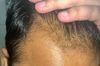
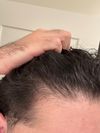
Hair loss from seborrheic dermatitis can be temporary. Treatments discussed include Minoxidil, finasteride, and RU58841, along with collagen and biotin supplements.
The conversation is about choosing a topical antiandrogen for hair loss, with options including RU58841, CB0301, Pyrolutamide, Alfatradiol, and Fluridil. Users discuss their preferences and reasons for selecting specific treatments.
Hair loss treatment involves gland treatment with iodine, liver extract, wild American ginseng, and black cohosh, along with crude oil scalp massage. The approach aims to stimulate hormones and improve blood circulation to promote hair growth.
Hair fibers effectively cover thin hair areas, boosting confidence and reducing stress about hair appearance. Users discuss combining hair fibers with other products like hair spray, dermmatch, and Boldify, noting challenges like blocking minoxidil absorption and the importance of color matching.
The user experienced hair growth using 5% topical Minoxidil foam twice daily from October 2024 to February 2025, without using finasteride due to family history of side effects. The user is considering other treatments like topical finasteride and received positive feedback on their progress.
GriffinLiftin experienced significant hair regrowth after 6 months using oral finasteride and minoxidil, along with hair care products like leave-in conditioner, curl-cream, and olive oil. They started treatment early due to a family history of balding and are pleased with the life-changing results.
The conversation is about disappointment with hair loss progress despite using treatments like finasteride, minoxidil, nizoral, tretinoin, and a dermaroller. Direct sunlight revealed more hair loss than expected, prompting continued treatment and hope for improvement.
The user shared a 4-5 month update on using finasteride, minoxidil, vitamins, oiling, and microneedling for hair loss. They reported improved hair density and confidence but experienced unwanted hair growth, thin hair, itching, and a flaky scalp.
The user has been using topical Minoxidil and Finasteride for 5 months and is questioning whether the new hair growth is genuine or just thin existing hairs. Another user suggests that comparison with before pictures is necessary to determine progress.
AH-001 is a new topical treatment designed to degrade androgen receptors, targeting the root cause of androgenetic alopecia without the side effects of oral treatments like finasteride. It has shown a strong safety profile and good local tolerability in early trials.
The user switched from liquid to foam minoxidil to reduce skin irritation but finds foam harder to apply effectively to the scalp. A suggestion was made to melt the foam into a liquid for easier application.
The conversation discusses hair regrowth progress after 2.5 months using pyrilutamide and minoxidil. Participants note visible improvement in a short time.
The user noticed increased hair loss over the past three years and is seeking advice. A suggestion was made to consult a dermatologist or trichologist and consider blood tests, particularly for vitamin D levels, to address potential androgenetic alopecia (AGA).
A 22-year-old is experiencing a receding hairline and has started using minoxidil and finasteride. They are considering using Jamaican black castor oil and are seeking advice on application and dosage, while also exploring microneedling and scalp massaging for hair regrowth.
A user's six month progress with Pyrilutamide, a hair loss treatment; they experienced positive results such as stopped itching and shedding, as well as regrowth, without any side effects.
A 2-week journey with Pyri, which is producing positive effects on hair texture and reduced shedding; Minoxidil and derma needling are being used as treatments.
Clascoterone 5% solution is discussed as a potential new treatment for hair loss, offering an alternative for those who can't use finasteride or need additional options beyond minoxidil. Concerns about cost, effectiveness, and safety compared to existing treatments like RU58841 and finasteride are highlighted.
The user is experiencing hair thinning at the front of the scalp and is seeking advice on regrowing long curly hair. They are considering treatments like Minoxidil, finasteride, and RU58841 to prioritize hair regrowth.
A 20-year-old is experiencing hair loss and is using finasteride, ketoconazole, and topical minoxidil. They suspect retrograde alopecia due to hair loss on the sides and nape, despite noticing some hair thickening on top.
The user experienced hair thinning despite using finasteride and switched to a ketoconazole shampoo without sulfates to address scalp itching and dandruff. They hope this will stop further hair thinning.
A 28-year-old male started balding at 20 and has been using Bosley Shampoo, minoxidil, finasteride, microneedling, and exosomes/PRP treatments. He also underwent scalp micropigmentation to hide thinning hair and is seeking feedback on regrowth progress.
The user increased finasteride to 1mg daily, stopped using ketoconazole and pyrithione zinc shampoos, and started using regular pH balanced shampoo with tea tree oil, rosemary/peppermint oil, and microneedling. They are now seeing new hair regrowth at the hairline and temples.
User shares 6.5 months of progress using topical finasteride 0.1% and minoxidil 10%, along with lasercomb, dermaroller, Nizoral, scalp massager, and biotin. They seek feedback on their results.
Hair follicle cloning is claimed to be possible but not widely available due to potential safety issues, such as cancer risks. Current treatments like finasteride and dutasteride are not effective for everyone, and there is frustration over limited access to these medications.
The user is asking for opinions on whether their hair growth is due to Pantostin and hormone treatments. One commenter confirms regrowth and asks about the hormone treatments.
Phase II for TDM-105795 for Androgenic Alopecia is set to begin in April 2023. The study aims to evaluate the efficacy and safety of TDM-105795 in male subjects.
Having hair improves social interactions and treatment by others, with hair transplants and finasteride enhancing confidence and attractiveness. People often receive more positive attention after addressing hair loss.
The conversation reassures a woman concerned about thinning hair on her crown, suggesting her hair appears normal and not thinning. Some users recommend prenatal vitamins for hair health, while others attribute the appearance to contrast between dark hair and a pale scalp.