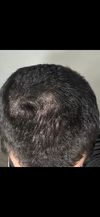
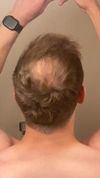
Participants want to maintain hair until at least age 30, using treatments like finasteride, dutasteride, and minoxidil. Hair loss remains a concern, with some considering hair transplants.
Severe scalp itching and hair loss, possibly linked to seborrheic dermatitis, are discussed, with treatments like Dutasteride, Finasteride, and various shampoos mentioned. Some users find relief from itching with DHT blockers like Finasteride, while others suggest consulting multiple dermatologists for accurate diagnosis.
A user shared their positive experience with a clinical trial for a new oral medication, VDPHL01, which is a reformulated version of oral minoxidil taken at a high dose of 17mg daily, showing significant hair regrowth after six months. The user noted that this formulation is believed to be more effective and time-released, with fewer side effects compared to regular oral minoxidil.
TDM-105795 showed promising hair growth results, with higher efficacy than placebo and minimal side effects. It activates dormant hair follicle stem cells and may maintain gains without immediate loss, unlike minoxidil.
The post is an update on the user's hair loss journey. They have a strong hair follicle that has remained unaffected by hair loss for almost 3 years. The user is starting finasteride and using ketoconazole, alfatradiol, and oral castor oil for hair maintenance.
User gained hair with topical minoxidil and finasteride, then experienced shedding after starting pyrilutamide. After 12 weeks, new hairs grew and existing hairs thickened, hoping for more improvement in a year.
OP uses microneedling, Minoxidil, and recently started RU58841 for hair loss. Users suggest adding finasteride, but OP is concerned about side effects.
A 17-year-old is frustrated with hair thinning and receding temples, seeking advice after a dermatologist dismissed concerns. Suggestions include starting Minoxidil for regrowth and considering Finasteride if androgenetic alopecia is suspected.
An 18-year-old is using topical minoxidil 5% and derma rolling weekly for hair regrowth after shaving their head, while also addressing vitamin D deficiency and thyroid imbalance. They are questioning if the changes observed are signs of regrowth.
Pelage plans to release phase 2 results and start phase 3 trials for PP405 in 2050, but skepticism remains due to past delays and unfulfilled promises. Users express frustration over the lack of progress in hair loss treatments, mentioning Minoxidil, finasteride, RU58841, CB-03-01, and Fluridil.
A user's successful hair transplant, with some people questioning the donor area regrowth, and others speculating that hair fibre may have been used to help fill in areas.
The user is trying alternative hair loss treatments like caffeine shampoo and dermarolling before considering minoxidil or other advanced treatments, and has noticed an increase in vellus hairs and some strong terminal hairs after two months of daily caffeine shampoo use. They plan to continue the treatment and document progress.
Some individuals experience hair loss despite using treatments like 2.5 mg dutasteride, finasteride, and minoxidil, suggesting sensitivity to DHT or other factors. Various treatments and lifestyle changes are discussed, but results vary, and some consider hair transplants or other solutions.
A user shared their 9-month progress using RU58841 at 2% daily for hair regrowth, initially starting at 5% but reducing the dose due to early signs of gynecomastia, which has since mostly resolved. They achieved their goal of regrowing hair at the temples and hairline.
Clascoterone cream can be used on the scalp, but it may not be effective due to its dosage. AR antagonists like clascoterone are generally less effective than 5AR inhibitors for hair loss.
The user experienced positive hair regrowth using 1mg oral finasteride daily, Nizoral 2% shampoo every three days, and dermastamping, without adding minoxidil due to satisfaction with current results. Initial side effects like erectile dysfunction and dry eyes resolved over time.
The user reported progress in hair regrowth after three months of using oral finasteride and minoxidil foam, despite initial doubts. They noted no side effects, a clean diet, regular weightlifting, and additional supplements.
A 30-year-old man has been treating his hair loss with 5% Minoxidil foam, a combination of 0.3% Finasteride and 6% Minoxidil at night, weekly dermastamping with 1.5 mm needles, and 1% ketoconazole shampoo 2-3 times a week for four months. He is asking for opinions on his hair regrowth and whether he can expect full recovery of his crown.
The conversation is about individuals noticing others with full hair while experiencing their own hair loss. Some use treatments like Minoxidil and Finasteride, while others joke about noticing receding hairlines or suggest that hats and wigs are used to hide baldness.
The user has been using 1mg finasteride daily, 5% minoxidil twice daily, 1.25mm derma-stamping fortnightly, and 2% nizoral shampoo twice a week for two years, seeing significant hair regrowth despite periodic shedding. They plan to consider a hair transplant in the future to address stubborn areas.
The user has been using oral Finasteride, Ketoconazole shampoo, and a dermaroller for 3 months, showing progress in hairline improvement. They are considering adding topical Minoxidil after evaluating the results from Finasteride.
The conversation discusses anticipation for CB-03-01, a potential new hair loss treatment that may be more effective and have a cleaner safety profile than finasteride. Users are hopeful but cautious, discussing current treatments like minoxidil, nizoral, and dermarolling, and the possibility of combining them with CB-03-01 for better results.
The user is frustrated with hair loss despite using finasteride and is considering a hairpiece as a solution. Suggestions include trying a buzz cut, considering dutasteride or oral minoxidil, and addressing potential dietary issues.
Discussion on hair loss treatments, focusing on Breezula, with mentions of Minoxidil, finasteride, RU58841, Pyrilutamide, GT20029, and PP405. Breezula's effectiveness is uncertain, with some trials showing minimal regrowth.
The conversation is about using DIY deoxyribose topical and botox injections for hair loss. The user is experimenting with these treatments and believes the science is strong.
A 26 year old female dealing with hair loss who is considering treatments such as Spiro, minoxidil and finasteride. Other potential solutions mentioned are PRP treatment, a wig, and bio-identical estrogen combined with bica.
A user is experiencing rapid hair loss and has been diagnosed with telogen effluvium by multiple dermatologists, but doubts the diagnosis due to the severity and speed of the hair loss. They are considering various treatments like spironolactone, estradiol, and possibly finasteride, while also exploring the possibility of hormonal imbalances or autoimmune issues.
The conversation is about the struggles of dealing with diffuse thinning at a young age and the lack of significant improvement after using treatments like finasteride and minoxidil. Some suggest additional methods like derma rolling, microneedling, and hair fibers, while others share their own experiences and encourage persistence with treatment.
The user experienced significant hair loss due to health issues and is now using finasteride and minoxidil for nearly 3 months. They are hopeful about tiny hairs/dots indicating regrowth and are considering a hair transplant later in the year.
Sprocketshead asks if pyrilutamide can be applied with minoxidil, and inquires about its consistency and odor. They want to know if it's more high maintenance than topical minoxidil.