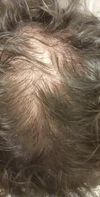
A user's hair regrowth journey involved a hair transplant and using RU58841, finasteride, and minoxidil, with side effects managed by other medications.
The conversation discusses affordable low-level light therapy (LLLT) products for hair loss, with users debating the effectiveness of red LEDs versus lasers. The original poster is already using finasteride, minoxidil, ketoconazole, and microneedling, and is seeking budget-friendly LLLT options to add to their regimen.
The conversation is about finding the optimal concentration of topical melatonin for hair loss treatment. The user is considering making their own solution and is unsure whether a higher concentration is more effective for deactivating prolactin receptors.
One study suggests a 0.2% caffeine concentration is nearly as effective as 5% minoxidil for hair loss, while other findings indicate that concentrations between 0.001% and 0.005% are more effective, with 0.001% being the most effective. There is no clear consensus on the optimal caffeine concentration for hair loss treatment.
The conversation discusses how to mix pyrilutamide for hair loss treatment, suggesting a mixture of 500mg pyrilutamide with 70% ethanol and 30% propylene glycol, and a potential application dose of 1mL. The user has not personally used pyrilutamide but has researched its preparation and application based on others' experiences.
The user is using a 5% minoxidil solution with low propylene glycol and 1 mg of oral finasteride daily but is still experiencing hair shedding, especially at the temples and front. They are concerned about absorption issues and considering adding tretinoin to improve results.
Microneedling for hair loss is discussed, with users suggesting different frequencies and needle lengths, such as 1.5mm every 3 to 6 weeks or 1.0mm weekly. Some users recommend less frequent sessions to avoid scalp damage and soreness.
The conversation discusses hair loss treatments, specifically Minoxidil, finasteride, RU58841, and Sulforaphane supplements. Two brands of Sulforaphane supplements, Avmacol and Prostaphane, are mentioned with optimal dosages.
Optimal microneedling routine is 1.25mm once a week with Dr Pen 36 needles. Applying Minoxidil right after microneedling may increase systemic absorption risk.
The conversation discusses the optimal amount of Propylene Glycol in Minoxidil for better absorption. It focuses on enhancing the effectiveness of Minoxidil in treating hair loss.
The post discusses the confusion about the optimal microneedling depth and frequency for hair growth, and when to apply treatments like minoxidil. A reply suggests the best method is using a 1.25mm depth every 7 days with a specific device, holding it for 10 seconds to stimulate hair growth.
Dutasteride is often taken daily despite its long half-life because consistent dosing maintains optimal serum levels for effective DHT suppression. Some users report success with less frequent dosing, such as three times a week, but effectiveness can vary based on individual response and professional advice.
Dutasteride is more effective than finasteride for hair loss, with optimal dosing at 0.5mg once or twice a week to minimize side effects. Topical application may further reduce side effects while effectively lowering scalp DHT.
Microneedling combined with minoxidil is more effective for hair growth than microneedling alone. Optimal results are seen with weekly microneedling using 0.5 - 1mm needles and regular minoxidil application, avoiding minoxidil on the needled area for 24 hours.
The conversation discusses microneedling for hair loss, focusing on optimal needle depth and frequency. Users report varying practices, with some using Minoxidil after microneedling and others suggesting different depths and frequencies based on personal tolerance.
The conversation is about the FDA approval of WINLEVI for acne treatment and the anticipation of Breezula, a hair loss treatment using the same active ingredient, which may indicate a positive future for Breezula's release. There is disappointment that Breezula's results are not optimal, but it is seen as progress in hair loss treatment.
The user is experiencing significant hair shedding despite using 1.25mg oral minoxidil and 1mg finasteride daily for a year. They are advised to monitor health factors like vitamin levels and heart health, and consider increasing ferritin levels for optimal hair growth.
Significant hair regrowth was achieved using 1mg finasteride and 5% topical minoxidil over 14 months, with only initial shedding and mild scalp irritation as side effects. Consistency and early treatment are recommended for optimal results.
The user switched from oral finasteride to oral dutasteride and increased minoxidil dosage, seeing significant hair improvement over a year. They plan to wait until age 35 for a hair transplant, aiming for optimal results.
Finasteride is more effective for long-term hair maintenance by addressing the root cause of hair loss, while minoxidil acts as a growth stimulant with faster visible results. Combining both treatments is optimal, with oral minoxidil often showing better results for some individuals.
Vitamin D supplementation may have led to slight hair regrowth and density improvement. Other treatments discussed include finasteride, minoxidil, and maintaining optimal vitamin D levels.
Low ferritin levels can affect hair density, and increasing ferritin through iron supplements may help with regrowth. It's suggested to maintain ferritin levels between 70-100 ng/mL and check other micronutrients for optimal hair health.
The user is experiencing hair regrowth after 8 months using 1mg finasteride three times a week, topical minoxidil twice a day, and recently started microneedling with a 1mm needle. Optimal results are expected after one year.
PP405 may revive dormant hair follicles, and DHT blockers like finasteride or dutasteride could maintain new hair. Combining PP405 with minoxidil might be optimal, but long-term effects and continuous use are uncertain.
Microneedling alone has limited effectiveness for hair growth, but it may enhance the results of topical minoxidil. The optimal needle length varies, and while some users report benefits, others see no significant change without additional treatments.
The user has been using minoxidil for four months and believes they see positive changes in hair thickness and coverage. Another user confirms the improvements and advises continued use for optimal results.
A user is seeking advice on creating a topical solution combining minoxidil, finasteride, and tretinoin for hair loss, and is unsure about optimal concentrations and availability. Another user shares their custom formula with tretinoin 0.015%, finasteride 0.025%, and minoxidil 5%, and mentions taking oral dutasteride 0.25mg daily.
Tretinoin and microneedling both enhance hair growth through different mechanisms, with microneedling being considered safe for long-term use. Optimal microneedling needle length varies, but 0.8 mm is suggested for hair growth, and a Dermastamp is recommended to avoid skin damage.
Use rosemary oil 2-3 times a week, ideally after derma rolling, for optimal results. This routine can complement other treatments like Minoxidil, finasteride, or RU58841.