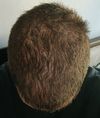
Hair regrowth progress over one year using 10% Minoxidil, 0.5 mg Dutasteride on alternate days, and recent addition of microneedling. The user is satisfied with the progress and reports no side effects.
User xEternex tries hair regrowth with daily broccoli sprouts, apple extract containing procyanidin b2, and microneedling. Others discuss potential issues with the experiment and share their experiences with vegetable consumption and hair growth.
A 32-year-old male experienced short-term hair regrowth with topical minoxidil, but thinning resumed. He switched to oral finasteride and minoxidil, saw initial improvement, but now faces aggressive thinning again and is considering other treatments like dutasteride, derma rollers, or red light caps.
The user is experiencing hair regrowth with oral minoxidil and dutasteride but still has fragile hairs that easily pluck out from the front center. Despite improvements, the user is concerned about the persistent fragility and shedding of these hairs.
A 47-year-old male experienced noticeable hair regrowth and improved hair quality after using Finasteride 1mg daily and Minoxidil 2.5mg tablets once a day for 13 months. He reports no significant side effects, except thicker eyebrows, and is pleased with the progress.
The user experienced notable hair regrowth after 2.5 months using oral finasteride, oral minoxidil, and microneedling. They switched from topical to oral minoxidil for convenience and reported no side effects.
The conversation discusses affordable low-level light therapy (LLLT) products for hair loss, with users debating the effectiveness of red LEDs versus lasers. The original poster is already using finasteride, minoxidil, ketoconazole, and microneedling, and is seeking budget-friendly LLLT options to add to their regimen.
The conversation is about using a topical solution of latanoprost and minoxidil for hair loss, with concerns about side effects due to a history of gynecomastia. The user is considering this treatment instead of finasteride and is seeking experiences from others.
The user experienced significant hair regrowth after 2.5 months on daily 0.5 mg oral dutasteride and 3 months of 5% topical minoxidil, with better results after switching to foam minoxidil. They attribute most gains to minoxidil, as dutasteride takes longer to show effects, and report no side effects.
A 23-year-old male has been using oral finasteride and topical minoxidil for 14 months, along with derma stamping and vitamins, but is considering switching to dutasteride due to dissatisfaction with progress. Users suggest cutting hair shorter to better track progress, and some recommend adding dutasteride and possibly a hair transplant in the future.
A user discusses a topical prescription for hair regrowth containing Minoxidil, Finasteride, and Latanoprost, noting Latanoprost's side effect of promoting eyelash and eyebrow growth. Others share experiences and information about Latanoprost, highlighting its origins as a glaucoma drug and potential side effects.
The user shared progress after one year of using Minoxidil, rosemary oil, and dermarolling for hair loss, noting fuller hair despite some scalp exposure. Another user inquired about the dermarolling process and frequency.
The conversation discusses concerns about a new rule affecting orders of hair loss treatments like Minoxidil, finasteride, and RU58841. Users are worried about the impact on their ability to obtain these products.
A 49-year-old male switched from Finasteride to Dutasteride 2.5 mg daily, along with oral Minoxidil 5 mg, resulting in significant hair regrowth and stopping hair loss after six months. Despite initial side effects like adrenaline spikes and urinary issues, the user is satisfied with the results and plans to continue the treatment.
Starting with 5 mg of oral minoxidil for faster initial results, then reducing to 2.5 mg to maintain progress. The user seeks opinions on this approach.
The conversation discusses switching from oral to topical treatments for hair loss, specifically using a mix of retinoic acid, finasteride, and minoxidil, after oral treatments like dutasteride and finasteride were ineffective. The user is concerned about the cost and potential impact of dandruff on the absorption of topical treatments.
A 32-year-old shares their one-year experience using dutasteride 0.5 mg and minoxidil for hair loss, noting some progress but still considering a hair transplant for better density. They mention decreased libido as a side effect and discuss the cost and considerations of a hair transplant.
The user is considering two hair loss treatments: Minoxidilmax Maxogen-x, which contains Minoxidil, Finasteride, Azelaic Acid, ABN Complex, Retinoic Acid, Fluocinolone, and Caffeine, and Morr-F, which contains only Minoxidil and Finasteride. They are asking for others' experiences with these brands.
The user experienced significant hair improvement using 0.5mg Dutasteride and 2.5mg Minoxidil daily for 8 months, with no side effects reported. They noticed thicker, darker hair and increased density, and did not use topical treatments.
The user has been using minoxidil and finasteride for almost a year, experiencing initial shedding, followed by regrowth, and then another shedding phase. They are concerned about the effectiveness of their current regimen and are considering adjusting their finasteride dosage.
A 25-year-old is experiencing hair thinning despite using 0.5mg oral dutasteride, 0.3% topical finasteride, and 6% topical minoxidil daily for a year. They are considering increasing dutasteride dosage and exploring other treatments like microneedling and KX 826, while seeking further medical opinions on their condition.
The conversation is about a person's one-year progress using Minoxidil and five months on Finasteride 1.25mg daily for hair loss, with noticeable improvement after switching brands and adding Finasteride. Some users commented on the unchanged position of a toothpaste tube in the progress photos, while others discussed their own hair regrowth experiences with similar treatments.
Hair loss theory involves 3alpha-hydroxysteroid reductase (3AHD) converting DHT to androstenol. Discussion explores potential treatments and encourages more research.
The user has experienced hair regrowth after switching from topical to oral Minoxidil and starting Finasteride. Other users confirm the regrowth and suggest additional treatments like microneedling and Nizoral shampoo.
A user used dutasteride 0.5mg for 3 months and is unsure about hair regrowth, noting some greying. Responses suggest improvement and that full regrowth may take time with shedding cycles.
A user created a tracker for hair loss treatments in clinical development, including compounds like Dermaliq, RU58841, and Pyrilutamide. The tracker updates with new information and allows filtering by conditions like androgenetic alopecia (AGA) and alopecia areata (AA).
The conversation discusses hair regrowth treatments using finasteride, minoxidil pills, and topical minoxidil, with a focus on the use of a 1.5mm derma roller. Users advise caution with derma rolling, suggesting smaller needle sizes and longer intervals between sessions to avoid skin damage and systemic absorption of minoxidil.
An experiment to determine the effectiveness of Pyrilutamide in reducing hair loss, using a regimen of Minoxidil and Finasteride, with promising results. The conversation also suggests comparing this to RU58841 as an alternative.
User discusses using topical Minoxidil twice daily for 4 months, then switching to once daily with oral Dutasteride and Minoxidil. They also mention microneedling monthly and are unsure if oral Minoxidil is better than topical.
A user documented their two-year hair regrowth journey using finasteride, minoxidil, and derma rolling, showing significant improvement. They switched from topical to oral minoxidil after the first year, experiencing some shedding and minor bloating.