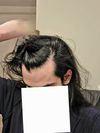
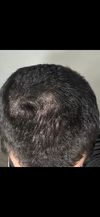
Men with early male pattern baldness (MPB) may have hormonal abnormalities similar to those in women with PCOS. Specific treatments mentioned include Minoxidil, Finasteride, and RU58841.
A female with PCOS and androgenetic alopecia is starting treatment with oral Minoxidil, topical Minoxidil 5% with finasteride, and plans to add mesotherapy. She previously tried anti-androgenic contraceptive pills but couldn't tolerate them and is using Myo Inositol for weight management.
Kintor Pharma successfully dosed the first patient in a Phase II trial for KX-826 for acne vulgaris. Users are more interested in results for male pattern baldness (MPB).
Hope Medicine's HMI-115 is expected to be released in 2027, with phase 3 trials currently recruiting. Concerns include the safety of targeting prolactin and the potential cost of the treatment.
Clascoterone 5% topical solution shows promise for treating male-pattern hair loss by blocking DHT at the follicle without systemic absorption, potentially offering fewer side effects than oral treatments like finasteride. While results are promising, long-term safety and effectiveness need further study, and it may serve as a starting point for developing more effective treatments.
Hmi115, a prolactin receptor blocker, showed promise for hair growth, but results from Phase 2 trials have not been published. ABS-201, an AI-based analog, is expected to begin trials in December 2025, while commercialization of treatments like PP-405 is anticipated around 2027.
A 30-year-old male is experiencing hair loss and is concerned about his receding hairline, seeking advice on his Norwood scale classification. He is apprehensive about using Minoxidil and finasteride as treatments.
Clascoterone cream can be used on the scalp, but it may not be effective due to its dosage. AR antagonists like clascoterone are generally less effective than 5AR inhibitors for hair loss.
Probiotics like L. reuteri ATCC PTA 6475 and B. longum BB536 may improve hair growth and density by reducing inflammation and reversing DHT damage. The user is trialing these probiotics personally, ordering them from the U.S. to Canada, and plans to continue if no adverse effects occur.
The user visited a trichologist due to ineffective topical finasteride treatment for hair loss. The trichologist recommended a new regimen including a two-month course of locoidon (cortisone 0.1%), followed by a solution containing minoxidil, hydrocortisone butirrate, estrone, progesterone, tocopherol acetate, trichosol, and transcutol.
Clascoterone 5% shows promising hair growth results but is criticized for high cost and unclear effectiveness compared to other treatments like finasteride. Glenmark is testing a combination of Clascoterone 7.5% and Minoxidil 5% in India.
A user shared their positive experience with Trichogenics for hair restoration, highlighting their unique zigzag hairline technique and personalized attention. They had 1700 follicles transplanted and praised the natural results.
A 17-year-old is frustrated with hair thinning and receding temples, seeking advice after a dermatologist dismissed concerns. Suggestions include starting Minoxidil for regrowth and considering Finasteride if androgenetic alopecia is suspected.
Oral DHT blockers like finasteride are preferred for their ease of use, effectiveness, and long-term safety data, while topical treatments like RU58841 lack extensive safety data and can be more cumbersome to apply. Oral treatments are generally considered more effective and convenient despite potential side effects.
A user is considering ordering topical finasteride with castor and rosemary oil from a Turkish pharmacy. They are debating whether to include the oils or use only PG and ethanol as the carrier.
AH-001 is a new topical treatment designed to degrade androgen receptors, targeting the root cause of androgenetic alopecia without the side effects of oral treatments like finasteride. It has shown a strong safety profile and good local tolerability in early trials.
The group buy for CB-03-01, a topical anti-androgen for hair loss, was postponed and refunded due to issues with the product's form and solubility. The product, also known as Breezula, is an alternative to finasteride with fewer side effects, but its official release is delayed until 2021.
A user is joining a clinical trial for Clascoterone, a drug approved for acne but being tested for hair loss. They previously tried finasteride with limited success and plan to share updates on their experience with the new treatment.
User shared 6-month progress of hairline recovery using oral finasteride and topical minoxidil, asking for current Norwood scale rating. Responses praised impressive results, with estimates ranging from Norwood 1.5 to 3.
The user reported slight improvement in hairline using 1% Clascoterone cream over three months but found it too costly to continue. They expressed interest in trying a 5% concentration if it becomes available at a reasonable price.
People are discussing ordering pyrilutamide for hair loss treatment in the US. The treatment is from Kintor's subsidiary company and is available on Amazon.
HMI 115 is being discussed as a potential hair loss treatment, with skepticism due to past disappointments like cosmeRNA, brezula, and pyrilutamide. The user is questioning if they should be hopeful for new developments in the next six years.
Dutasteride is more effective than finasteride for hair loss, especially at the crown and midscalp, but both have similar side-effect profiles with low incidence of sexual adverse events. Improvement is measured visually, and significant results may take over 12 months to appear.
Exploring different treatments for hair loss, such as cosmeRNA and HMI-115 which are small interference messenger RNA that inhibits the DHT receptor and an antibody that binds to the prolactin (PRL) receptor respectively; and researching mechanism and environment of hyperresponders.
User discusses group buy for finerenone, a third-gen mineralocorticoid antagonist for hair loss treatment. Finerenone inhibits TGFb, NOX, and ROS, and improves renal and cardiac function; topical dose should be no more than 10mg per day.
The conversation is about a user who had a hair transplant with 2,850 grafts and switched from finasteride and topical minoxidil to oral minoxidil and dutasteride for better results. They are hopeful for full results in a year.
The conversation discusses HMI 115, a new hair loss treatment with promising results, showing a significant increase in hair density after two months. Some users are skeptical, while others are hopeful for its release and potential affordability.