Dr. Bloxham's 9-month update on FUT scar revision with Verteporfin shows promising results. Excitement is high for FUE, which appears highly effective based on Dr. Barghouthi's findings.
The conversation is about hair regrowth using topical finasteride, minoxidil, and microneedling, with some users noticing new hair growth. The original poster also takes protein, biotin, and vitamin D supplements and prefers topical treatments due to concerns about side effects from oral finasteride.
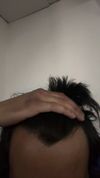
An 18-year-old is concerned about potential balding and seeks advice. They are unsure if their hairline is a widow's peak or if they are experiencing hair loss.
Minoxidil may inhibit collagen synthesis at high concentrations, with anecdotal reports of skin aging but limited research. Dermatologists and other specialists show little interest in studying minoxidil's side effects.
Crushing spironolactone pills and combining them with minoxidil for topical application may be effective for hair loss, with the addition of finasteride suggested. Adding rosemary and peppermint oils can help mask the unpleasant smell.
A user shared their 14-month progress using finasteride, minoxidil, and dermarolling for hair loss, showing before and after pictures. Replies included brief comments and a question about the user's identity.
A user shared their 11-year journey with alopecia, using finasteride, dutasteride, and a hair transplant. They encouraged others not to panic, noting that hair miniaturization can take over 15 years to complete.
The conversation discusses hair loss treatments, specifically minoxidil, vitamin D supplements, and the potential impact of iron overload. The user experienced hair regrowth with high-dose vitamin D but faced hair thinning again after reducing the dosage, and is now exploring the role of iron overload in hair loss.
The conversation discusses hair loss treatments, focusing on iron supplements for low ferritin levels and considering finasteride and minoxidil if thinning persists. There is debate over starting with finasteride versus dutasteride, with some users advocating for dutasteride due to its potency, while others caution about potential side effects.
A 30-year-old with diffuse thinning and a balding crown is using a treatment regimen of a 2-in-1 pill containing finasteride, minoxidil, and biotin, along with various supplements. After two weeks, no side effects have been experienced, and updates with pictures will be posted monthly.
The conversation humorously discusses inducing goosebumps to potentially reverse hair loss, with mentions of using cold therapy and muscle exercises. It also references other unconventional ideas like removing a testicle to lower DHT.
Adipose-derived stem cells with ATP improved hair regrowth in male and female mice with androgenetic alopecia. The most effective treatments were low dose stem cells with ATP for males and medium dose stem cells with non-liposomal ATP for females.
The user is documenting their hair loss journey, using oral finasteride since January 2025, and plans to add microneedling and rosemary oil. They have experienced no further hair loss but no gains, and are considering oral minoxidil due to having pets.
The user has experienced hair regrowth using finasteride, minoxidil, dermarolling, and nizoral shampoo, but is considering a hair transplant due to advanced hair loss. Others suggest checking the donor area and considering a reputable surgeon for a potential transplant.
A user shared a 10-month update on their hair transplant (HT), expressing significant confidence gain and recommending the procedure to others. They had the transplant in Turkey for $2300 and are very satisfied with the results.
OP uses 1mg finasteride, 2.5mg minoxidil, and 10mg biotin daily, along with a biotin, caffeine, and saw palmetto shampoo. OP noticed results after 5 months, with occasional heart palpitations from minoxidil.
A breakthrough in hair follicle cultivation using induced pluripotent stem cells (iPSCs) has been achieved, producing large hair follicles suitable for transplantation. Clinical trials for this hair multiplication technology are planned in partnership with Yinguan Biotechnology.
Hair follicles usually go dormant rather than die, and treatments like finasteride, minoxidil, and hormone therapy can sometimes reactivate them, though results vary. Complete regrowth is rare, especially in long-term bald areas, but some individuals see significant improvement with these treatments.
A user humorously discusses their 10-month-old's hair loss, suggesting treatments like microneedling, minoxidil, finasteride, and RU58841. Replies include various satirical and exaggerated suggestions, emphasizing the post's satirical nature.
The user shared progress in hair regrowth using a Minoxidil/finasteride topical compound and Olly Biotin. A suggestion to add microneedling was made, but a dermatologist said it's beneficial but not necessary.
The conversation discusses concerns that Minoxidil may cause skin aging, like collagen depletion and puffier faces. Some users suggest that a good skincare routine or collagen supplements might prevent these effects.
A 20-year-old reports significant hair regrowth and darkening after 3 months of using oral finasteride and minoxidil, with no side effects. The user also notes increased beard and body hair growth, and the treatment costs about 12€ monthly.
The conversation discusses hair regrowth progress from November 2023 to April 2024 using 1mg finasteride, 5% minoxidil, and weekly dermarolling. The consensus is that there is some improvement and increased density, with expectations of further progress.
The user experienced significant hair regrowth and increased density after six months of using oral minoxidil and finasteride chewables, despite going through a secondary shedding phase. The only side effect mentioned was restlessness, and the user feels healthier overall.
OP saw significant hair growth after starting scalp exfoliation and using 5% topical minoxidil for 4.5 months, along with microneedling initially. Users discussed the benefits of exfoliation and inquired about experiences with finasteride and dutasteride.
Minoxidil and spironolactone are used for hair regrowth, with visible progress noted. Spironolactone is discussed as a treatment option, particularly in the context of transitioning, with concerns about its effects on men.
A new hair loss treatment, PP405, is moving from phase 2A to 2B in clinical trials, sparking discussions about its potential to regrow dormant hairs and its impact on existing treatments like Minoxidil and finasteride. Some users express skepticism, while others are hopeful about its future effectiveness.
Tiny blond hairs on the vertex may indicate early hair regrowth from using dutasteride and minoxidil. Consistent treatment is advised, with potential for thicker hair over time, but a hair transplant might be needed for significant results.
A study that outlines the full model for androgenic alopecia (AGA) which links DHT to cellular senescence in dermal papilla cells, and suggests black chokeberry as a source of cyanidin 3-O-arabinoside polyphenol with potential anti-oxidant properties that could reverse this process. The post encourages reaching out to experts in anti-aging and longevity to research treatments involving the polyphenol.