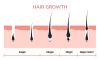
Androgenetic alopecia is caused by DHT affecting hair growth. Finasteride and minoxidil are used to manage hair loss by blocking DHT and promoting hair growth.
Finasteride can aid hair regrowth but may cause side effects like depression and sexual dysfunction. Users discuss experiences with finasteride, minoxidil, and RU58841, highlighting varied responses and the importance of informed treatment choices.
Oral biotin combined with topical minoxidil may increase hair growth rate, though the study was limited to healthy subjects and did not measure hair density. Some users report personal benefits from biotin, such as faster nail growth and healthier hair, but concerns about acne and study quality were also mentioned.
Caffeine intake may increase DHT levels, but its impact on hair loss is minimal compared to genetic factors. Excessive caffeine can cause health issues, and its effects on hair loss are not directly applicable to humans based on rat studies.
Participants want to maintain hair until at least age 30, using treatments like finasteride, dutasteride, and minoxidil. Hair loss remains a concern, with some considering hair transplants.
The conversation is about hair loss treatments, focusing on finasteride and considering a switch to dutasteride due to hairline recession. Users suggest trying minoxidil or dermarolling before switching, while others recommend dutasteride for more aggressive hair loss.
OP transitioned and used Spironolactone, Estradiol Valerate, Minoxidil, and dermarolling, resulting in significant hair regrowth. They advise this method may not be suitable for cis men.
A user shared their hair loss journey from 2017 to 2024, detailing the use of finasteride, minoxidil, dutasteride, supplements, and dermarolling. They experienced significant hair loss after stopping finasteride in 2017, saw some regrowth after resuming treatments in 2023, and are considering a hair transplant.
The conversation discusses hair loss treatments like topical finasteride with minoxidil, oral dutasteride, and essential oils. Oral treatments like dutasteride and finasteride are seen as more effective, though some prefer topicals to avoid side effects.
A user has been treating hair loss for a year with Finasteride, oral Minoxidil, microneedling, and ketoconazole shampoo, recently adding Dutasteride. They are unsure about the effectiveness and seek advice on whether to continue or switch fully to Dutasteride.
A user is deciding between oral and topical finasteride for hair loss, noting oral finasteride's ease of use but broader effects. Another user simply recommends oral finasteride.
A user experienced shedding after 7 months on Fin/Min spray despite good results and no change in treatment. Other users noted similar experiences and mentioned that shedding periods can be normal.
For hair loss, start with Finasteride, Minoxidil, Ketoconazole shampoo, and Microneedling. For severe cases, consider Dutasteride, oral Minoxidil, or hair transplants.
Topical finasteride results in plasma levels 100 times lower than oral finasteride, potentially reducing systemic side effects. Users report similar efficacy with fewer side effects, suggesting a preference for topical application.
A user shared their 8-month progress using 1mg oral finasteride with no side effects and plans to start minoxidil. Another user commented that the results look great and suggested reconsidering starting minoxidil.
A user shared their 11-year journey with alopecia, using finasteride, dutasteride, and a hair transplant. They encouraged others not to panic, noting that hair miniaturization can take over 15 years to complete.
User shared progress pictures showing significant hair improvement after using finasteride (0.25-0.5mg daily) for 11 months. Other treatments like microneedling, ketoconazole, and scalp massage were mentioned but not used consistently.
People over 35 have seen success with finasteride, minoxidil, and dutasteride for hair loss. Results vary, with some noticing improvements in hair volume and hairline, while others emphasize patience and managing expectations.
The conversation humorously speculates on whether an elderly man's good hairline is due to finasteride, dutasteride, or genetics. It also discusses the role of DHT and genetics in hair loss.
User shared progress using topical Finasteride 0.3% and Minoxidil 6% daily since January, noting some improvement and no side effects. Considering adding derma rolling for better results.
The conversation discusses the impact of finasteride on sexual function, with many users reporting reduced libido and weaker erections despite continuing the treatment to prevent hair loss. Some users suggest checking hormone levels or switching to different dosages or treatments like dutasteride, while others share mixed experiences regarding the severity of side effects.
A user increased their dutasteride dose to 3mg daily after two years but experienced significant hair loss. They also use RU58841 and minoxidil and are concerned about whether the loss is due to shedding or another issue like telogen effluvium.
Many celebrities and athletes likely use hair loss treatments like Minoxidil and Finasteride. Despite their effectiveness, only a small percentage of the general population uses these treatments.
A user has been on dutasteride for nearly 2 years with no improvement in hair loss, expressing frustration. Other users suggest checking for other health conditions, getting bloodwork, and considering stopping TRT or trying finasteride.
A user is seeking advice on hair loss treatment and has been prescribed finasteride. They currently use minoxidil, rosemary oil, and castor oil, and are considering adding dermarolling. Respondents suggest daily use of minoxidil and finasteride, with some recommending additional treatments like ketoconazole shampoo, dermapen, dutasteride, and vitamins.
The conversation is about a person struggling with inconsistent hair styling due to thinning hair, despite being on hair loss medications. They find that ketoconazole 2% shampoo helps, but conditioning makes their hair look worse; others suggest staying consistent with treatment and using hair fibers for events.
A user shared their experience with Finasteride for hair loss, noting improvement but still some thinning. They plan to get a hair transplant to address remaining thin spots and strengthen their hairline.
The conversation is about someone's hair improvement after 5.5 years on finasteride, with various users commenting on the results and discussing their own experiences with hair loss treatments. Some users can't see a difference, while others inquire about the dosage used.
The user has been using finasteride for 6.5 months, topical minoxidil for about 4 months, and occasionally microneedling to treat hair loss, and is asking if the progress shown is appropriate for that time. Commenters are congratulating the user on the visible improvement.