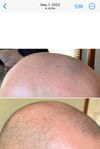
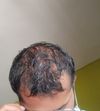
A user experienced rapid hair loss and was prescribed Desonide cream for mild Alopecia. They are seeking feedback on its effectiveness and potential side effects.
A 24-year-old shared their 2-month progress using oral finasteride (1mg) four times a week, topical minoxidil (5%) daily, and ketoconazole shampoo twice a week for hair loss. They experienced initial headaches and shedding but plan to continue the regimen due to positive results.
A 22-year-old is using a hair loss treatment stack of 5% topical minoxidil, 0.1% topical finasteride, and oral minoxidil. They are avoiding oral finasteride due to concerns about side effects and hope this combination will stop thinning and promote regrowth.
A 25-year-old with aggressive diffuse NW5 hair loss is using Minoxidil, oral Finasteride, RU58841, Ketoconazole, and dermastamping, experiencing slow progress and mental health struggles. Despite some visible regrowth, the user feels discouraged due to ongoing hair loss and is seeking reassurance and advice.
Minoxidil and finasteride are being considered for hair loss due to seborrheic dermatitis and male pattern baldness. The user is also using ketoconazole and zinc pyrithione shampoo.
A 21-year-old experiencing itchy and burning scalp with hair loss was diagnosed with MPB and scalp inflammation. They were prescribed Ketoconazole, Prednisone, Clindamycin, and Finasteride, and are considering trying antihistamines, dietary changes, and "nopoo" to alleviate symptoms.
A user is trying a DIY method of mixing crushed finasteride tablets with minoxidil for hair loss treatment, seeking feedback on its effectiveness. Some users express skepticism about the absorption of finasteride through the skin, while others mention anecdotal success.
Using tretinoin with minoxidil can enhance hair growth results. Microneedling and ketoconazole shampoo are also used to improve scalp health and treatment efficacy.
RU58841's potential side effects, particularly heart palpitations, are debated, with some attributing them to contamination with minoxidil. Users report mixed experiences, with some seeing no side effects and others cautioning about the lack of reliable data on RU58841's safety.
Kintor KX-826, a hair loss treatment, is being discussed for its pricing and effectiveness, with a focus on whether the 0.9% concentration is more effective than the 0.5%. Users are seeking cheaper purchasing options.
A 31-year-old male switched from topical to oral Minoxidil (2.5 mg) and Finasteride (0.6 mg) but feels it's less effective, noticing less hair density and thickness. He is concerned about the effectiveness of the oral treatment compared to the previous combination with topical Minoxidil.
User considers trying RU58841 for hair loss and asks for advice on its effectiveness and application. Responses vary, with some reporting positive results and others warning about potential risks or lack of change.
Minoxidil and caffeine are discussed for hair loss treatment. The user questions the logic of combining them due to their opposing effects on adenosine receptors.
A user with aggressive androgenic alopecia is considering increasing their dutasteride dose from 0.5 mg to potentially 2.5 mg, while already using oral minoxidil, Nizoral, RU-58841, and dermapen. They are seeking advice on the effectiveness and side effects of higher dutasteride doses, with suggestions to consult a dermatologist and consider a higher Nizoral concentration.
A 33-year-old male restarted finasteride after stopping it to conceive, noticing hair loss, especially in the crown area. His current routine includes finasteride, minoxidil, ketoconazole, and microneedling, and he plans to continue this treatment for 18 months before making any major changes.
The user is experiencing an itchy scalp and acne while using oral dutasteride and minoxidil for hair loss. They are considering stopping minoxidil to see if symptoms improve and possibly switching to finasteride if needed.
A 28-year-old male, previously on dutasteride for hair loss, is considering oral minoxidil or a compounded treatment of minoxidil, finasteride, and tretinoin after noticing hairline recession. The dermatologist suggested oral minoxidil and mentioned a compounded option, but the user is unsure about its benefits compared to current treatments.
The conversation discusses using minoxidil 5% and finasteride 1.25mg daily for hair loss, with the user experiencing monthly shedding and a slight decrease in sex drive as a side effect. The user also mentions using a shampoo with piroctone olamine for seborrheic dermatitis and considers oral minoxidil to reduce scalp irritation.
A new hair loss protocol using FDA-approved topical treatments targets eight pathways, potentially improving results by 60-75% compared to the standard 40-50% from oral minoxidil and finasteride. The protocol includes minoxidil, finasteride, tacrolimus, cetirizine, bimatoprost, lithium gluconate, losartan, melatonin, NAC, caffeine, and tretinoin, with a monthly cost of $35-50 in Mexico and $80-150 in the US.
The user plans to mix Kirkland minoxidil with spironolactone tablets for hair loss. They cannot use finasteride, saw palmetto, or spearmint tea due to side effects like insomnia and low testosterone.
The conversation is about choosing between RU58841 and topical spironolactone for hair loss treatment. The user is currently using a topical solution with minoxidil, alfatradiol, and progesterone, and is concerned about side effects and effectiveness of both RU58841 and spironolactone.
FCE 28260 (PNU 156765), an under-explored 5α-reductase inhibitor, showcases promising results in research by Giudici et al., outperforming well-known treatments like Finasteride in reducing the conversion of testosterone to DHT. Its superior efficacy, demonstrated through lower IC50 values in both natural and human recombinant enzyme studies, suggests it could offer more effective management of DHT-related conditions. Additionally, its lower molecular weight hints at better potential for topical application, potentially offering advantages in treating conditions such as androgenic alopecia. Despite its potential, it has not advanced in development, possibly due to financial limitations, leaving its therapeutic prospects and side effect profile largely unexplored.
The user has been using topical 5% Minoxidil, 0.1% Finasteride, dermastamping, 2% ketoconazole, and a DHT-blocking shampoo with saw palmetto, caffeine, biotin, and argan oil for hair loss. Despite some baby hair growth on one side, the user is experiencing continued hairline recession and shedding, leading to distress.
A 20-year-old is using oral and topical finasteride, topical minoxidil, ketoconazole shampoo, rosewater, Adgain tablets, creatine, and derma stamping to address hair loss. There is a debate about creatine's impact on hair loss, with some suggesting it increases DHT, while others disagree.
The conversation discusses adjusting the isopropyl alcohol, propylene glycol, and water ratios in a topical finasteride solution for better scalp comfort and less dandruff. The user considers using 20ml IPA, 25ml PG, and 15ml water in a 60ml bottle, moving away from mixing finasteride with topical minoxidil.
A 20-year-old has been using 1mg of dutasteride daily, caffeine shampoo, Nizoral shampoo 2-4 times a week, and pumpkin seed pills for hair growth, noticing regrowth since October. Initial shedding occurred, but improvements are felt, especially at the back of the hair.
Foam minoxidil may be a good alternative for those who experience irritation from liquid minoxidil, though opinions on its effectiveness vary. Some users suggest oral minoxidil as a more effective option with fewer side effects at low doses, while others recommend foam or alcohol-free topical versions for sensitive scalps.
OP struggles with scalp flakes causing hair loss and has tried Selsun Blue, Ketoconazole, and ZPT Shampoo without success. Suggestions include using salicylic acid shampoo, shaving the head, using Nizoral, and combining treatments like Minoxidil and finasteride.
The user is using finasteride, HGH, GHK-CU, BPC-157, KPV, biotin/collagen/keratin vitamins, ketoconazole shampoo, and low-dose naltrexone to address hair loss, avoiding minoxidil due to past shedding experiences. Adenosine is discussed as a potential alternative to minoxidil, though it is noted to be expensive and hard to find.
The user discusses using Follics FR5, FR10, and FR15, which combine Minoxidil, Adenosine, Procapil, Azelaic acid, and Procyanidin B2, to address hair loss. They have previously used Minoxidil, Finasteride, and Dutasteride with varying success.