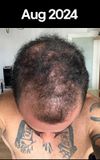
Minoxidil and finasteride can both cause initial hair shedding, but they work differently; minoxidil promotes hair growth, while finasteride improves the hormonal environment. Starting finasteride after minoxidil may trigger additional shedding, but it often leads to improved regrowth.
Retinoids, like Retin-A and retinol, can be beneficial when used with minoxidil for hair loss. Retin-A is the strongest and requires a prescription, while retinol is over-the-counter.
Tretinoin may enhance minoxidil's effectiveness for those not responding to minoxidil alone, but it could reduce efficacy for some who are already responding to minoxidil. Tretinoin requires careful use, including skin moisturizing and sun protection due to increased sensitivity.
The conversation is about the potential format of Breezula, a hair loss treatment, and concerns that it might be greasy or sticky. Specific treatments mentioned are Minoxidil, finasteride, and RU58841.
The user experienced prolonged hair shedding after restarting oral minoxidil (OM) at 2.5 mg in September 2023, following a break due to hypertrichosis. Despite seeing regrowth, the shedding has not decreased after 11 weeks on the increased dosage.
The user experienced significant hair regrowth and increased density after six months of using oral minoxidil and finasteride chewables, despite going through a secondary shedding phase. The only side effect mentioned was restlessness, and the user feels healthier overall.
The conversation discusses the user's experience with oral minoxidil for hair loss and a possible increase in facial wrinkles, leading to a plan to ask for a tretinoin prescription. Specific treatments mentioned are oral minoxidil and the intention to use tretinoin.
The user has been using minoxidil for over a year with little success, added tretinoin cream, and is considering adding red light therapy. They are advised to use moisturizer to counteract skin sensitivity from tretinoin.
The user experienced hair shedding after using finasteride and topical minoxidil since August 2024, and briefly adding oral minoxidil in early 2025. They suspect the shedding might be due to the oral minoxidil, a bad batch of finasteride, or a normal shedding cycle, and are also experiencing an itchy scalp and acne.
User started using stemoxydine with minoxidil for mild hair recession and maintenance. Stemoxydine improves hair appearance and behavior, making it fuller and shinier.
The conversation discusses creating a topical catalase solution with phosphate buffered saline, glycerin, and polysorbate 20 for hair loss treatment. The user seeks advice on preparing this solution.
The conversation discusses the role of NADPH in hair loss and the potential impact of creatine and B complex vitamins on hair shedding. The user theorizes that increasing NAD levels with B complex vitamins may reduce hair shedding, despite using finasteride and minoxidil for 9 months.
The conversation discusses using minoxidil foam as a solvent for topical finasteride. Ingredients of minoxidil foam include butane, cetyl alcohol, glycerin, and purified water.
The user is experiencing significant hair shedding after starting RU58841, despite using dutasteride and oral minoxidil for over a year without stabilization. Others suggest continuing the treatment as shedding can be a normal phase, but caution that RU58841 is unpredictable.
Rotenone, a natural plant extract, may promote hair growth by increasing LDH activity and blocking MPC in the scalp, but it carries risks due to its toxicity. The suggested formulation includes Barbasco extract, DMSO, propylene glycol or PEG-400, ethanol, and a carrier oil.
The conversation humorously discusses hair loss treatments, mentioning Minoxidil, finasteride, and RU58841. It jokingly suggests the creation of a new chemical called RU99999.
Minoxidil bottle developed crystals, possibly due to air exposure, but the trichologist advised not to worry. The user questions the advice, noting the lack of recommendations for finasteride or derma rolling.
After adding tretinoin to minoxidil for hair loss treatment, the user experienced increased shedding and no visible regrowth, despite also using microneedling and ketoconazole shampoo. The user cannot take finasteride due to side effects and is seeking advice on whether to continue with the current routine or modify the use of tretinoin.
The conversation discusses hair loss treatments, mentioning minoxidil, finasteride, RU58841, VDPHL, GT20029, and follicle cloning as potential solutions. It also reveals that the discussion about PP405 was an April Fool's joke.
A female user is considering using RU58841 with minoxidil 2.5% to reduce side effects like facial hair from minoxidil 5%, while also using copper peptides and a hair serum. Other users discuss alternative treatments like spironolactone, alfatradiol, and the side effects of finasteride.
A user is seeking advice on creating a homemade finasteride foam similar to over-the-counter Minoxidil foam, due to issues with glycerin and propylene glycol in their current solutions. They are considering using a mixture of ethanol/alcohol and water for the foam.
A user experienced increased hair shedding after 2.5 years on finasteride and 5 months on minoxidil, possibly due to recent additions like supplements and microneedling. Others shared similar experiences with minoxidil shedding, suggesting it may be a normal part of the process, with hair often growing back thicker.
A 17-year-old using 5% topical minoxidil experienced significant hair shedding after a year, possibly due to a "synchronization shed" and deficiencies in vitamin D and iron. Recommendations include continuing minoxidil, optimizing vitamin D and iron levels, and reducing tretinoin use if scalp irritation occurs.
Switching from tretinoin to tazarotene with minoxidil led to new hair regrowth after years of maintenance. Tazarotene's selectivity and higher concentration might be more effective for hair growth.
The user is attempting to create a topical finasteride solution by mixing crushed finasteride pills with minoxidil but is facing solubility issues. They are unsure if the finasteride has dissolved properly and are seeking advice on whether it is safe to use and if there is a solution to the problem.
Combining stemoxydine with topical minoxidil for hair loss treatment. Users discuss application order and effectiveness, with some skepticism about stemoxydine's benefits.
A user is experiencing scalp flaking from a finasteride/minoxidil topical solution and considers using salicylic acid shampoo to remove propylene glycol residue. Another user suggests trying a leave-in conditioner to address dryness and flaking.
Switching from liquid to foam Minoxidil to avoid scalp irritation, with a method to melt the foam for easier application. Users discuss alternatives and personal experiences with Minoxidil, including issues with propylene glycol and different application methods.
The user has been using minoxidil for 5 years and finasteride for 7 months, with recent addition of tretinoin cream causing significant hair shedding. Other users suggest the shedding indicates effectiveness and recommend continuing tretinoin use.