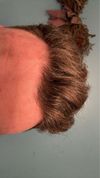
The conversation discusses the potential availability of GT20029 for hair loss treatment, with one user noting promising Phase 1 results and inquiring about gray market access. Another user humorously suggests it will take 50 years to become available.
A user was frustrated with delays in getting finasteride for hair loss, was prescribed minoxidil, and found a vitamin B7 deficiency. They are questioning if the deficiency could cause receded temples and considering finding a new dermatologist.
The user mixed Pyrilutamide with a KB solution and noticed some undissolved powder, questioning if more shaking or liquid is needed. They use Pyrilutamide from Anagenic.
Despite using treatments like Dutasteride, Minoxidil, RU58841, and GHK-Cu injections, the individual continues to experience aggressive hair thinning and is seeking a specialist for further help. Suggestions include trying finasteride, dermarolling, or another hair transplant.
The user, a 27-year-old male, has been treating early hair loss with topical finasteride and minoxidil, then switched to oral finasteride and dutasteride, but has seen no improvement and plans to add oral minoxidil. Despite treatment, hair loss has progressed from Norwood 1-1.5 to Norwood 3, with noticeable thinning, especially on the left side.
CB-03-01, also known as Breezula, is being considered as an alternative to DHT blockers for hair loss. Users are discussing its effectiveness, potential regrowth, side effects like scalp irritation, and hormonal impacts.
The post discusses the user's experience with hair loss treatment RU58841, which was tested for quality and found to be 96+% pure. The conversation includes various responses, with some users questioning the safety of the product and others expressing satisfaction with the test results.
The user tried a product labeled as PP405 from Umbrella Labs for hair loss but saw no changes, and it was revealed to be a fake or misidentified product. The user is also using finasteride, minoxidil, and other treatments but is still experiencing hairline issues.
A female user is using a 5% RU58841 solution with 5 sprays daily and is concerned about potential reactions and the impact of wearing a bonnet. A male user mentioned using 1ml of the same solution daily via dropper.
The conversation is about using micro needling and PTD-DBM for hair loss treatment. The user applies PTD-DBM drops on weekdays and performs micro needling weekly.
The user experienced side effects from low-dose topical finasteride and is considering using clascoterone (CB-03-01) despite concerns about its risks and cost. They seek advice on its effectiveness and potential side effects compared to other treatments like alfatradiol and fluridil.
The conversation discusses using RU58841 with primobolan or masteron to protect hair while on steroids, alongside dutasteride. Users suggest caution with these compounds due to potential hair loss and discuss alternatives like nandrolone and EQ for better hair safety.
The conversation is about future hair loss treatments. Current treatments mentioned include finasteride, minoxidil, and RU58841, with potential future treatments like GT20029, TDM-105795, JW0061, and follicle cloning.
A 26-year-old male with high testosterone is experiencing diffuse hair thinning despite using a comprehensive treatment regimen including dutasteride, oral minoxidil, RU58841, ketoconazole shampoo, microneedling, and low-level laser therapy. Suggestions include adjusting dutasteride dosage, monitoring iron levels, and consulting a dermatologist for further evaluation.
The conversation discusses GT20029, a new topical drug for hair loss and acne without notable side effects, which has been accepted for investigational use in China. Some users express skepticism about the legitimacy of the company and the potential for other drugs like RU58841 to be developed due to patent expiration and lack of profitability.
The user has been using finasteride for hair loss and is considering adding RU58841. They ask about RU58841's effectiveness, potential heart side effects, duration of action, dosage increase over time, transitioning to GT20029, and where to find the liquid form.
Concerns about a potential ban on finasteride and dutasteride due to side effects, with users advocating for continued access and informed choice. Alternative treatments like pyrilutamide are also mentioned.
GHK-RU58841 is used for hair loss, with positive results when combined with finasteride, stemoxydine, redensyl, and alfatradiol. Users report effectiveness after adding finasteride.
The conversation discusses the potential availability of a new hair loss treatment, GT20029, on the grey market, with users suggesting it could be within a year but advising against using grey market products due to safety concerns and complexity of the drug.
TDM-105795 showed better efficacy and safety in trials for hair loss, with a higher hair count improvement compared to GT20029 and HMI 115, but it's not as widely discussed. The user is questioning why this is the case.
People are discussing their experiences with kx-826 (pyrilutamide) for hair loss, using concentrations of 0.5% and 0.9%. They are sharing personal results and progress with this treatment.
RU58841 is discussed as a hair loss treatment, with concerns about its effectiveness diminishing after two years due to androgen receptor upregulation. The user is hesitant to start using it, fearing it may worsen their condition over time.
Scalp biopsies are crucial for diagnosing hair loss conditions like Diffuse Unpatterned Alopecia (DUPA) and retrograde hair loss, as treatments like finasteride and dutasteride may not be effective if other conditions are present. Combining PPAR-GAMMA agonists with retinoids could improve treatments for conditions like Lichen Planopilaris.
The conversation is about managing allopregnanolone deficiency caused by 5-alpha-reductase inhibitors like finasteride or dutasteride. Specific treatments discussed for hair loss include Minoxidil, finasteride, and RU58841.
A 21-year-old shared a 7-month update on using 1mg finasteride and minoxidil for hair loss, reporting positive results with no side effects except watery semen. The user initially stopped minoxidil due to inconvenience but resumed it after shedding, and is satisfied with the progress despite some thinning at the crown.
A 19-year-old male has been using topical finasteride and minoxidil for 8 months with no progress and is considering seeking a second opinion due to potential misdiagnosis. The discussion revolves around whether the hair loss is due to male pattern baldness, alopecia areata, or a vitamin deficiency.
The conversation is about the stability of pyrilutamide in different solutions. The user is asking if a 70/30 ethanol/pg solution with 4% water will degrade pyrilutamide.