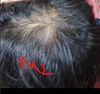
GentleIris stopped hormone-induced hair loss with diet changes but couldn't regrow lost hair. A reply suggested microneedling instead of Platelet-Rich Plasma Therapy (PRP) for hair regrowth.
A young female diagnosed with Lichen planopilaris (LPP) experienced years of misdiagnosis and ineffective treatments, including a hair transplant and other procedures. She is considering litigation due to the misdiagnosis and has learned that LPP is chronic, hair loss can be stopped with ongoing medication, but lost hair cannot regrow.
A 21-year-old male is using finasteride, minoxidil, and had a hair transplant to address lifelong thin, diffuse hair loss. Progress pictures show changes over two months.
A poem humorously suggests hope for a new hair loss treatment, PP405, while users debate the effectiveness and side effects of current treatments like Finasteride. Concerns are raised about Finasteride's side effects, especially for young users, and skepticism about new treatments is expressed.
The conversation discusses positive initial trial results for GT20029, a topical compound for hair loss that degrades androgen receptors, potentially requiring only weekly application. Participants express hope for this treatment to be more effective and convenient than current options like Minoxidil, Finasteride, and RU58841.
The user has been using a hair loss treatment protocol including topical dutasteride, minoxidil with tretinoin, ketoconazole shampoo, microneedling, a laser cap, and vitamin D for 15 weeks, showing impressive progress. Feedback suggests continuing medical therapy for 12-24 months before considering a hair transplant.
RU58841 helped regrow hairline without side effects for a bodybuilder using PEDs. The treatment included RU58841, finasteride, minoxidil, GKH-Cu, microneedling, and HGH.
PP405 is likely a scam, with concerns about its legitimacy and safety, as it may cause unintended tissue growth. Users suggest sticking to known treatments like finasteride and minoxidil.
A user shared their hair recovery progress from ages 25-31, attributing success to quitting smoking, minoxidil, microneedling, and hormone therapy. They also mentioned being transgender and using hormone therapy.
The conversation discusses using NAC and quercetin as supplements for hair loss, with some users also mentioning finasteride. NAC is highlighted for its potential benefits, but concerns about its safety and absorption are also raised.
The conversation discusses interest in participating in PP405 trials for hair loss treatment, with users expressing uncertainty about eligibility due to location. Participants are eager for updates and willing to pay for shipping if trials are limited to America.
The post and conversation are about the role of the enzyme 3alpha-hydroxysteroid reductase in hair loss and the potential of compounds like procyanidin B2 and sulforaphane to boost its activity for hair regrowth. Further research is needed to develop effective treatments based on this theory.
A user reported that Procerin, containing Saw Palmetto and Pumpkin seed oil, provided similar hair thickening results as finasteride but with milder side effects. They experienced reduced libido and watery ejaculations but are adjusting the dose to minimize these effects.
PP405 is considered a promising hair loss treatment, potentially replacing minoxidil but not finasteride. Users are hopeful for future treatments like GT20029 and VDPHL01, while remaining cautious about effectiveness and side effects.
PP405 and ABS-201 are promising treatments for male pattern baldness. PP405 shows rapid hair growth in human trials, while ABS-201 shows significant regrowth in animal studies but is still in early human trials.
GT20029 is a topical treatment that degrades androgen receptors to prevent hair thinning and loss, potentially offering fewer side effects than systemic treatments like finasteride. Concerns include its impact on hair texture and potential systemic effects, with market availability speculated in 3 to 5 years.
The conversation is about the effectiveness and production of GT20029, a drug being developed as a topical androgen receptor degrader for hair loss, and whether it can fully degrade androgen receptors or only partially. It also discusses the drug's potential unique working mechanism and synthesis by a company called Anagen.
Follistatin, known for inhibiting myostatin and promoting muscle growth in mice, is being discussed as a potential treatment for hair loss. Specific treatments mentioned include Minoxidil, Finasteride, and RU58841.
The conversation discusses GT20029, a new topical drug for hair loss and acne without notable side effects, which has been accepted for investigational use in China. Some users express skepticism about the legitimacy of the company and the potential for other drugs like RU58841 to be developed due to patent expiration and lack of profitability.
The user discusses their experience with diffuse unpatterned alopecia and acquired progressive hair kinkering, noting improvements with treatments including biotin, pantothenic acid, finasteride, ketoconazole, and zinc pyrithione shampoo. They report thicker, healthier hair and improved scalp condition, attributing success mainly to biotin, pantothenic acid, and finasteride.
Hair loss treatments discussed include Minoxidil, finasteride, and RU58841. There is skepticism about claims of a breakthrough, despite FDA approval for human trials.
PP405 may damage hair follicles if used long-term, suggesting cycling might be necessary. Combining it with finasteride could help maintain hair growth.
PP405 targets hair follicle stem cells differently than exercise-induced lactate, suggesting exercise alone may not replicate its benefits. Minoxidil and finasteride are recommended alongside exercise for hair regrowth, with additional suggestions like spicy food and infrared exposure.
JXL082 is not the same as PP405, leading to a halt in sales and a plan to synthesize the real PP405. There is skepticism about the safety and effectiveness of JXL082 and PP405, with concerns about patent issues and the long-term impact on hair growth.
New hair loss treatments like PP-405, AMP-303, and SCUBE3 are being discussed, but none are confirmed to fully restore hairlines. Current treatments like Minoxidil, Finasteride, and RU58841 are still widely used, with some hope for future advancements in hair regrowth.
PP405 is a promising hair growth stimulant but not a cure for advanced hair loss, as it may only help dormant follicles. Treatments like Minoxidil, Finasteride, and Dutasteride are discussed, with emphasis on early intervention for effectiveness.
Pelage Pharmaceuticals received $120 million in Series B funding for hair loss treatment development. The conversation expresses excitement and anticipation for the release and effectiveness of the treatment.
A 21-year-old male with advanced hair loss (NW7) started using finasteride and minoxidil 10 months ago but hasn't seen much progress. He is pre-diabetic with stage 1 hypertension and is seeking insights on whether treating these conditions could improve hair regrowth.