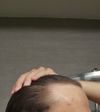
The user aims to achieve a hypertrichosis look and has used topical Minoxidil for 20 years, now trying oral Minoxidil in a low dose. They seek alternatives to Minoxidil to avoid side effects.
Adipose-derived stem cells with ATP improved hair regrowth in male and female mice with androgenetic alopecia. The most effective treatments were low dose stem cells with ATP for males and medium dose stem cells with non-liposomal ATP for females.
Many people become hyper-aware of hair loss in themselves and others, often leading to feelings of jealousy or self-consciousness. Treatments like finasteride, minoxidil, and dutasteride are commonly discussed as solutions to combat hair loss.
A 39-year-old experienced hair regrowth on his temples after switching from finasteride to topical RU58841 combined with 5% minoxidil. He also underwent stem cell treatment and noticed improvements, attributing the regrowth mainly to the change in treatment.
The conversation discusses hair loss treatments, mentioning minoxidil, finasteride, RU58841, VDPHL, GT20029, and follicle cloning as potential solutions. It also reveals that the discussion about PP405 was an April Fool's joke.
The user has been treating hair loss with finasteride, dutasteride, oral minoxidil, and pyrilutamide for several years without success and is experiencing an inflamed scalp, possibly due to seborrheic dermatitis. They are seeking advice on additional treatments after these methods failed to improve their condition.
Pyrilutamide is discussed as an effective hair loss treatment by some users, despite skepticism due to limited data and underwhelming trial results. Users compare it to finasteride, minoxidil, and RU58841, with some expressing interest in its potential as an adjunct treatment.
PP405 is anticipated as a future treatment for dormant hair follicles, but its effectiveness and safety are uncertain. Current treatments include oral minoxidil and microneedling, with some avoiding finasteride due to side effects.
A user applied pyrilutamide for 6 months without hair regrowth and is considering stopping due to cost and lack of results. Another user suggests switching to finasteride, which is cheaper and has shown regrowth for them.
Pyrilutamide, a potential topical treatment for male pattern baldness, and the user's anticipation of its Phase 2 trial results. Several users discussed their experiences with Finasteride and RU58841, while others voiced skepticism about the efficacy of Pyrilutamide.
The user noticed increased hair thinning and scalp redness on one side of their temple. They are seeking advice on what this could be and how to address it.
Pyrilutamide, a potential hair loss treatment that has been tested in Phase 2 trials and may be available for purchase through a group buy in June. It is purported to have similar effects on hair growth as Dutasteride.
A female user with alopecia is researching peptide usage, specifically ghk-cu, for hair loss. Other users shared mixed experiences with copper treatments, noting some success with topical application.
A new hair loss treatment, PP405, is moving from phase 2A to 2B in clinical trials, sparking discussions about its potential to regrow dormant hairs and its impact on existing treatments like Minoxidil and finasteride. Some users express skepticism, while others are hopeful about its future effectiveness.
PP405 shows initial promise for treating androgenetic alopecia, with safety confirmed in early trials, but skepticism remains due to limited data. Further trials are needed to determine its true efficacy and potential market impact.
The conversation discusses using Latanoprost for hair regrowth, with the original poster seeking advice on where to purchase it without a prescription. Users suggest alternatives like Triple Hair's TH-07, which includes Finasteride, Minoxidil, and Latanoprost, and Strut's Latanoprost with melatonin and caffeine.
Transplanting pubic and butt hair to the head is discussed humorously, highlighting pros like DHT resistance and cons like poor blending and appearance. Users joke about using treatments like Minoxidil, Finasteride, and RU58841 on unconventional donor areas.
The post discusses a theory that hair regrowth after transplant is due to the angiogenesis process (new blood vessels forming), not because the transplanted hair is unaffected by DHT. The responses highlight the established belief in 'donor dominance' (the importance of the hair's origin in transplantation) and skepticism about the new theory.
Despite using treatments like Dutasteride, Minoxidil, RU58841, and GHK-Cu injections, the individual continues to experience aggressive hair thinning and is seeking a specialist for further help. Suggestions include trying finasteride, dermarolling, or another hair transplant.
PP405 is a new hair loss treatment targeting dormant hair follicles, with ongoing trials. Some users consider stopping finasteride and minoxidil to join trials, while others doubt its effectiveness.
A new hair loss treatment, PP405, showed promising Phase 2a results with 31% of patients experiencing over 20% hair density increase without systemic absorption, avoiding hormonal side effects. The treatment is expected to be expensive, with Phase 3 trials starting mid-2026, and there is skepticism about the data's strength.
A 16-year-old is experiencing hair loss and is using minoxidil, finasteride, and plans to add RU58841, while considering other treatments like MK-677 and microneedling. Concerns are raised about the potential impact of these treatments on puberty and development.
A 21-year-old male with advanced hair loss (NW7) started using finasteride and minoxidil 10 months ago but hasn't seen much progress. He is pre-diabetic with stage 1 hypertension and is seeking insights on whether treating these conditions could improve hair regrowth.
Parasites in the gut may contribute to hair loss by depleting essential nutrients and disrupting hormone balance. An imbalance of hormones, not just DHT, could be a factor in androgenic alopecia.
The conversation discusses the scalp tension theory as a potential factor in hair loss, alongside DHT, inflammation, and other mechanisms. Treatments mentioned include finasteride, minoxidil, and botox injections, with some users exploring additional methods due to varying effectiveness.
Finasteride may help stabilize hair loss, but regrowth at the temples is challenging and often requires additional treatments like minoxidil or a hair transplant. Users suggest patience and possibly combining treatments for better results.
A user was frustrated with delays in getting finasteride for hair loss, was prescribed minoxidil, and found a vitamin B7 deficiency. They are questioning if the deficiency could cause receded temples and considering finding a new dermatologist.
Pumpkin seed oil is a weak natural DHT inhibitor and not effective for significant hair loss. Effective treatments include finasteride, minoxidil, and other medications.
Treating hair loss with finasteride, dutasteride and minoxidil, as well as micro-needling, potentially using research chemicals such as Pyril and Senzu Beans.