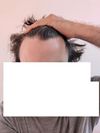
User noticed hair growth after 1.5 months using Fin, Min, stemoxydine, dermarolling, nizoral, and scalp massage. Others commented on promising results and potential improvement in 6 months.
Topical dutasteride is suggested as a low side-effect treatment for hair loss, with a proposed dose of 0.025% 1ml/day. It is considered better than finasteride due to its even inhibition of DHT isoforms and lower systemic absorption.
People are hopeful about future hair loss treatments like PP405, GT20029, and VDPHL01, while some are currently using finasteride and minoxidil. There is skepticism about the effectiveness of new treatments, and some advise against hair transplants until more promising drugs are available.
A user reported hair regrowth and increased thickness after 11 months using finasteride 1mg, taken 3-4 times a week, with noticeable improvement starting around the third or fourth month. No side effects were mentioned, and the user is considering reducing the dosage to find the minimum needed to maintain results.
P5P supplementation helped reverse finasteride side effects, particularly by lowering prolactin levels and restoring sensitivity. The user experienced significant improvement within a day and full recovery in a few days.
The user is seeking advice on treating male pattern baldness (MPB) while dealing with seborrheic dermatitis, specifically asking about the use of finasteride (Fin) and minoxidil (Min). They are concerned about side effects and are looking for recommendations to improve overall hair thickness, especially on the crown.
GT20029 and PP405 are discussed as potential alternatives or complements to finasteride for hair loss treatment. GT20029 is entering phase 3 trials, while PP405 is seen as promising for regrowing hair and possibly eliminating the need for other treatments.
Minoxidil can cause itching, pimples, and shedding, and starting spironolactone or finasteride may also lead to shedding. Topical CBD oil with MCT is suggested to reduce inflammation, and overlapping shedding might occur but doesn't necessarily increase each other's effects.
A 33-year-old is considering switching from topical finasteride to oral finasteride due to application difficulties with long hair. They are concerned about potential shedding with oral finasteride and are seeking advice on dosage and whether their crown shows signs of thinning.
The conversation discusses the importance of scalp biopsies for diagnosing hair loss conditions like DUPA and Retrograde, which may not be just AGA. It emphasizes that treatments like finasteride and dutasteride may not work if the condition is autoimmune.
PRP treatments have been effective for the user, with a new recommendation of using a high-quality plasma kit once a year. The user seeks experiences with this specific PRP approach.
The conversation discusses the ineffectiveness of tablet forms of dutasteride for hair loss due to poor absorption compared to soft gel capsules. It suggests switching to FDA-approved soft gel capsules for better results, as tablets may not adequately suppress DHT levels.
A dermatologist recommended a new supplement containing annurca apple, which reportedly doubles hair density and increases keratin after 60 days, to be used with finasteride. Some users are skeptical, considering it potentially ineffective or a marketing ploy, while others are open to trying it if it proves effective and affordable.
The conversation discusses hair loss treatments, focusing on reducing scalp itching and dandruff using natural shampoos, witch hazel, and apple cider vinegar. The user also mentions using finasteride and observing potential regrowth, though it's difficult to confirm.
User shares new hair growth stack including oral minox, daily rolling with minox application, niacin, and Dutasteride. Excited about progress and plans to update in two months.
Baby hairs can mature with long-term DHT reduction, and Minoxidil can aid this process. Dutasteride mesotherapy is effective and preferable to oral pills, as it directly targets tissues.
A user shared a list of natural supplements they tried that did not stop their male pattern baldness (MPB), including vitamin D, biotin, and various oils. The conversation includes skepticism and jokes about one of the methods, injecting jellyfish mucus into testicles, and mixed opinions on the effectiveness of natural treatments.
PP405 updates are seen as vague and lacking substance, causing frustration among users. Some users report positive effects from using minoxidil and dutasteride, while others remain skeptical about new treatments.
Piroctone olamine is more effective than ketoconazole for increasing hair growth and reducing itching and dandruff. Treatments discussed include Minoxidil, finasteride, and RU58841.
The conversation is about the potential side effects of using verteporfin in conjunction with a hair transplant. Specific treatments discussed include verteporfin, a hair transplant (HT), minoxidil (Min), finasteride (Fin), and RU58841 (RU).
User discusses using C60 serum with microneedling at 1.75mm and asks if it's safe. Current routine includes daily Pyril on temples, weekly microneedling, and C60 serum on non-Pyril days.
Minoxidil, dutasteride, and copper peptides are used in a tattooing method for hair regrowth, with some users noting better results compared to oral treatments. Copper peptides are considered to have minimal impact, but the method may reduce side effects.
The user is considering using dutasteride or finasteride for hair loss and has recurrent folliculitis. Another user suggests treating the folliculitis and notes diffuse thinning.
The conversation is about a user experiencing excessive hair growth on their body due to using topical minoxidil and dutasteride. The suggested solutions are shaving off the excess hair or considering laser epilation. It is mentioned that dutasteride does not cause extra hair growth, while minoxidil can stimulate hair growth in unintended areas. The user is advised to lower the dosage, concentration, or frequency of use and only apply the treatment to the desired areas.
A user discusses their habit of analyzing others' hair due to their own hair thinning at 18. Another user mentions starting finasteride in 2010 and still having a full head of hair.
High prolactin levels may contribute to hair loss, and some users suggest supplements like mucuna pruriens, vitamin B6, vitamin E, L-Tyrosine, L-Theanine, DIM, and Zinc to lower prolactin. Lifestyle changes to increase dopamine, such as reducing screen time and stress, are also recommended.
A Spanish dermatologist suggests sulforaphane for androgenetic alopecia (AGA) due to its potential to remove DHT metabolites, though high dosages are needed. A topical formulation might be possible.
Hair cell therapy and follicle cloning are still in experimental stages, with treatments like hair multiplication and regenerative hair therapy being marketed but not yet proven to create unlimited new follicles. There is skepticism about the effectiveness and legitimacy of these treatments, with some considering them scams.
User seeks participants for Verteporfin group buy. Verteporfin, FDA approved, may regenerate hair follicles and sweat glands through heavy microneedling.
Male pattern baldness (MPB) may be influenced by androgen receptors in scalp hair follicles and potentially poor blood flow. Transplanted hair is not immune to DHT, and factors like inflammation and scalp tension might also contribute to hair loss.