A drug that regrows body parts, but not hair, sparking debate on hair loss treatments. Discussions include the use of finasteride, dutasteride, and the potential for new methods to restore hair.
Finasteride users discuss potential side effects, including Post Finasteride Syndrome (PFS), with varying opinions on its legitimacy and impact. Some users report side effects like changes in semen consistency and reduced pre-ejaculate, while others emphasize the rarity and reversibility of side effects.
Adipose-derived stem cells with ATP improved hair regrowth in male and female mice with androgenetic alopecia. The most effective treatments were low dose stem cells with ATP for males and medium dose stem cells with non-liposomal ATP for females.
Hair transplants for NW7 individuals are challenging due to limited donor hair, often resulting in thin coverage unless body or beard hair is used. Treatments like minoxidil and finasteride are mentioned to support hair density and growth.
PP405 shows promise in stimulating new terminal hair growth by activating dormant follicles, with no systemic adverse effects observed in a short-term trial. However, long-term efficacy remains unproven, and further trials are needed to confirm its potential as a hair loss treatment.
A user was prescribed Alpicort E, which contains Estradiol Benzoate, Prednisone, and Salicylic Acid, for hair loss and is seeking others' experiences due to concerns about potential side effects.
The conversation discusses concerns about brain fog potentially caused by finasteride use, with some users sharing personal experiences of cognitive issues and others suggesting it might be paranoia or unrelated. The original poster decides to stop using finasteride to see if their cognitive function improves.
A user underwent a hair transplant at Moart Clinic in Seoul, receiving 1100 grafts in the crown area after Dutasteride and oral Minoxidil failed to improve a stubborn bald spot. The procedure was successful, with minimal pain and good post-op recovery, costing $6900 USD before a tax refund.
The conversation discusses that dutasteride may be more effective than finasteride for frontal hair loss due to higher 5ar Type 1 enzyme activity in that area. Some users question the validity of this information, while others confirm it with additional sources.
The conversation discusses the removal of Breezula phase II 12-month results by Cassiopea and the search for the original data. Concerns were raised about potential negative long-term effects on hair growth, such as androgen receptor upregulation.
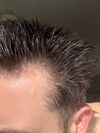
A 33-year-old male is experiencing thinning at the temples and hairline, with increased shedding over the past year. The user suspects androgenetic alopecia (AGA) despite AI suggesting a maturing hairline.
After a second session of Platelet-Rich Plasma (PRP) treatment for hair regrowth, the user is experiencing increased shedding of thick and dark hairs and is concerned about whether this is temporary. They are seeking others' experiences with PRP, specifically regarding the duration of shedding and eventual positive outcomes.
A user's transformation from an accountant to a spartan with a full beard, discussing the potential of DUPA and alopecia areata, as well as treatments like vitamins, topicals, and natural treatments for potential regrowth.
Having hair improves social interactions and treatment by others, with hair transplants and finasteride enhancing confidence and attractiveness. People often receive more positive attention after addressing hair loss.
The conversation discusses hair loss treatments, including finasteride, microneedling, minoxidil, and PTD-DBM. The user has not noticed significant regrowth and is considering cost-effective options like valproic acid.
Someone's brother tried Platelet-rich plasma (PRP) for hair loss; it had minimal effect on hair but improved skin appearance. Microneedling at home was suggested as a more sustainable alternative.
A user is advocating for Phase 3 trials of the hair loss treatment PP405 to be conducted in Germany, citing benefits like a diverse patient base and faster access for European patients. Despite skepticism about the petition's influence, the user believes it can demonstrate significant interest and potentially influence strategic decisions.
Pelage is delaying the start of phase 3 trials for PP405 to 2026 due to necessary regulatory processes, despite having $120 million in funding. Users discuss the potential of PP405 for hair regrowth, with some expressing skepticism and others hopeful for new treatments like Breezula.
The user has been taking oral finasteride for 2 months, experiencing more hair loss but noticing some fuzzy hair growth on the scalp. They are questioning if this new hair growth is significant.
The user shared progress on hair regrowth using oral dutasteride, oral minoxidil, and verteporfin procedures. They reported some regrowth after 6-9 months of treatment.
A user is experiencing hair thinning on the sides while wearing a hair system and has had a transplant to correct temple peaks. They are using finasteride, oral minoxidil, and rosemary oil serum, and are considering a corrective transplant to add density and achieve a natural look.
The conversation discusses using topical Calcipotriol and Valproic Acid for hair loss, focusing on their mechanisms involving the VDR receptor and Wnt/beta-catenin pathway. Specific treatments mentioned are Minoxidil, Finasteride, and RU58841.
Hair loss without a white bulb may indicate mechanical damage, anagen effluvium, alopecia areata, or traction alopecia. Seeking a specialist is recommended, but access can be difficult in smaller areas.
Setipiprant and bimatoprost are being discussed as potential future treatments for hair loss. Some individuals have started testing setipiprant before FDA approval, but no progress updates are available yet.
The conversation discusses disappointment in Verteporfin for hair loss treatment, with a mention of an upcoming trial by Dr. Bisanga. No specific treatments were confirmed as used by the original poster.