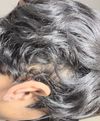
The user switched from oral finasteride to dutasteride with minoxidil, but saw no results. They then tried topical finasteride and noticed some potential improvement after four months, theorizing that the topical application bypasses liver metabolism.
A female user's experience with topical and oral finasteride for hair loss, which has been successful as evidenced by the reduction of miniaturized hairs. Replies to the post discussed the recommended dosage for females versus males.
A 26-year-old is experiencing unexpected hair shedding on the scalp, eyebrows, eyelashes, and body, along with greasy skin, and has decided to see a doctor. They are seeking advice and support.
The conversation reassures a woman concerned about thinning hair on her crown, suggesting her hair appears normal and not thinning. Some users recommend prenatal vitamins for hair health, while others attribute the appearance to contrast between dark hair and a pale scalp.
The conversation discusses natural methods for addressing male pattern baldness, with the original poster using a plant-based diet, herbs, scalp massages, pumpkin seed oil, and dermapen treatments, while avoiding pharmaceuticals like minoxidil and finasteride due to concerns about side effects. Other users suggest that pharmaceuticals like finasteride may be necessary for significant hair loss, but the original poster remains committed to natural approaches.
Bald men can still attract partners, as personality and confidence often outweigh hair loss. Treatments like finasteride and minoxidil are used, but self-acceptance and personal satisfaction are key.
A 31-year-old experienced significant hair regrowth after switching to oral Finasteride but reported dull orgasms as a side effect. Users suggested waiting for the body to adjust, reducing the dosage, or switching to topical Finasteride to manage side effects.
The user is using minoxidil, finasteride, dermarolling, and other treatments for hair regrowth, showing promising results in the temple area. Despite some skepticism, there is optimism about potential improvement.
The conversation is about a user sharing their positive experience with Scalp Micropigmentation (SMP) for hair loss, highlighting the natural look achieved by a specialized artist. The procedure cost $2600 and was done by Alex Corona in Panama City Beach, FL.
The user has been using finasteride for three years and topical minoxidil, and while they feel they've lost some ground in the last 18 months, most responses suggest their hair looks the same or even fuller. The general consensus is that the treatments have maintained the hair well, with some users suggesting additional treatments like derma stamping or dutasteride for further improvement.
Asian dermatologists are more open to prescribing finasteride, while in some regions, medications like finasteride and minoxidil can be obtained without a prescription. In Europe, particularly France, there are stricter regulations requiring patients to acknowledge potential side effects, but many people find ways to obtain these treatments through various means.
A hair transplant of 3361 grafts, 11.5 months after the procedure, that resulted in a very natural looking NW1 hairline; the person who underwent this procedure has not experienced any hair loss and is expecting to have no future hairloss either.
Hair loss causing distress during physical interaction; treatment for a year not effective. Options discussed: accept new normal or explore other treatments.
Male Pattern Baldness, and identifying early signs of it. The treatments discussed to combat and slow balding include finasteride, dutasteride and minoxidil.
Amplifica is testing a compound called AMP-303 for hair loss, but it's not Scube3 or osteopontin. The timing for the results from the clinical trial is unknown.
A user shared their satisfaction with a hair transplant done by Dr. Jimmy Cortez at Capilar Hair Center, but others in the conversation questioned the authenticity of the results, suspecting the use of hair fibers and deceptive advertising. Some found the hairline natural-looking, while others criticized it as artificial or unnecessary.
PP405 is a potential hair loss treatment undergoing trials, with discussions on its effectiveness and comparison to existing treatments like finasteride and minoxidil. There is skepticism about its status as a cure, with hopes for future advancements in genetic treatments like CRISPR.
The user has been taking oral Finasteride and topical Essengen 6 Plus for hair loss and is experiencing increased depression. They plan to get bloodwork to check hormone levels and are seeking advice on which tests to include.
The user noticed hair thinning since age 15, initially attributed to a Vitamin D deficiency. They are currently using Rogaine and considering Propecia but are hesitant about a scalp biopsy; they seek financially practical treatments for male-pattern baldness.
Pyrilutamide phase 3 results showed little to no significant hair regrowth, but may be sufficient for maintaining current hair density. The user is unsure due to lack of recent discussions on pyrilutamide.
Oscar Piastri's hairline and hair loss treatments like minoxidil, finasteride, dutasteride, and hair transplants. Users share experiences and discuss treatment effectiveness.
Hair regrowth treatment involving 3aHSD enzyme shows 6% improvement in 18 weeks. Sulforaphane, L-Menthol, and Dexpanthenol are potential ingredients for new hair loss solution.