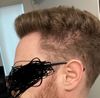
Pirfenidone is suggested to treat fibrosis and baldness by blocking inflammation markers and reducing collagen. It is also available as a gel for scar removal.
The conversation discusses hair loss treatments, with the main focus on using Fluridil and considering switching to Pyrilutamide. Other treatments mentioned include minoxidil, topical finasteride, nizoral shampoo, and saw palmetto supplements, with advice to stick with Fluridil for at least six months before considering alternatives.
A user's transformation from an accountant to a spartan with a full beard, discussing the potential of DUPA and alopecia areata, as well as treatments like vitamins, topicals, and natural treatments for potential regrowth.
The conversation discusses hair loss treatment progress 11 weeks after a crown transplant. The user is using minoxidil every two days and biotin daily, without finasteride.
A user shared progress pictures showing hair improvement after using oral finasteride and topical minoxidil for two and a half months. They are considering a hair transplant but are advised to wait for full results from the treatments.
The conversation is about using Latanoprost 0.01% solution for hair loss and seeking success stories. It mentions that Latanoprost works differently from Minoxidil, Finasteride, and RU58841.
A 34-year-old male is experiencing hair loss on the sides of his head, with inflammation and itchiness, while the top remains thick. He is using topical dutasteride and keto shampoo to address the issue.
The user had a hair transplant with 2,000 grafts in 2017, and after four and a half months of using finasteride, minoxidil, derma rolling, and Boton shampoo, they are seeing hair regrowth including the return of their widow's peak. They are considering switching to RU58841 and a deeper derma rolling treatment.
The user had a hair transplant on the front hairline and started taking Finasteride and Dutasteride. Observers noted progress and improvement in the scalp and crown area.
The conversation discusses the importance of scalp skin barrier health in hair follicle cycling, suggesting treatments like ceramides or niacinamide to support hair growth. It also mentions the use of finasteride for hair loss.
Latanoprost at 0.1% concentration is used to increase hair counts, often mixed with Minoxidil and Finasteride. Users report noticeable results in about 3 months.
The conversation is about experimenting with topical exosomes for hair loss treatment, alongside microneedling, Happy Head's gel-like topical, and Ordinary's hair serum. The user also mentions the availability of treatments like latanoprost and Redensyl.
The conversation is about Jordan Peterson allegedly getting a hair transplant, with various users mocking his way of speaking and debating the ethics of him potentially hiding the procedure. Some users discuss the natural look of the transplant and the implications of getting one at an older age.
The user is happy with their crown after 2 years on finasteride and topical minoxidil but is still losing hair at the hairline. They plan to switch to dutasteride.
A 21-year-old male diagnosed with telogen effluvium and male pattern baldness started oral finasteride, which initially slowed hair loss and slightly thickened hair, but experienced increased shedding after surgery. The doctor recommended iron and vitamin D supplements, and the user is seeking additional advice.
A user humorously shared their appearance three days after a hair transplant, sparking jokes and memes about their head shape. They remained positive, acknowledging the swelling and hoping for improvement.
The conversation discusses treating male pattern baldness in a transgender woman using cyproterone acetate, finasteride, and biotin. The original poster shared their experience for others who might be in a similar situation.
The user had a hair transplant in Turkey and started taking finasteride to maintain hair growth. They are satisfied with the results and plan to continue using finasteride while being cautious about hairstyles to prevent traction alopecia.
A 32-year-old male is considering options to soften a dense transplanted hairline after experiencing accelerated hair loss and intolerance to finasteride and dutasteride, while using minoxidil. He is exploring partial electrolysis or laser treatments to achieve a natural look with a short buzz cut, avoiding a second transplant or scalp micropigmentation.
A young female diagnosed with Lichen planopilaris (LPP) experienced years of misdiagnosis and ineffective treatments, including a hair transplant and other procedures. She is considering litigation due to the misdiagnosis and has learned that LPP is chronic, hair loss can be stopped with ongoing medication, but lost hair cannot regrow.
The conversation is about someone's hair transplant progress after 8 months, questioning if results will improve. They use topical minoxidil and finasteride, a dermapen, vitamins for hair, and aminexil shampoo, and sometimes do scalp massages.
The user had a hair transplant in 2021 with 1600 grafts and is currently using finasteride, minoxidil, biotin, and collagen. They are considering another transplant in Turkey to address a bald spot and improve coverage in the front and middle.
Addressing hair loss by focusing on posture, blood flow, and craniofacial development. Methods include improving posture, cardiovascular activity, scalp massages, healthy diet, meditation, using minoxidil, and addressing craniofacial issues.
A user's hairline recovery after severe hair loss, which was treated with Dutasteride and Minoxidil; other users offered their opinions on the severity of the hair loss.
User decided to get hair transplant and is happy with results. Others compliment the change and suggest hair loss concealers or SMP for further improvement.
User noticed new baby hairs on temples after 1.5 months of minoxidil and 1 month of finasteride. They use a topical combo, derma stamp, rosemary oil, scalp massages, and keto shampoo.
The user experienced significant hair regrowth using finasteride and minoxidil, leading to doubts about proceeding with a planned hair transplant. Many suggest postponing the transplant to save grafts for future needs, as the current results are impressive.
A new technique developed by scientists in Japan to reverse balding using hair follicle cell transplants, and the discussion around the effectiveness of this approach compared to other treatments such as Minoxidil, finasteride, RU58841, Replicel, and Hairclone.
The hair transplant has a straight, unnatural-looking hairline that many find unappealing. The person is not using finasteride or minoxidil, which may affect future hair retention.