Search
for
Sort by
Community Join
210-240 / 1000+ resultscommunity Is regrowth on an androgen receptor blocker possible?
RU and Pyri block androgen receptors to prevent hair loss but may also hinder hair regrowth since they prevent testosterone, which can stimulate hair growth, from binding to these receptors. The user is questioning if this understanding is correct.
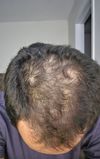
community 35M After 2.5 Years on Finasteride: Should I Consider a Transplant? Need Graft Estimates and Canada Options
A 35-year-old male has been using finasteride for 2.5 years but still finds his hair loss unsatisfactory and is considering a hair transplant. He is seeking advice on the number of grafts needed and affordable options in Canada.
community 2 years of Dutasteride. Not sure if I had proper MPB, or TE following drastic weight loss. But here it is (5 pics from then, and 6 from now).
User experienced hair thinning after losing 100 lbs and started Dutasteride treatment. They faced side effects like fatigue, brain fog, and insomnia but no erectile dysfunction.
community Can’t do finasteride. Does this automatically cross out Pyrilutamide?
Hair loss discussion includes finasteride intolerance and questioning if Pyrilutamide is an alternative. Pyrilutamide not commercially available, but may be tolerable if approved since it's not a 5aR inhibitor.
community 0-6 Months of Finasteride Results (20 M)
community If I can’t tolerate 5ari, should I try Pyrilutamide 1%?
The conversation is about considering pyrilutamide 1% as an alternative treatment for hair loss due to intolerance to 5-alpha reductase inhibitors. Some users suggest it might be effective, while others view it as a temporary solution.
community Meta analysis: Topical or mesotherapy dutasteride is more effective than topical finasteride in the treatment of AGA in men
Topical Dutasteride is more effective than topical Finasteride for treating AGA in men, with fewer side effects. Mesotherapy with Dutasteride, administered every 3 months, shows promising results for hair regrowth and maintenance without daily routines or significant side effects.
community 7.5 months of oral finasteride 1mg(Dec13). Is this regrowth?
community DIY Dutasteride Mesotherapy....THE ULTIMATE EXPERIMENT WITH RESULTS! (UPDATED! MISSION COMPLETE)
The post discusses a DIY Dutasteride Mesotherapy procedure for hair regrowth, supplemented with oral Minoxidil. The user describes the process, including preparation, equipment used, and initial results, expressing excitement for future outcomes.
community I attempted to explain why Saw Palmetto is BS, now I think taking it with Fin isn't a bad idea.
Saw Palmetto may act like a weaker version of finasteride and could be too weak to treat male pattern baldness (MPB) on its own. However, combining Saw Palmetto with low doses of finasteride might increase effectiveness with less risk of prostate shrinkage and sexual side effects.
community Guys anyone on dutasteride mesotherapy? 26M
A 26-year-old is undergoing dutasteride mesotherapy with cuticapil serum and minoxidil tablets for hair loss, expecting results in a few months. The treatment is monthly, costs 4750 INR per session, and has shown no noticeable side effects so far.
community Blood Results - 2 years on Finasteride, 1 year on dutasteride
The user has been using finasteride and dutasteride for hair loss but is experiencing low energy and motivation, possibly due to high prolactin levels. Despite treatment, hairline recession continues, and the user is considering the impact of low DHT levels on overall health and energy.
community Whether to wait for recovery or hop on it again
User experienced side effects from topical finasteride, including penile pain and reduced sexual satisfaction, and is unsure whether to resume or avoid the treatment. They are seeking advice on whether tapering off the drug might help.
community Taking only dutasteride and topical redensyl
A 27-year-old male with Norwood grade 5 hair loss is using dutasteride and a hair serum with Redensyl, Anagain, Procapil, and Capilia Longa, but is hesitant to use oral minoxidil due to past allergic reactions to topical minoxidil. He plans to try dutasteride alone for 3 months before considering adding oral minoxidil.
community How many are hyper responders to Finasteride?
The user experienced severe side effects from finasteride, including hormonal imbalances and cognitive issues, leading to a recommendation to stop its use. They plan to follow up with tests to rule out a pituitary tumor and are considering topical treatments as alternatives.
community Huge shed after one year Dut when I started RU.
After a year on dutasteride and oral minoxidil, the user experienced significant hair regrowth, improving from Norwood 2 to almost Norwood 1. They added RU58841, microneedling, rosemary oil, GHK-Cu, and annurca apple supplement to their regimen and are now noticing hair loss in the temple area.
community Finasteride caused HPS for me. A cautionary tale
User warns about finasteride causing Huge Penis Syndrome (HPS) with 2cm/year growth. Others joke about the side effect and share their experiences.
community Progress update Finasteride 1mg, 6 months update (20M)l
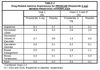
community Topical Dutasteride - Non-Hormonal, Side Effect Free 5ARI?
Topical dutasteride is suggested as a low side-effect treatment for hair loss, with a proposed dose of 0.025% 1ml/day. It is considered better than finasteride due to its even inhibition of DHT isoforms and lower systemic absorption.
community High testosteron on dutasteride
community 0.25 finasteride dosage every other day
community COMPLETE OVERVIEW of the Treatment of androgenetic alopecia in men
Male androgenetic alopecia is commonly treated with topical minoxidil and oral finasteride, both requiring continuous use. Other options include hair restoration surgery, dutasteride, light therapy, and camouflaging agents.
community Currently participating in the Extended Phase III clinical trial of Pyrilutamid in China
A user from China is participating in a clinical trial for Pyrilutamid, a potential hair loss treatment originally developed for prostate cancer. They've experienced no side effects except initial scalp itchiness, and will share results after the year-long trial.
community Goodbye my dudes
A user decided to stop using finasteride due to side effects and chose to shave their head instead. They plan to use the money saved for a hair transplant towards a house downpayment, hoping for future advancements in hair cloning.
community 1 year 5-ar. Blood test results
The user experienced sexual side effects after starting finasteride and later switched to dutasteride, noticing hormonal changes. They are considering using P5P and possibly aromatase inhibitors to manage high prolactin and estradiol levels.
community Treatment of Finasteride Induced Gynecomastia (Male breast tissue growth)
Finasteride can cause gynecomastia, which may be reversible by stopping the drug and using selective estrogen receptor modulators (SERMs) like tamoxifen. Lifestyle changes such as weight loss and avoiding alcohol can also help, but surgery may be needed if the condition persists.
community DUPA/Retrograde might not be DHT based...GET A BIOPSY QUICK or permanent Hair Loss!
DUPA and retrograde alopecia may not be solely DHT-based, and a biopsy is crucial for accurate diagnosis and treatment. Treatments mentioned include dutasteride, oral minoxidil, pioglitazone, clobetasol, calcipotriol, ketoconazole, and doxycycline, depending on the specific condition.
community 6 months on treatment nw7. Male 29 y
A 29-year-old male shares his hair loss treatment progress using dutasteride, minoxidil, dermastamping, and ketoconazole shampoo, while discontinuing RU58841 due to side effects. He is hopeful for hair recovery to consider a hair transplant and discusses potential side effects and experiences with other users.
community Pelage PP405 Phase 2a completed.
Minoxidil, finasteride, and RU58841 are discussed as treatments for hair loss, with excitement around a new drug, PP405, and a reformulated oral minoxidil in trials. Concerns about cost, side effects, and long-term use are also mentioned.