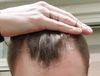
The user is likely at Norwood level 3 with thinning at the crown and temple recession. Treatments like finasteride or minoxidil are suggested to manage hair loss.
2-deoxy-d-ribose hair serum is now available in Australia, potentially aiding hair loss by promoting new blood vessel growth. Users are discussing its potential effectiveness compared to other treatments like Minoxidil, finasteride, and RU58841.
PP405 is a new hair loss treatment that may outperform minoxidil and finasteride by growing thick hair in bald areas within four weeks. Its release is expected around 2028, but concerns about its long-term efficacy and cost remain.
The conversation discusses potential advancements in two hair loss drugs, KX-826 and GT20029, and the interest in whether transitioning from oral finasteride to these drugs would maintain hair growth. One reply expresses skepticism about the compounds' representation.
Shiseido's S-DSC hair regenerative treatment in Japan focuses on improving existing hair by thickening miniaturized follicles, not creating new ones. There is limited patient feedback and long-term data available.
The conversation discusses using a combination of redensyl, capixyl, and procapil (RCP) for hair loss, with some users also mentioning minoxidil and finasteride. Users shared mixed experiences, with some suggesting "RevivHair Max Hair Stimulating Serum" for better results, while others reported no noticeable effects from using products like The Ordinary Multi-Peptide Serum.
The user mixed Pyrilutamide with a KB solution and noticed some undissolved powder, questioning if more shaking or liquid is needed. They use Pyrilutamide from Anagenic.
The conversation is about the interest in testing verteporfin, potentially with a dermaroller, for hair loss treatment. There is frustration over the lack of group buys for promising treatments compared to past efforts with less evidence.
PTD-DBM therapy for hair loss is being developed by Dr. Kang-Yell Choi, with human testing planned in South Korea. Some clinics in the U.S. offer PTD-DBM/valproic acid therapy, but it hasn't completed trials yet.
A user with stage 1 hair loss is inquiring about the release date of GT20029, hoping to use it instead of Minoxidil and finasteride, as they believe it has better results. They want to know if it will be available in the next couple of years.
Pelage Pharmaceuticals' PP405 aims to treat hair loss by reactivating dormant hair follicle stem cells, showing promising results in early trials. The company plans to present their findings at the American Academy of Dermatology Annual Meeting in 2026.
A user improved their hair loss from NW3+ to NW1.5 over three years using a regimen of dutasteride, finasteride, Nizoral, biotin, and collagen. They experienced some side effects and adjusted dosages over time, and noted additional benefits like better skin and muscle gain.
The user asks about the order and compatibility of using topical minoxidil, stemoxydine, The Ordinary natural moisturizing factors + HA for scalp, RU58841, and Nioxin system 2 leave-in treatment. They seek advice on layering these hair loss treatments.
Clascoterone 5% solution shows strong potential for hair growth, offering a new treatment for alopecia with minimal side effects. It blocks androgen receptors locally and may be available by late 2026 or early 2027.
The user tried pyrilutamide for hair loss and noticed reduced scalp itch and improved skin but stopped due to mild heart sensations. They plan to update after consistent use, noting improved sleep when applied at night.
A user is concerned about hair loss in the temple area despite using Minoxidil and finasteride for 10 months and is curious if PP405 can help. Responses indicate uncertainty about PP405's effectiveness, with some optimism about future treatments and AI speeding up drug discovery, but emphasize waiting for clinical trial results.
People are discussing ordering pyrilutamide for hair loss treatment in the US. The treatment is from Kintor's subsidiary company and is available on Amazon.
The user shared progress after two months using a topical formulation containing Dutasteride 0.25%, Minoxidil 5%, Cetirizine 1%, Melatonin 0.5%, Caffeine 2%, and Latanoprost 0.005%. The focus is on hair loss treatment results.
A user shared a 2-year hair regrowth progress using 1mg finasteride daily and topical minoxidil twice daily, with noticeable thickening after 7 months. Other users discussed the commitment required and potential side effects, but the original poster experienced no side effects.
The conversation is about creating a higher concentration of the newly FDA-approved hair loss treatment, Clascoterone (Winlevi), through compounding pharmacies and possibly organizing group purchases. Some users are unfamiliar with Winlevi and are asking for an explanation of the drug.
PP405's effectiveness in increasing hair density is questioned due to a small sample size, despite investment from Google Ventures. Users express skepticism and suggest waiting for more conclusive results.
The conversation discusses skepticism about group buys for hair loss treatments, highlighting issues with unverified chemicals and the risks involved. It suggests stabilizing with dutasteride and minoxidil, and considering a hair transplant instead of experimenting with untested products.
New hair loss treatments like VDPHL01, PP405, Gt20029, and Breezula are anticipated, with VDPHL01 possibly releasing in 2027/28. Current treatments include finasteride, dutasteride, and minoxidil, but new options are eagerly awaited.
The user discusses using Follics FR5, FR10, and FR15, which combine Minoxidil, Adenosine, Procapil, Azelaic acid, and Procyanidin B2, to address hair loss. They have previously used Minoxidil, Finasteride, and Dutasteride with varying success.
Epibiotech will offer off-the-shelf allogeneic hair multiplication treatment in South Korea, using dermal papilla cells from donors to grow hair in balding areas. This method is cheaper and less invasive than traditional hair transplants.
User "Number_Worried00" is using a treatment stack for hair loss, including Minoxidil, Finasteride, Dutasteride, Estradiol, Cetirizine, and Pyrilutamide. Another user suggests that if the cause is vitamin deficiency or inflammation, the stack may not be effective.
A user in the UAE is facing customs issues with ordering Fluridil (Eucapil) and is considering ordering smaller quantities or switching to Pyrilutamide. They are also using finasteride daily to maintain hair and are unsure of Fluridil's effectiveness.