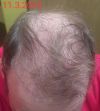
A woman who is considering giving up on her hair loss journey after trying minoxidil and spironolactone, but other posters offer words of encouragement and suggest the use of wigs.
The user experienced noticeable hair regrowth, especially at the hairline, after using Minoxidil, microneedling, vitamins, and specific shampoos for 2-3 months. They are considering adding finasteride but are hesitant due to potential side effects.
A person shared their hair regrowth journey using HIMS topical treatments with finasteride, minoxidil, hormone replacement therapy (HRT), and microneedling. They also discussed their transition as a transgender woman and the positive impact of HRT on hair recovery.
A 20-year-old male experiencing hair loss is using topical finasteride and recently added dutasteride but is still losing hair and considering giving up. Suggestions include being patient, giving dutasteride more time, trying oral finasteride, adding minoxidil, and considering other treatments like low-level laser therapy.
The conversation discusses switching from oral finasteride to topical RU58841 for hair loss, with concerns about hormonal effects and libido. Some users suggest alternatives like dutasteride, while others share mixed experiences with RU58841's effectiveness.
A user claims a product can treat alopecia, but others are skeptical, calling it a scam due to lack of evidence and transparency. The product is said to inhibit Type II 5-αr by 22.9%, but is considered weaker than existing DHT blockers.
A 21-year-old male has been experiencing persistent hair loss despite using treatments like dutasteride, finasteride, RU58841, minoxidil, and ketoconazole. Suggestions include checking for hormonal issues, nutritional deficiencies, or allergies, and consulting a doctor for professional advice.
PP405 is discussed as a potential hair loss treatment, with doubts about its effectiveness and availability. Users mention using finasteride and minoxidil, and express concerns about PP405's cost and market release.
DHT may inhibit hair growth by affecting mitochondrial function, leading to hair follicle miniaturization. Treatments like minoxidil and PP405 may promote hair growth by altering metabolic pathways, potentially counteracting DHT's effects.
Finasteride use resulted in increased hair growth but reduced libido for some, leading users to consider topical versions to lessen side effects. Opinions varied on the trade-off between hair benefits and sexual side effects.
Hair regrowth using oral finasteride and topical minoxidil, with significant improvement after three months. Some users experienced side effects like bloating and dark circles, and discussed alternative treatments like microneedling and natural oils.
The user replaced finasteride with saw palmetto due to availability issues and experienced side effects, leading to adjustments in their regimen. They use saw palmetto, minoxidil, Nizoral, and a dermaroller, reporting reduced side effects and some benefits, with hair fall ranging from 5 to 20 hairs daily.
The user has been using finasteride for hair loss since January 2023, initially seeing improvement but now experiencing increased thinning. They are considering other factors like thyroid and insulin resistance and are seeking advice from long-term finasteride users, while some suggest trying dutasteride, minoxidil, or consulting a dermatologist for further evaluation.
Some users experience worsening hair loss with dutasteride, while others improve after initial shedding. Many switch back to finasteride due to better results or fewer side effects, often using minoxidil and topical treatments.
PP405 is a promising molecule that may reactivate dormant hair follicles, potentially offering a new treatment for hair loss. It is in phase 2 trials, with possible availability between 2027 and 2030.
Many would trade beard growth for a full head of hair, using treatments like minoxidil and finasteride. Some prefer beards or have experienced side effects, leading to mixed opinions.
A 26-year-old male experienced hair regrowth using finasteride, minoxidil foam, and micro-needling over 2-3 months, with significant improvement in the crown, sides, and temples, but less in the hairline. He noted side effects like fluid retention in the ankles and weight gain but no change in libido.
The user experienced hair regrowth and thicker hair after using 5% topical minoxidil, 0.025% topical finasteride, and dermarolling weekly. Despite initial doubts and side effects from oral finasteride, the user received positive feedback on their progress.
A humorous discussion on hair loss, suggesting girlfriend ASMR might counteract finasteride's effects, with a proposed experiment involving finasteride, ASMR, and control groups. Participants joke about evolutionary theories, ASMR, and the effects of DHT on balding.
The user reported hair thickening and new growth after using minoxidil and microneedling for over three months. They are considering finasteride but have not started it yet.
Genetic factors, enzyme activity, and DHT sensitivity affect individual responses to hair loss treatments like finasteride, minoxidil, and dutasteride. Starting treatments early can slow hair loss, but results vary among individuals.
OP used finasteride 1mg and 2.5mg oral minoxidil since late April, showing hair improvement despite some initial libido issues. Users discussed side effects, costs, and alternative treatments, with OP noting increased facial hair but no significant body hair growth.
Users discussed their experiences with oral minoxidil and dutasteride for hair loss. Most reported positive results, including hair regrowth and improved hair quality, with minimal side effects.
Heavy nicotine use can lead to hair thinning and loss, but quitting can reverse these effects. The user noticed significant hair regrowth after quitting vaping.
The user believes that combining alfatrodial and fluridil with minoxidil effectively maintains hair, based on their 7-year experience. They suggest this combination for those who can't tolerate finasteride.
The user is using a combination of hair loss treatments including finasteride, stemoxydine, oral minoxidil, RU58841, dermastamping, ketoconazole shampoo, collagen, Viviscal, and biotin, and has improved their diet. Despite these efforts, they are still experiencing hair shedding and scalp itchiness, and are considering increasing their minoxidil dosage or starting dutasteride.
A user shared their 9-month post-hair transplant results with 4600 grafts, using only Nourkin hair vitamins, Vitamin D, and B12, and expressed satisfaction. The replies debated the necessity of medications like finasteride and minoxidil for maintaining hair health.
A user has been using minoxidil for hair loss and has seen positive results, but is seeking additional treatments to enhance its effects. One suggestion given is to use finasteride alongside minoxidil.
The conclusion of the conversation is that the user, Amanp2002, has been using a combination of topical finasteride and minoxidil for 5 months to treat hair loss.
The user "Dismal_Library_2264" shared their 11-month progress on a hair loss treatment regimen. They used dutasteride, topical minoxidil, dermarolling, a hair serum, and specific shampoos. They experienced some side effects but were overall satisfied with the results.