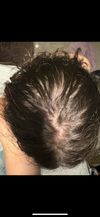
The conversation discusses a product called Rexagain Mixprocapil, which includes topical finasteride. Users express skepticism about the product's legitimacy and caution about its use.
The conversation discusses Melatonin's potential benefits for AGA and a product called "Asatex" by ASATONA AG. The company was uncooperative when contacted for purchase inquiries.
New hair loss treatments PP405 and VDPHL01 are discussed with skepticism and hope, alongside existing treatments like minoxidil and finasteride. Users express frustration over limited progress since the 1980s but remain cautiously optimistic.
The user has been using MinoxidilMax Latanoprost 0.01% and noticed an increase in hair density after years of stability on finasteride and minoxidil. They are seeking help to find a higher dosage of Latanoprost or a reliable source to purchase the powder to make their own, without a prescription or high cost.
Eucapil is discussed as a potential hair loss treatment with some believing it to be effective, though its efficacy compared to finasteride is debated. It is considered an anti-androgen treatment, often used alongside other treatments like minoxidil and finasteride, but lacks independent studies to fully support its effectiveness.
The conversation is about using liquid melatonin, typically for sleep, as a topical treatment for hair growth on the scalp. No specific treatments were mentioned.
PP405 shows promise as a hair loss treatment, with 31% experiencing increased hair density in a short trial. It may complement treatments like finasteride and minoxidil, but long-term effectiveness and safety need confirmation.
A 25-year-old is using a nightly routine of topical finasteride 0.3% and minoxidil 6%, along with a derma roller and Nizoral shampoo, to address crown hair loss. The user reports no side effects and noticeable improvement over 2.5 months.
PP405 is discussed as a potential hair loss treatment, but its effectiveness and safety are uncertain. Some users express skepticism, while others are hopeful, comparing it to existing treatments like Minoxidil and Finasteride.
The conversation discusses a topical finasteride therapy with hydrocortisone butyrate, estrone base, and breviline. A user suggests oral finasteride as a superior option.
The conversation is about using liposomal finasteride for hair loss treatment, highlighting its cost-effectiveness and ease of preparation. It suggests using lecithin and crushed finasteride pills to make the solution, which has shown to be significantly more effective than other topical formulations.
A dermatologist prescribed a topical hair loss treatment containing finasteride, biotin, melatonin, and caffeine without alcohol. The user is skeptical about its effectiveness.
A quercetin-encapsulated and polydopamine-integrated nanosystem (PDA@QLipo) shows promise for treating androgenetic alopecia by reshaping the perifollicular microenvironment, outperforming minoxidil in hair regeneration. The nanosystem promotes cell proliferation, hair follicle renewal, and recovery by scavenging reactive oxygen species and enhancing neovascularity.
The user experienced significant hairline improvement after 2 months using 1 mg Finasteride and topical Minoxidil, with only initial shedding as a side effect. The progress is notable, with the user returning from near Norwood 2 to Norwood 1, and they use Rogaine for topical application.
The conversation is about disappointment with pyrilutamide's performance as a hair loss treatment, with some users expressing interest in other treatments like Verteporfin, GT20029, and RU58841, while others suggest sticking with established treatments like finasteride or dutasteride.
The user is considering using topical finasteride for thinning hair around the middle part, vertex, and crown, and is unsure if the whole scalp is thinning. Another user suggests oral finasteride is more effective than topical, and recommends consulting a dermatologist for proper treatment.
The user shared their 9-month progress using topical finasteride and minoxidil, a Capillus laser cap, and a dermastamp for hair loss. They noted improvements and emphasized the importance of consistency for better results.
The conversation is about the effectiveness of a hair loss treatment product containing 0.01% Latanoprost, with the user considering trying it as a vehicle for RU58841. The user questions whether the dosage is too low to be effective.
A user's progress pictures showing visible hair growth results from taking Finast and Minoxidil, as well as using microneedling, Nizoral, and a multi peptide serum for hair density. The conversation also discussed how DHT is the cause of diffuse thinning.
The conversation is about a female experiencing hair loss and seeking advice on why it's difficult to regrow hair. Specific treatments like Minoxidil, finasteride, or RU58841 are not mentioned.
PP405 is a promising new hair loss treatment that may reactivate dormant hair follicles without side effects. It could surpass traditional treatments like minoxidil and finasteride if successful in further trials.
The conversation is about hair loss treatments, specifically setipiprant, which the user is considering after experiencing side effects from finasteride and dutasteride. Another user mentions that setipiprant was ineffective in clinical trials.
The conversation discusses using NAC and quercetin as supplements for hair loss, with some users also mentioning finasteride. NAC is highlighted for its potential benefits, but concerns about its safety and absorption are also raised.
Dermal incision with verteporfin is being explored as a potential hair loss treatment by dermatologist Melissa Toyos, with promising before-and-after photos shared on social media. The conversation discusses its potential effectiveness compared to other treatments like Minoxidil, Finasteride, and RU58841.
A user plans to order Pyrilutamide for hair loss after losing ground on finasteride. Another user advises against buying from Hairliciously, suggesting Amazon instead.
The conversation discusses the potential of Verteporfin for hair regeneration and improving hair transplant surgery to leave no scars. Specific treatments mentioned include Minoxidil, Finasteride, and RU58841.
Men with hair loss might have lichen planopilaris (LPP), which can mimic androgenetic alopecia, leading to misdiagnosis and ineffective treatment with finasteride or dutasteride. Proper diagnosis, including biopsies, is crucial to distinguish between androgenetic alopecia and conditions like LPP.
Users discuss using pyrilutamide for hair loss, seeking alternatives to 5AR inhibitors. They mention using minoxidil, ketoconazole shampoo, and RU58841.
Hair loss treatments, including PP405, minoxidil, finasteride, and RU58841, with hopes for future solutions. Participants discuss the emotional impact of hair loss and consider alternatives like hair transplants or acceptance.
A user is making a topical finasteride solution with 0.01% finasteride, 50% ethanol, 15% glycerine, and 35% water, but it doesn't adhere well to the scalp. They seek advice on improving the mixture's consistency without taking oral pills.