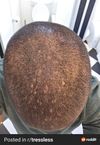
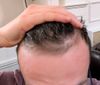
Hair loss discussion includes treatments like Minoxidil, Finasteride, and RU58841. Users share experiences and support, mentioning that many people face hairthinning.
A 30-year-old with a family history of receding hairlines is considering starting finasteride due to gradual hairline recession. They are seeking advice on whether to begin treatment or if they are worrying unnecessarily.
The conversation revolves around how balding has made the original poster and others hyper-aware of other men's hairlines, often judging the severity of their hair loss and whether they've had treatments like hair transplants, minoxidil, or finasteride. Some participants express a need for therapy due to their obsession, while others joke about their newfound "expertise" in assessing hair loss.
A 16-year-old is experiencing thinninghair at the front and shedding during showers. He is concerned about potential early baldness and is considering seeing a doctor and taking multivitamins.
A person noticed increased hairthinning after changing their workout routine from cycling to weightlifting, which also coincided with a rise in testosterone levels. They are considering stopping intense workouts, switching to yoga, cutting out caffeine, and re-evaluating after a few months to see if it improves their hair condition.
A user shared their experience with Finasteride for hair loss, noting improvement but still some thinning. They plan to get a hair transplant to address remaining thin spots and strengthen their hairline.
The user has been experiencing hair loss since having COVID and has low vitamin D levels; they are seeing some improvement in their crown and hairline after starting vitamin D supplements. Commenters suggest the hair loss pattern is consistent with male pattern baldness (MPD) and varies by individual.
The user is experiencing thinning at the temporal points and has been using minoxidil, dermarolling, and a mixture of natural oils to improve hair growth. They are considering finasteride as a potential treatment based on shared information.
The user has been using finasteride and minoxidil for 8 years and recently started dutasteride, but still experiences thin, see-through hair. Suggestions include adding probiotics, changing hairstyle, checking hormones, supplementing vitamin D3, trying laser therapy, and improving gut health.
A 17-year-old is experiencing diffuse thinning, dandruff, body hair shedding, and other symptoms, possibly linked to seborrheic dermatitis or telogen effluvium. They are using ketoconazole shampoo and considering blood tests to check for thyroid issues or deficiencies.
A user discusses their experience with hair loss, noting they don't notice shedding despite using finasteride, minoxidil, and tretinoin. Others share similar experiences, suggesting that shedding varies and may not occur for everyone using these treatments.
A user is experiencing rapid hair loss and has been diagnosed with telogen effluvium by multiple dermatologists, but doubts the diagnosis due to the severity and speed of the hair loss. They are considering various treatments like spironolactone, estradiol, and possibly finasteride, while also exploring the possibility of hormonal imbalances or autoimmune issues.
The user noticed small circular hairless spots after a buzz cut and has been using finasteride, dutasteride, and oral minoxidil for hair loss. They are experiencing continuous shedding and thinning, and it is suggested they consult a dermatologist for a scalp examination and possible biopsy to determine if it's alopecia areata or androgenetic alopecia.
The conversation discusses hair loss and the potential impact of diet and lifestyle changes, particularly increased protein intake, on hair health. The original poster shared their experience of improved hair appearance after weight loss and dietary changes, despite skepticism from others about lighting differences in photos and the effectiveness of diet alone without finasteride or minoxidil.
The conversation is about a person struggling with inconsistent hair styling due to thinninghair, despite being on hair loss medications. They find that ketoconazole 2% shampoo helps, but conditioning makes their hair look worse; others suggest staying consistent with treatment and using hair fibers for events.
An 18-year-old is concerned about hairthinning and is considering starting Minoxidil and finasteride. They are seeking advice on whether to begin these treatments.
A young woman with genetically thin hair is stressed and embarrassed, seeking advice. Suggestions include seeing a dermatologist, using spironolactone, and minoxidil for hair regrowth.
A 34-year-old female is experiencing hairthinning after stopping birth control pills and a damaging hair treatment. She has normal bloodwork and a normal trichogram but is considering trying MSM or Saw Palmetto for her hair loss.
A 28-year-old male experiencing hairthinning is considering minoxidil and finasteride. Minoxidil helps regrow hair, while finasteride prevents further loss; both are usually lifelong treatments.
The user is concerned about hair loss, particularly at the crown, and is using topical finasteride and ketoconazole shampoo but avoids minoxidil due to side effects. Opinions vary, with some suggesting the hair looks worse, while others see no change or slight improvement; additional treatments like oral finasteride and micro-needling are suggested.
The user started using finasteride, minoxidil, and biotin for male pattern baldness (MPB) and is experiencing rapid thinning. They are questioning if low blood flow to the head could be contributing to their hair loss.
The insecurity people feel when going to the barber for a haircut due to visible hair loss. Replies include encouragement, advice such as looking for more understanding barbers and female hairdressers, as well as suggestions of trying at-home haircuts or using treatments like minoxidil, finasteride, and RU58841.
A 20-year-old male with a high hairline seeks advice on potential hair loss, noting a family history that typically doesn't progress beyond Norwood 2. A user suggests it appears to be a mature hairline rather than hair loss and advises monitoring for changes.
A 27-year-old is experiencing hairthinning and receding, currently using finasteride and planning to start minoxidil. They seek advice on hairline treatment options, including styling, PRP, peptides, and micro-needling.
The user has been using finasteride for over a year and noticed short, prickly hairs on their scalp that don't grow like the rest of their hair. Despite losing about 40 short hairs when washing, their overall hair density hasn't decreased.
A 21-year-old male with a thyroid condition noticed his hairthinning uniformly without a receding hairline. He is considering using a 5ARI to prevent further baldness if he starts TRT.
The user is experiencing diffuse hairthinning after 8 months on topical finasteride and 11 months on minoxidil, and is considering switching to oral finasteride due to lack of effectiveness. They also mention scalp itchiness and use of a 1% ketoconazole shampoo.
The user is experiencing hair loss and is concerned about a small bald patch despite having thick hair and a full crown. They are considering starting minoxidil and finasteride to prevent further hair loss.