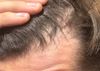
The user is pleased with their hair transplant results but is concerned about the vertex area. They use Minoxidil and finasteride daily and had the procedure at a clinic in Athens.
The conversation discusses the use of AlphaInfuse, a micro-infusion system with Panax ginseng and Eclipta prostrata extracts, for hair growth and its comparison to Minoxidil. The original poster seeks personal experiences and evidence of its effectiveness.
The post and conversation are about a user's progress with microneedling and minoxidil for hair loss. The user is happy with the progress and plans to continue with the treatment, without using finasteride.
User reports using a derma roller daily, seeing new hair growth along the hairline without using Minoxidil or finasteride. They seek advice on further promoting hair growth with their current routine.
Male pattern baldness (MPB) may be an early warning sign for type 2 diabetes due to its association with insulin resistance. Treatments discussed include testosterone therapy and finasteride, which affects hormone levels related to hair loss and insulin sensitivity.
User experienced hair loss since 16, used Fin, Minox, and Nizoral with success but stopped due to side effects. Now using Pur D'or shampoo, Rogaine foam, scalp massages, volumizing spray, and dermarolling for hair maintenance.
A 24-year-old is experiencing hair loss and is considering microneedling due to side effects from finasteride and saw palmetto. They are contemplating combining microneedling with a 3-in-1 treatment to manage hair loss until age 30.
The user shared progress pictures after using oral minoxidil 2.5mg, oral finasteride 0.25mg three times a week, and weekly 1.5mm microneedling for two months. They reported positive results in hair growth.
The user successfully managed hair regrowth by using a combination of finasteride, dutasteride, minoxidil, and specific shampoos to treat seborrheic dermatitis. They emphasize the importance of maintaining a healthy scalp and are considering food intolerance tests to further address inflammation.
The conversation discusses potential causes of pigmentation around hair follicles, suggesting sebum buildup, autoimmune conditions, or dermatitis. Treatments mentioned include finasteride, dutasteride, and an anti-inflammatory diet, with a recommendation to consult a doctor for a proper diagnosis.
The conversation discusses the potential benefits and risks of using Methionine and Glycine for hair loss, with concerns about cancer risk if not balanced properly. The user seeks opinions on these amino acids for hair health and overall benefits.
The conversation discusses the steps for microneedling, specifically differentiating between medical needling (0.5-1.5mm) and cosmetic needling (0.3mm). It emphasizes the importance of cleaning and disinfecting before microneedling, regardless of needle length.
The user is generally happy with their hair transplant results but has concerns about graft density and placement, particularly on the left temple and hairline. They are using finasteride and minoxidil inconsistently, plan to add Priorin, and are considering microneedling and PRP sessions for future care.
User shared progress of two years using 1mg daily Finasteride and 2x weekly microneedling for hair loss. Many users praised the results and discussed their own experiences with microneedling and Finasteride.
A user trying various treatments for hair loss, such as minoxidil, stemoyxidine, alfatradiol, and microneedling, with plans to add tretinoine and finasteride.
A new human trial using an FDA-approved treatment for wound healing called Verteporfin, which may potentially be able to reverse scarring and regrow hair in that area. The trial is only lasting one month so far.
Maneup GHK-Cu peptide was used for hair loss, resulting in some hair growth in the receded hairline, but the new hairs were dry and split easily. Users discussed their experiences with this treatment.
Stress can lead to hair loss by affecting hair-follicle stem cells, and this loss is harder to recover from if one has male pattern baldness (MPB). Treatments like finasteride and minoxidil are used to address hair loss, but stress-related hair loss differs from androgenic alopecia.
Verteporfin may improve hair transplant outcomes and reduce scarring, potentially allowing patients to avoid finasteride. Dr. Barghouthi seeks collaborations, volunteers, and financial support for research on verteporfin.org.
The conversation discusses using topical dutasteride with a dermapen for hair loss treatment. The user is deciding between liposomal and mesosomal formulations for this purpose.
GentleIris stopped hormone-induced hair loss with diet changes but couldn't regrow lost hair. A reply suggested microneedling instead of Platelet-Rich Plasma Therapy (PRP) for hair regrowth.
A human trial involving verteporfin for hair regeneration, with the results showing some regrowth of 1-2 hairs in an area where a follicular unit was extracted. The conversation also suggested that future studies should involve higher doses and more frequent injections.
Peptides like GHK-Cu, BPC-157, and TB-500 have significantly reduced hair loss, with GHK-Cu being particularly effective. The discussion also covers the high cost of these peptides and explores more affordable purchasing options.
The conversation is about a user's 3-month hair regrowth progress using finasteride, minoxidil, and a 0.5mm dermaroller, with recent addition of caffeine shampoo. Users are responding positively and inquiring about application methods.
A user's progress with using Minoxidil, finasteride, and microneedling to treat hair loss; another user mentioned a Japanese study that found better results for hairy individuals on finasteride.
The user applies a topical solution containing minoxidil, finasteride, dutasteride, retinoic acid, and hydrocortisone to address scalp inflammation and is considering adding cetirizine to the mix. They are calculating the correct amount of cetirizine to add to their formula and have paused this approach to retry oral minoxidil.
The conversation discusses experimenting with microneedling for hair loss, specifically addressing non-responsiveness and the use of topical treatments like dutasteride, minoxidil, and tretinoin. The user seeks advice on effective frequency and depth combinations for better results.
The conversation discusses experiences with PRP and mesotherapy for hair loss. One user mentions both treatments were costly without significant results.