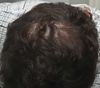
User made progress with topical Finasteride/Minoxidil and topical Dutasteride for hair loss. Microneedling at 1.5mm daily was also mentioned as part of the treatment.
Topical finasteride that doesn't penetrate the skin could potentially treat hair loss without side effects. Current challenges include finding a formulation that remains on the scalp without increasing blood levels.
Liposomal carriers for topical finasteride offer better targeting, reduced side effects, and less irritation compared to alcohol-based solutions, but availability and cost may limit their use. Minoxidil can dissolve in liposomal carriers, enhancing delivery and stability.
The conversation is about a user's four-month progress using finasteride, minoxidil, and weekly dermastamping for hair loss. People occasionally notice improvements in the user's hair.
A 21-year-old male is using oral finasteride, topical minoxidil, and microneedling to improve hair density and regrowth but remains dissatisfied with the results. He is considering whether continuing finasteride for two years might help.
Microneedling for hair loss is discussed, with users mentioning using 0.6mm needles twice a week. Treatments like Minoxidil, finasteride, and RU58841 are implied but not directly mentioned.
A user's 3-month progress with a combination of finasteride, minoxidil and dermarolling for hair loss; other users shared their experiences and advice.
The conversation discusses using very low dose topical finasteride to achieve specific serum DHT reduction percentages. It concludes that finasteride dosage increases linearly between 5-30% DHT reduction but requires exponential increases for reductions up to 70%.
A 30-year-old is experiencing positive hair growth results using finasteride daily, minoxidil twice daily, and dermastamping/dermarolling biweekly from July 2025 to January 2026. Friends and family have noticed significant improvement.
Combining tretinoin with minoxidil may improve absorption by exfoliating the scalp, but results vary. Users suggest starting with low frequency to avoid irritation, and some recommend additional treatments like finasteride or microneedling.
A 25-year-old male is experiencing hair thinning at the hairline and vertex, considering using a dermapen or dermastamp, and seeking advice on whether to continue with natural remedies like onion juice and rosemary oil or start using minoxidil or finasteride. He is also looking for recommendations on microneedling devices.
A 29-year-old man shows 3 months of hair regrowth using minoxidil 5%, oral dutasteride 0.5mg every other day, and occasional microneedling after overcoming fears about finasteride side effects. He is optimistic about further improvement.
A user started using homemade topical finasteride with PG-free liquid minoxidil for hair loss. They noticed the solution became milky with floaters and asked if it needed filtering.
The user is using 0.1% dutasteride, 1% minoxidil with 2% procapil and 0.005% caffeine in the morning, and 1% minoxidil with 2% procapil and 0.01% tretinoin at night. They are concerned about the solution vehicle's effectiveness in preventing systemic absorption and ensuring the products stay around the hair follicles.
The conversation discusses hair transplants, including the use of techniques like FUE and the importance of a good donor area to avoid visible bald patches. It also touches on alternative treatments like Minoxidil, Finasteride, and Pyrolutimide, and debates the idea of embracing baldness versus seeking treatments.
The user is exploring topical Saw Palmetto as a milder alternative to microdosing topical Finasteride for hair loss, aiming to minimize systemic DHT impact. They plan to experiment with this herbal remedy for a year to assess its effectiveness on their mild androgenetic alopecia without significant side effects.
The user shared 60-day progress using 5% topical minoxidil, 1mg finasteride, and recently started microneedling with a derma stamp. Users commented on the difficulty of seeing changes due to hair length and even thinning.
A user reported noticeable hair regrowth after using 5% topical minoxidil daily and microneedling weekly since mid-January. They previously used dutasteride for four years with minimal effect.
The user experienced significant hair growth and density improvement over nine months using 1 mg finasteride daily, initially 5% topical minoxidil, then transitioning to 2.5 mg and later 5 mg oral minoxidil, along with weekly microneedling. Noticeable changes were observed after three months, with the most significant progress by month nine.
A 25-year-old man has been using topical minoxidil 5%, oral finasteride 1mg, and microneedling for hair loss treatment for 14, 9, and 8 weeks respectively. He experienced watery semen after starting finasteride, but it normalized after a few days with no other side effects.
The user applied topical finasteride 0.3% and minoxidil 6% once daily, used keto shampoo weekly, and derma stamped weekly or biweekly. They noticed hair improvement, possibly due to regrowth or letting it grow longer.
Hair loss and potential treatments, primarily focusing on Finasteride and Minoxidil. Other solutions discussed include PRP, dermarolling, LLP, and scalp tension relief.
A 30-year-old with diffuse thinning and a balding crown is using a treatment regimen of a 2-in-1 pill containing finasteride, minoxidil, and biotin, along with various supplements. After two weeks, no side effects have been experienced, and updates with pictures will be posted monthly.
The user switched from topical to oral finasteride and minoxidil, noticing thicker and longer baby hairs, suggesting potential regrowth at the temples. Other users agree it looks like a sign of success.
The user has been using oral finasteride and minoxidil, along with biotin, vitamin D3, collagen, and micro-needling, to address hair loss over six months. They experienced some shedding initially but have seen progress, with improved hair quality and reduced bald spots.
A user's 6-month journey to treat their hair loss using 1mg finasteride twice daily, topical minoxidil, vitamin D3, keto diet, and microneedling. They experienced shedding at the end of month 3 but have seen progress in recent months despite this.
A 38-year-old man using minoxidil, tretinoin, and microneedling for hair loss is considering adding finasteride to his regimen. He is concerned about potential effects on beard growth but seeks advice on whether to add finasteride now or wait.
A 22-year-old experiencing severe hair loss is considering using Minoxidil and finasteride despite initial reluctance, and is also using vitamins and micro-needling. They are contemplating a hair transplant but are advised to wait until at least age 30.
A trans woman experiencing male pattern baldness has been using Minoxidil and microneedling for 3.5 months, noticing visible hair regrowth. Despite initial skepticism, progress is evident, though a hair transplant might be needed for fuller coverage.