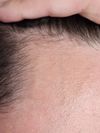
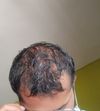
Finasteride helped OP recover their hairline, and they did not use minoxidil. OP experienced significant hair regrowth with finasteride, similar to their father's experience.
A serum with oleic and palmitoleic acids shows promise for hair regrowth in mice, but its effectiveness in humans is unproven. Minoxidil and finasteride remain the recommended treatments.
The conversation discusses hair loss treatments, specifically using topical finasteride and minoxidil combined with microneedling, along with supplements like collagen, vitamin C/D, and saw palmetto. The user also mentions using a DHT-blocking shampoo and experimenting with cold showers and contrast therapy for hair health.
User shared 8-month hair loss treatment progress using topical fin/min, topical dut, mk677, RU, and microneedling. They experienced watery semen as a side effect but saw significant improvement in hair growth.
A 26-year-old male has been using oral finasteride for 9 months and minoxidil for 2-3 years to control hair loss but still experiences hairline recession and miniaturization. Despite additional PRP and GFC sessions, he sees no improvement and seeks advice, with suggestions to maintain consistency and consider microneedling.
The user is experiencing potential hair regrowth after 4 months of using a minoxidil and finasteride topical spray combined with microneedling 1-2 times a week. They notice some scalp redness and irritation but are unsure if the increased hair density is due to regrowth or longer hair.
The user has been using a combination of 0.3% topical finasteride, minoxidil, ketoconazole, and microneedling once a week for two months with positive results and no side effects. They apply the treatment daily using a spray and have short hair, which makes application easier.
The user has been using Finasteride and Minoxidil for 5.5 months but continues to experience significant hair shedding. They are concerned about the ongoing shedding despite a brief period of reduced hair loss after switching Finasteride brands.
A 32-year-old man has been treating his hair loss with daily oral finasteride (1.25g), twice-daily topical minoxidil, weekly ketoconazole 2% shampoo, and weekly microneedling for almost three months, with no side effects from finasteride. He started with a Hamilton Norwood scale rating of 5 and has seen improvement without experiencing pain by using a 0.8mm needle length for microneedling.
The user shared progress pictures over four months using topical finasteride (0.1%) and minoxidil, initially at 7% and later increased to 10%, with retinoic acid. Another user suggested trying a hair system or shaving, doubting the effectiveness of the treatments.
A user shared their 4-year progress using topical minoxidil and 1mg finasteride daily for hair regrowth, noting plans to reduce finasteride due to minor side effects. They emphasized consistency as key to success, with noticeable improvements in hair density and color.
The user is experiencing reduced hair shedding and increased hair density after using finasteride, minoxidil, derma rolling, granactive retinoid, and Nizoral, while also taking testosterone and aromatase inhibitors. They question if they are a hyper responder to the treatments, despite mixed feedback from others about visible progress.
A trans woman experiencing male pattern baldness has been using Minoxidil and microneedling for 3.5 months, noticing visible hair regrowth. Despite initial skepticism, progress is evident, though a hair transplant might be needed for fuller coverage.
P-1075 is a more potent hair growth agent than Minoxidil, but it poses significant heart risks, making it unsafe for use. Despite promising results in macaques, concerns about its cardiotoxicity in rats have halted its development.
User deciding between oral and topical minoxidil, concerned about hypertrichosis and myocarditis interaction. They're using topical finasteride, LLLT, natural oils, dermastamping, and scalp massage, and considering adding oral minoxidil.
The conversation is about a user sharing their positive progress with hair regrowth using oral minoxidil, biotin, finasteride, and other supplements. The user also mentions using a HIMS oral fin/min combo and receives advice and encouragement from others.
A user discusses their experience with hair loss and treatments, including minoxidil, micro needling, rosemary oil, dietary supplements, and topical finasteride (Morr-F). They emphasize the impact of lifestyle on hair health and express hope for improvement with the new treatment.
A 19-year-old is using keto shampoo, topical Minoxidil 5% for 3 months, and topical finasteride 0.1% for 1.5 months to address hair loss. They are noticing baby hairs and shedding, questioning if the hairs will thicken and if more time is needed for finasteride to work.
User shared 4.5-month hair loss treatment results using Fin, Minoxidil, and microneedling. Others discussed postponing hair transplant and adjusting microneedling depth.
The individual had a hair transplant in Turkey with 4052 grafts, resulting in significant hair growth and increased confidence. They use finasteride, rosemary oil, and vitamins, and are pleased with the natural-looking results, encouraging others to consider similar treatments.
The user reported hair regrowth after using 1 mg finasteride daily for 4 months, foam minoxidil twice daily for 6 months, and 5000 mcg biotin daily for 4 months. Commenters are impressed with the results and some are considering starting finasteride after seeing the progress.
The user had a hair transplant with 2,000 grafts in 2017, and after four and a half months of using finasteride, minoxidil, derma rolling, and Boton shampoo, they are seeing hair regrowth including the return of their widow's peak. They are considering switching to RU58841 and a deeper derma rolling treatment.
A 20-year-old has seen no improvement in hair loss after 8 months using finasteride, minoxidil, topical solutions, and microneedling. They express frustration and a loss of confidence due to the lack of results.
The conclusion of the conversation is that the user has made progress in their hair loss with the use of oral finasteride and topical minoxidil. The progress was most significant in the first year, and the user's temples are slowly improving.
The user is using a regimen of topical finasteride (.025% concentration), minoxidil, Nutrafol, and vitamin D to address hair loss. They experienced initial side effects but reported improvement over 11 weeks and are considering increasing the dosage.
A 33-year-old man has seen no improvement in hair loss after using topical Minoxidil and Finasteride for 5-6 months, despite also derma rolling and using keto shampoo. He experienced severe side effects from oral Finasteride and is seeking advice on alternative treatments.
The user has been treating hair loss with 1mg oral finasteride daily, 1mg topical minoxidil twice daily, and microneedling twice a week. They report improved hair quality and density but are still experiencing shedding.
Minoxidil can be effectively delivered through nanoemulsions containing eucalyptol or oleic acid, enhancing its diffusivity and targeting hair follicles. This contradicts the advice against mixing minoxidil with oils in topical formulations.
The clinic diagnosed the user with NW3 and AGA, noting thinning hair despite using finasteride for 3 years, and suggested PRP and Mesotherapy before considering a transplant. The user questions the necessity of these treatments without confirming retrograde alopecia and its treatability.
A 35-year-old male uses topical minoxidil, spironolactone, and microneedling for hair loss, with spironolactone prescribed based on a DNA test indicating poor response to finasteride and dutasteride. Despite concerns about the test's validity and spironolactone's side effects, he reports stable or improved hair condition and no low testosterone symptoms.