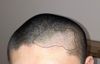
Body hair transplants may look better if kept very short. People with limited donor regions or waiting for Verteporfin or FAK Inhibitors could consider this option.
User shared 6-month progress using topical finasteride, biotin, and occasional dermarolling, reporting no side effects except possible depression. Replies praised the results and shared personal experiences with finasteride.
Topical RU58841 is discussed for hair loss treatment, with a focus on brands available in Europe that have low systemic absorption. Users suggest mixing your own solution to control vehicle and dosage, and mention different brands like Actifolic and Biolabshop.
The user has been experiencing hair loss since having COVID and has low vitamin D levels; they are seeing some improvement in their crown and hairline after starting vitamin D supplements. Commenters suggest the hair loss pattern is consistent with male pattern baldness (MPD) and varies by individual.
Topical finasteride is considered a safer option for hair regrowth with fewer systemic side effects compared to oral finasteride. Some users report similar efficacy and side effects between topical and oral treatments, while others prefer topical due to reduced systemic exposure.
The post discusses a hair loss treatment regimen including oral finasteride, topical minoxidil, a rejuvenating scalp serum with caffeine, rosemary, and ginger, topical ketoconazole, saw palmetto, and derma rolling. The user seeks advice for scalp pimples and irritation.
Topical finasteride may reduce more scalp DHT but is seen as inconsistent and messy compared to oral finasteride. Users report mixed results with both forms, with some preferring oral for its convenience and consistent dosing, while others find topical effective but harder to apply.
OP shared progress pictures after 7 months of using a topical solution with 0.25% finasteride and 5% minoxidil, prescribed by a dermatologist. OP experienced mild shedding initially and noticed significant growth by the third month.
People are hopeful about future hair loss treatments like PP405, GT20029, and VDPHL01, while some are currently using finasteride and minoxidil. There is skepticism about the effectiveness of new treatments, and some advise against hair transplants until more promising drugs are available.
A user discusses using a serum called Dallixa, containing minoxidil-like and bimatoprost-like compounds, for hair loss and greying. The user's dermatologist advised against finasteride and suggested the serum might improve hair pigmentation.
Low-level laser therapy (LLLT) devices may help thicken existing hair but are not effective for regrowing hair on bald areas. Users suggest sticking with finasteride, minoxidil, and dermapenning, as LLLT devices like Capillus are expensive and results are mixed.
User shared 12-month progress using topical 0.25% finasteride and 5% minoxidil daily. Most replies suggest waiting longer for potential further regrowth before considering a hair transplant.
The user is seeking advice on effectively applying a liposomal solution of Minoxidil and Finasteride for hair loss, specifically targeting the roots without wasting the product. They find it challenging to use only 1 ml to cover thinning areas on the front and crown.
A user shared an 8-month hair regrowth progress using finasteride, topical minoxidil, and microneedling, and others reacted positively, asking for details about the treatment regimen. The user also mentioned taking cod liver oil and a hair multivitamin with biotin and collagen.
The user experienced significant hair regrowth using finasteride (1.25mg daily) and minoxidil (topical and oral) with occasional microneedling. They noted increased libido as a side effect during the first six months.
The user is experiencing one-sided diffuse thinning and has been using finasteride and liquid minoxidil for 4-5 years with minimal results. They are considering whether to save for a hair transplant or address scalp sensitivity and irritation first.
David Barreto shared that a London-based research group is conducting a 12-month trial for a new nutraceutical treatment for pattern hair loss, designed with Dr. Carlos Puig. The trial aims to provide robust data, with results expected in 1-2 years, potentially representing a significant advancement since finasteride’s introduction in 1997.
Fluridil's effectiveness and safety in treating hair loss are discussed, with higher concentrations showing potential success. Comparisons are made to other treatments like RU58841, Pyri, CB-03-01, and topical spironalactone.
The conversation is about a user who has been using topical minoxidil for 3 months and oral finasteride for 2.5 years to combat hair loss, with positive results so far. The user is curious about future hair growth and considers additional treatments like dermarolling and low-level laser therapy.
The user experienced hair thinning in the middle of their head despite using finasteride and minoxidil and having a hair transplant. They are concerned about the thinning and considering shaving their head, while being advised to continue treatment and manage stress.
The conversation discusses hair loss treatments without using Minoxidil, Finasteride, or Dutasteride, focusing on addressing hormonal issues and low ferritin levels. Suggestions include consulting a hematologist, checking for vitamin D deficiency, thyroid issues, anemia, and considering serums with copper peptides.
The user has seen no regrowth after 1 year and 2 months on finasteride, despite increasing the dose, and is inquiring about the potential of future treatments like verteporfin and gt20029 for hair regrowth.
Hair loss treatments, specifically the use of Alfatradiol as an over-the-counter topical 5AR inhibitor that has been shown to be effective in stopping hair loss without side effects. Other treatments discussed include Minoxidil, finasteride and RU58841.
A user shared 3 months of hair loss progress using topical minoxidil 5%, biotin, and increased protein. The user noted steady improvement and the benefit of progress pictures.
The user has been using oral finasteride, topical minoxidil, and a dermaroller for hair regrowth, noticing most improvement between months 3 and 4. Other users commented on the positive results and shared their own treatment routines.
The conversation discusses hair loss treatments, specifically mentioning Minoxidil, finasteride, and RU58841, and highlights hair multiplication research from Koehler Lab at Harvard. Users express optimism about future advancements.
The conversation discusses hair regrowth using Finasteride, Alpecin shampoo, vitamins, RCP serums, and Redensyl, with noticeable improvement in the fifth month. The user experienced some shedding initially but found stability without using Minoxidil, as advised by their dermatologist.
A user shared their 4-month progress using a topical solution with 5% minoxidil and 0.1% finasteride, applied twice daily. They reported good results despite occasional missed applications.
The conversation discusses the effectiveness of anti-androgens for hair loss, with a preference for topical treatments like RU58841 over oral options due to better scalp concentration and fewer side effects. Topical finasteride at 0.1% may provide some results, especially when combined with a topical androgen receptor antagonist like RU58841.
The user reports using Finasteride 1.1 mg, Minoxidil 3 mg, Biotin daily, and occasionally a dermapen from May 24 to July 22. They observe some improvement in hair regrowth, especially around the temples and crown.