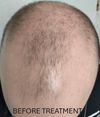
A Swiss product called Redensyl, which is supposed to target hair follicle stem cells and has recently been marketed in Europe. The post inquires if anyone has had any experience with the product.
The user successfully regrew hair using 1.2mg finasteride and 3mg minoxidil daily, without a hair transplant. They experienced significant improvement over 14 months, leading to positive changes in their appearance and confidence.
The user has been using finasteride and minoxidil with tretinoin for 5 months and is questioning if they see hair regrowth. Others share their experiences and challenges with hair loss treatments, particularly the availability of medications.
User tried topical finasteride mixed with minoxidil, Nizoral shampoo, oral minoxidil, and FUE hair transplant for hair loss. User asks when it's safe to trim hair after transplant and considers trying RU58841 or pyrilutamide.
The post discusses a user's successful hair regrowth using finasteride, dutasteride, topical minoxidil, and estrogen over nine months. The user, who is male-to-female (mtf), reports significant regrowth and no side effects beyond typical hormone replacement therapy effects.
A user shared impressive hair growth results after 77 days using oral finasteride, topical minoxidil, and weekly microneedling. They reported thicker, darker hair and minimal shedding, with treatment costs around 30 euros per month.
The user experienced hair loss after chikungunya and started PRF (platelet-rich fibrin) injections with injectable Dutasteride, noticing new hair growth. They are hopeful for continued improvement.
A 31-year-old uses Minoxidil, RU58841, Reviv Hair Serum, and Ketoconazole shampoo for hair loss but avoids finasteride. They plan to reintroduce red light therapy (LLLT) and Eucapil despite previous shedding concerns.
PP405 is a promising hair loss treatment that may outperform minoxidil and finasteride by reviving dormant follicles and promoting significant regrowth. Results from ongoing trials are awaited, with a potential market release between 2028-2030.
The user has been using finasteride for 4 months with positive results, including thicker and darker hair. They are seeking advice on maximizing hair growth without minoxidil, using a routine that includes finasteride, rosemary oil, argan oil, topical melatonin, specialized shampoos, and vitamins.
The user shared progress pictures after using topical minoxidil for 8 months and topical finasteride for 5 months, along with other treatments like tretinoin cream, microneedling, and specialized shampoos. They are seeking feedback on their hair regrowth progress and are concerned about reaching a plateau.
After 8 months of using topical finasteride, hair miniaturization continues, raising concerns about its effectiveness. Microneedling is suggested as a possible complementary treatment.
Users discussed hair loss treatments, specifically 0.1% latanoprost with melatonin, caffeine, and biotin. Other treatments mentioned include minoxidil, finasteride, RU58841, and microneedling.
A nearly 50-year-old male achieved significant hair regrowth and thickening over three years using daily finasteride, twice-daily topical minoxidil, and bi-weekly microneedling with a dermastamp. He experienced no side effects and found microneedling particularly effective for the crown area.
PP405 shows promise in stimulating new terminal hair growth by activating dormant follicles, with no systemic adverse effects observed in a short-term trial. However, long-term efficacy remains unproven, and further trials are needed to confirm its potential as a hair loss treatment.
A 19-year-old is using keto shampoo, topical Minoxidil 5% for 3 months, and topical finasteride 0.1% for 1.5 months to address hair loss. They are noticing baby hairs and shedding, questioning if the hairs will thicken and if more time is needed for finasteride to work.
The conversation discusses hair regrowth, with the user using finasteride (1 mg), topical minoxidil, and microneedling. A reply suggests the user's hair appears fuller and healthier.
PP405 may promote short-term hair growth by pushing follicles into the growth phase, but concerns exist about long-term effects due to lack of rest phases. Users discuss various treatments like finasteride, minoxidil, spironolactone, alfatradiol, and investigational drugs like KX-826 and GT20029 for hair maintenance and regrowth.
The user has seen significant hair regrowth using a routine of minoxidil, finasteride, microneedling, scalp massage, and Nizoral. They are considering adding red light therapy and PRP to their regimen.
A user experienced hair regrowth after 6 months on finasteride, which is earlier than the usual 12-18 months observed by their dermatologist. The dermatologist noted this as an exceptionally good response.
PP405 shows promise in treating severe hair loss, with 31% of users experiencing over 20% hair density increase in four weeks, faster than minoxidil and finasteride. Some users are skeptical about the results' significance and long-term efficacy.
A breakthrough in hair follicle cultivation using induced pluripotent stem cells (iPSCs) has been achieved, producing large hair follicles suitable for transplantation. Clinical trials for this hair multiplication technology are planned in partnership with Yinguan Biotechnology.
PP405 is a potential hair loss treatment that inhibits mitochondrial pyruvate carriers, increasing lactate dehydrogenase activity and stimulating hair follicle stem cells. In a phase 1 trial, 31% of participants showed over 20% hair density increase with PP405 treatment.
The user is experiencing potential hair regrowth after 4 months of using a minoxidil and finasteride topical spray combined with microneedling 1-2 times a week. They notice some scalp redness and irritation but are unsure if the increased hair density is due to regrowth or longer hair.
The conversation is about a person's hair improvement after 14.5 months using RU58841 and Minoxidil topically at 50 mg each day, with noticeable hairline improvement but incomplete crown area recovery. The person struggles to take good pictures of their crown area.
Hair regrowth in transfems is more effective due to hormonal changes, specifically estrogen, which keeps hair in growth phase longer. Treatments mentioned include anti-androgens, sex hormones, and DHT blockers like finasteride.
Hair regrowth using finasteride 1mg daily and topical minoxidil twice daily, with a hair transplant after three years, showed significant improvement over four years. The user is satisfied with the results despite not having access to oral minoxidil.
The user experienced positive hair regrowth using topical minoxidil, along with other factors like shorter hair, castor oil, and hair masks. The user is optimistic about further progress and wants to avoid baldness.