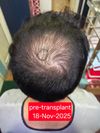
User discusses Latanoprost as potential hair loss treatment and considers combining it with oral minoxidil for better results. Seeking opinions on effectiveness and expense.
A 16-year-old is experiencing hair loss and is using minoxidil, finasteride, and plans to add RU58841, while considering other treatments like MK-677 and microneedling. Concerns are raised about the potential impact of these treatments on puberty and development.
The user is considering increasing their dutasteride dose and trying clascoterone or RU58841 for hair loss stabilization. They have used finasteride, minoxidil, and dutasteride, with some success but recent setbacks.
The conversation discusses the use of Verteporfin in hair loss treatment. It suggests that Verteporfin could potentially regenerate hair follicles instead of forming scars, providing an unlimited donor supply for hair transplants.
The user experienced side effects from oral finasteride and switched to a DIY topical solution, then to Essegen F. They noticed increased hair shedding with the topical finasteride and are concerned about its normalcy and duration.
Dutasteride users should get yearly kidney and liver tests, especially young people. General health checkups are not common in the UK, but such tests are recommended as a precaution.
The user regrets not using medication after a failed hair transplant and is now using a combination of minoxidil, finasteride, derma rolling, oils, and ketoconazole shampoo to try to improve hair regrowth. They are seeking feedback on progress and considering further treatment options.
User asks about using eucapil/fluridil with Minoxidil and how to space out application to avoid ineffectiveness. Also inquires about microneedling timing.
Microneedling before a hair transplant may harden the scalp and affect blood circulation, potentially impacting graft growth. Some users report successful transplants after microneedling, while others advise caution and consulting with a surgeon.
The user started using Hims Finasteride and Minoxidil topical in July 2023, added daily microneedling in November, and switched to chewable Finasteride and Minoxidil in January with increased microneedling frequency. They observed hair regrowth, suggesting diffuse thinning may be easier to treat.
A 26-year-old male with a family history of early baldness documents his hair loss journey, using finasteride, dutasteride, and Nizoral, along with lifestyle changes like weightlifting and a vertical diet. Despite some stabilization, he continues to experience thinning and remains determined to fight hair loss.
A 33-year-old is using topical minoxidil, oral finasteride (1mg), a derma pen, and 0.05% tretinoin on the hairline to treat hair loss, showing progress after 2 months. They apply tretinoin in the evening with minoxidil and use a derma pen once a week at 1.5mm.
An 18-year-old is using finasteride for hair loss prevention despite having a healthy hairline. Opinions are mixed, with some advising against its use at his age and others supporting his proactive approach.
A user's positive early results after 2.5 months of using a topical finasteride/minoxidil spray and Nizoral twice a week for hair loss. The user, who started losing hair six years ago at age 22, is asked to share further progress at the six-month mark.
A 17-year-old male experiencing significant hair loss is using a prescribed topical treatment containing Minoxidil, Tretinoin, Dutasteride, and Latanoprost. He expresses concerns about the potential side effects of Dutasteride and oral Finasteride, and seeks advice on whether to continue with the treatment or consider alternatives.
A 38-year-old man from Poland, balding for 15 years, shared his hair regrowth progress after 4 months of using finasteride (fin), minoxidil (min), micro-needling, and infrared light treatments. He recently switched from finasteride to dutasteride.
The user is generally happy with their hair transplant results but has concerns about graft density and placement, particularly on the left temple and hairline. They are using finasteride and minoxidil inconsistently, plan to add Priorin, and are considering microneedling and PRP sessions for future care.
Finasteride users discuss potential side effects, including Post Finasteride Syndrome (PFS), with varying opinions on its legitimacy and impact. Some users report side effects like changes in semen consistency and reduced pre-ejaculate, while others emphasize the rarity and reversibility of side effects.
The conversation is about a user considering reducing their dutasteride dose due to side effects like lower libido and watery semen. They plan to use dutasteride mesotherapy every three months to maintain hair while reducing systemic DHT suppression.
A 21-year-old experiencing itchy and burning scalp with hair loss was diagnosed with MPB and scalp inflammation. They were prescribed Ketoconazole, Prednisone, Clindamycin, and Finasteride, and are considering trying antihistamines, dietary changes, and "nopoo" to alleviate symptoms.
A 34-year-old underwent a hair transplant with 5,250 grafts, stem cell therapy, and PRP at Dr. Hakan Clinic in Istanbul, without using Minoxidil or Finasteride. Despite initial concerns about the hairline design, the user is optimistic about the results and plans to update progress over time.
The conversation discusses the safety, tolerability, and efficacy of oral Setipiprant tablets for treating androgenetic alopecia compared to finasteride. It mentions the high cost of Setipiprant on the black market and the trial's end date in September 2017.
The user is using dutasteride, oral minoxidil, and topical minoxidil with tretinoin for hair loss. They are considering whether to continue this treatment or opt for a hair transplant for their temples.
The conversation discusses the differences in inactive ingredients between Sandoz 5mg Finasteride and Proscar/Propecia, questioning the purpose of certain additives like Docusate sodium. It seeks to determine if these differences affect the effectiveness of the treatment for hair loss.
The user is experiencing asymmetrical hair loss at the frontal hairline and is concerned about potential conditions like frontal fibrosing alopecia. They have started using finasteride and pumpkin seed oil to address the issue.
The conversation discusses hair loss treatments, focusing on reducing scalp itching and dandruff using natural shampoos, witch hazel, and apple cider vinegar. The user also mentions using finasteride and observing potential regrowth, though it's difficult to confirm.
A 27-year-old male experienced hair loss and dermatitis, which improved with tea tree oil and neem extract. He is considering using a 2% Ketoconazole solution for further treatment.
A 28-year-old male shares his 7-month progress after a crown hair transplant, using topical minoxidil foam, finasteride, and microneedling. He seeks feedback on whether his crown's progress is typical and if further thickening is expected between months 7 and 12.
The user is considering using CB or clascoterone for hair loss, potentially as an alternative to RU. They're also contemplating asking a dermatologist for topical clascoterone cream to apply to their temple.