The user experienced eyebrow hair loss after COVID-19 and has not seen regrowth despite using Latisse. They are seeking new treatment options but are cautious about spending money on ineffective solutions.
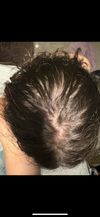
A hair restoration case involved injecting four different doses of Verteporfin into the mid scalp and using Scalp MicroPigmentation (SMP) around the extraction areas. Photos were taken and an update will be shared soon.
Minoxidil may cause fine lines and dark circles, but effects might be reversible with retinol. Users report mixed experiences, with some noticing skin changes and others not.
Minoxidil can cause dark circles and skin issues, and users suggest reducing dosage or switching to foam. Supplements like vitamin C, glycine, and MSM may help with collagen production to reduce these side effects.
Verteporfin is being explored for hair regeneration, with unofficial trials and updates shared online. Efforts are being made to encourage more surgeons to trial verteporfin for donor hair regeneration.
User started minoxidil, noticed forehead lines and dark circles, and asked for non-invasive skin aging prevention methods. Another user suggested using tretinoin and hyaluronic acid for long-term benefits.
The user has been using dutasteride, minoxidil with tretinoin, and ketoconazole shampoo for hair loss but hasn't seen improvement in temple areas. Suggestions include trying microneedling with minoxidil or considering a hair transplant, though temple transplants can be challenging.
Minoxidil isn't effective for OP, who is exploring latanoprost and bimatoprost for hair growth. Users suggest higher concentrations of latanoprost (0.1%) are needed for effectiveness, but they are costly and hard to find.
A user is seeking recommendations for dermatologists or hair clinics in the Greater Sacramento or Bay Area for exosome treatments, comparing topical application plus microneedling versus direct scalp injections. They are also asking for personal experiences and before-and-after photos.
Minoxidil is applied beyond the crown, including the hairline and other areas, despite labels suggesting crown use only. Users report success with broader application, and some prefer oral minoxidil for convenience.
Minoxidil may cause wrinkles and dark circles, which some users report can be mitigated by adjusting dosage. Reactions vary, and while some dismiss these side effects, others experience significant changes.
Minoxidil 5% can cause eye bags, but using Cerave Eye Repair Cream helped reduce them. The user also decreased their minoxidil dosage to manage side effects.
A case study that suggests verteporfin may be able to help regrow donor hairs after FUE extraction, and the potential implications of this result. Treatments discussed include Minoxidil, Finasteride, and RU58841.
The user switched from oral to topical finasteride with minoxidil after a hair transplant and is experiencing increased hair growth in unexpected areas like eyebrows and sideburns. They are seeking feedback from others with similar experiences.
The user had a hair transplant and is using oral minoxidil and finasteride but seeks advice for treating the crown area. They are looking for additional recommendations for non-transplanted areas.
Dermal incision with verteporfin is being explored as a potential hair loss treatment by dermatologist Melissa Toyos, with promising before-and-after photos shared on social media. The conversation discusses its potential effectiveness compared to other treatments like Minoxidil, Finasteride, and RU58841.
Verteporfin may improve hair transplant outcomes and reduce scarring, potentially allowing patients to avoid finasteride. Dr. Barghouthi seeks collaborations, volunteers, and financial support for research on verteporfin.org.
Exploring the potential of using Verteporfin to grow follicles in combination with microneedling, as well as the cost of administering a single injection and the possibility of combining it with minoxidil.
The user experienced significant hair loss on the scalp, eyebrows, eyelashes, and pubic area, along with itchy, flaky skin and red patches. They have a history of eczema and dermatitis and suspect that stopping shampoo use and taking Ritalin may have contributed to the issue.
BionicBell discussed using Bimatoprost, a medication typically for eyelash growth, for hair loss and mentioned a compounding pharmacy that can mix it with other ingredients like minoxidil and finasteride. They are seeking advice on using topical finasteride for female pattern baldness and are considering a custom foam combination to maximize hair growth results.
User doing PRP with exosomes for hair loss, sees possible regrowth after two treatments. Another user suggests providing before and after pictures for better assessment.
The conversation discusses using scalp antiandrogens like RU58841, pyrilutamide, or fluridil on the face to reduce sebum production, noting that clascoterone (winlevi) is an approved facial antiandrogen with underwhelming reviews.
A user reported that applying castor oil to their eyebrows for two weeks resulted in thicker hair and is considering using it on their scalp to thicken existing hair, not to stop balding. They do not expect it to cure male pattern baldness.
Verteporfin is being explored for its potential to improve hair transplant outcomes by reducing scarring and increasing donor hair follicles. There is skepticism about the results, with some claiming misleading presentation of evidence.
The conversation is about the interest in testing verteporfin, potentially with a dermaroller, for hair loss treatment. There is frustration over the lack of group buys for promising treatments compared to past efforts with less evidence.
A trial of verteporfin for hair regeneration, with pictures comparing the original and current status, as well as links to other resources discussing the efficacy of this treatment in combination with Minoxidil, Finasteride, and RU58841.
The user is considering using topical finasteride for thinning hair around the middle part, vertex, and crown, and is unsure if the whole scalp is thinning. Another user suggests oral finasteride is more effective than topical, and recommends consulting a dermatologist for proper treatment.