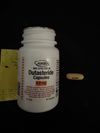
The user shared their experience with dutasteride for hair loss prevention, noting side effects like muscle weakness and brain fog, and observed increased testosterone levels. They recommend starting with a low dose and adjusting based on individual needs and blood work results.
The conversation is about a person experiencing hair loss from steroid use, considering treatments like RU58841, dutasteride, and Nizoral, while avoiding finasteride and Minoxidil due to concerns about hormones and hypertension. The consensus suggests using dutasteride or finasteride, as Nizoral alone is not effective.
The conversation humorously discusses using anal administration of Dutasteride as a novel method for treating hair loss, suggesting it could target DHT production more effectively. It includes satirical comments about the method's potential effects and absurd outcomes.
The user experienced severe scalp itching and hair loss while on dutasteride, which they linked to caffeine and masturbation. They plan to cut out both to see if their hair density improves.
KX-826 (Pyrilutamide) being tested in the US for hair loss treatment and that they have found enough people to participate in phase II clinical trials. Other treatments discussed are Minoxidil, finasteride, and RU58841.
The conversation is about the effectiveness and production of GT20029, a drug being developed as a topical androgen receptor degrader for hair loss, and whether it can fully degrade androgen receptors or only partially. It also discusses the drug's potential unique working mechanism and synthesis by a company called Anagen.
Ursolic acid, found in apple peels, lemongrass, rosemary, and lavender, may have anti-androgen effects similar to finasteride. It might be beneficial for hair health when used with other treatments like Minoxidil, Finasteride, and RU58841.
The user switched from finasteride to dutasteride to address temple hair loss and obtained generic oral minoxidil. They are questioning the legitimacy of Camber's dutasteride compared to other options.
The user is hesitant to use finasteride due to potential hormonal side effects and is waiting for the release of pyrilutamide, a new hair loss treatment. Other users suggest trying finasteride, warning about potential regret if hair loss progresses in the meantime.
Bimatoprost, latanoprost, and travoprost can aid hair regrowth but are costly and less effective than minoxidil. They work best when combined with minoxidil and finasteride.
GHK-Cu is a potent inhibitor of the type 1 5-alpha reductase enzyme in hair follicles, which may reduce hair loss without the side effects associated with type 2 5-alpha reductase inhibitors. The user previously experienced side effects with 5-alpha reductase inhibitors and is considering GHK-Cu as an alternative.
A user is considering dutasteride mesotherapy for hair loss due to concerns about oral side effects from high DHT levels. They have been using topical finasteride with minoxidil but are exploring mesotherapy as an alternative, while another user shares their experience with mesotherapy sessions using dutasteride and minoxidil without side effects.
The user has been using finasteride and oral minoxidil for hair loss, but experienced increased hair loss after using testosterone steroids without post-cycle therapy. They are considering switching to dutasteride and have added ketoconazole shampoo to their routine, but are concerned about side effects and the ongoing hair loss.
A user experienced increased hair density loss after 4 months on dutasteride combined with finasteride. They are also using topical dutasteride with azelaic acid and alfatradiol but cannot tolerate antiandrogens like RU58841 due to headaches.
A 17-year-old is using Finasteride and Minoxidil for hair loss, experiencing hair shedding and cystic acne. They are considering Dutasteride for acne but are concerned about potential side effects on genital development.
A 25 year old male who has been using finasteride and dutasteride for two years to treat his hair loss, with no success. Other treatments such as oral minoxidil, topical anti-androgens, RU58841, latanoprost, topical estrogen, CB 03 01, microneedling, keto 2% shampoo, vitamin D, Omega 3, B vitamins and probiotics were discussed.
The user has been on oral Dutasteride and Minoxidil for 16 months but continues to experience hair miniaturization. They previously used oral Finasteride and topical Minoxidil with success for 7 years and are now seeking advice on whether to switch back to topicals, adjust dosages, or consider other treatments like topical anti-androgens or Estradiol.
Reducing DHT in the scalp is ideal for hair retention, with topical finasteride and dutasteride being common treatments. Some users report side effects like reduced libido, while others experiment with higher doses for regrowth.
RU58841 was the only treatment that slowed hair loss and reduced irritation for a DUPA sufferer after trying finasteride, minoxidil, and dutasteride with no success. The user continues using 6mg oral minoxidil, 0.5mg dutasteride, and an 8% RU58841 solution.
A 21-year-old male is experiencing crown balding and is using RU58841, topical minoxidil, and plans to add dutasteride and oral minoxidil to his treatment. He seeks advice on increasing his treatment stack despite previous side effects like chest pain.
PP405 shows initial promise for treating androgenetic alopecia, with safety confirmed in early trials, but skepticism remains due to limited data. Further trials are needed to determine its true efficacy and potential market impact.
Using high doses of testosterone with RU58841 to create an androgen-free environment for hair regrowth is suggested, but concerns about heart health and the effectiveness of this approach are raised. Alternatives like topical estrogen, progesterone, and other treatments like finasteride and dutasteride are discussed.
Finasteride has been effective for maintaining hair density, but due to a slight dip in temple hair, the user switched to dutasteride as an additional measure. Users discuss varying experiences with side effects from finasteride, dutasteride, and minoxidil, highlighting that reactions can differ significantly among individuals.
A user shared their experience with hair loss treatments, using minoxidil, pyrilutamide, alfatrodial, and nizoral to improve hair density and thickness. They reported positive results without side effects and emphasized the importance of consistency with topical treatments.
The conversation discusses the ineffectiveness of dutasteride in halting hair loss for the user and explores the potential of PP405, which works through a different mechanism. Suggestions include considering a biopsy to determine the cause of hair loss and exploring other treatments like RU58841.
The conversation discusses using topical dutasteride from minoxidilmax for hair loss and the possibility of crowdfunding for DHT blood tests to check if the treatment goes systemic. The user plans to post before and after pictures.
A 26-year-old male with high testosterone is experiencing diffuse hair thinning despite using a comprehensive treatment regimen including dutasteride, oral minoxidil, RU58841, ketoconazole shampoo, microneedling, and low-level laser therapy. Suggestions include adjusting dutasteride dosage, monitoring iron levels, and consulting a dermatologist for further evaluation.
Finasteride may take over two years to show results and can cause side effects like sexual dysfunction and emotional changes. Alternatives such as dutasteride and minoxidil are discussed, with varying effectiveness and side effects.