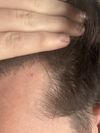
The user has been using topical finasteride and minoxidil for a month to address hair thinning. They are experiencing shedding but have noticed small hairs on their temples.
Ordering Pyrilutamide from Minoxidilmax to use as an experimental topical treatment for hair loss, with discussion of the carrier used in trials and encouragement from other users.
The clinic diagnosed the user with NW3 and AGA, noting thinning hair despite using finasteride for 3 years, and suggested PRP and Mesotherapy before considering a transplant. The user questions the necessity of these treatments without confirming retrograde alopecia and its treatability.
People are discussing JXL-069 (PP405) for hair loss, with some experimenting with a 0.05% topical gel. Concerns about safety and efficacy persist due to limited testing and lack of official approval.
Bimatoprost, latanoprost, and travoprost can aid hair regrowth but are costly and less effective than minoxidil. They work best when combined with minoxidil and finasteride.
Keratin microspheres may offer additional mechanisms to combat hair loss compared to minoxidil. The process to create these microspheres is relatively simple and can be done at home with basic equipment.
The conversation is about someone who initially had positive results with Minoxidil for hair loss, lost those gains due to a hospital stay, and is now not seeing the same results upon resuming treatment. They plan to add microneedling and/or tretinoin to their regimen and are seeking success stories from others who did not respond to Minoxidil alone.
Hair loss may be linked to the TRPS1 gene and protein, not just DHT. Amplifica's AMP-303 targets mesenchymal stem cells and shows promise in treating hair loss, unlike Pelage's PP405.
Applying minoxidil and finasteride to the temples won't cause shedding elsewhere. Shedding occurs due to hair follicles resetting their growth cycle, not the application location.
User seeks participants for Verteporfin group buy. Verteporfin, FDA approved, may regenerate hair follicles and sweat glands through heavy microneedling.
The conversation is about a 24-year-old using microneedling and essential oils, specifically neo hair lotion, to promote hair growth on the temples. The user reports seeing hair growth without using medications, using a 0.5 mm needle roller and planning to switch to a 1.0 mm needle.
The conversation discusses the sourcing of Pyril by major retailers like Minoxidil Max, RU Direct, and Actifolic. It involves treatments such as Minoxidil, finasteride, and RU58841 for hair loss.
A user's experience using topical finasteride and melatonin to regrow hair, as well as their use of dermaroller versus dr. Pen for microneedling. People discussed the benefits of oral minoxidil and questioned if melatonin could help with hair regrowth.
The conversation is about purchasing dutasteride solution for mesotherapy, with a suggestion to make it using dutasteride capsules and oils. A user shared a link to a potential supplier and mentioned using dutasteride with microneedling.
Hair transplant recipients are concerned about whether dormant follicles are permanently damaged by incisions, but some believe undamaged follicles could still regrow if a treatment like PP405 is effective. Opinions vary on the impact of transplants on original follicles, with some suggesting treatments like finasteride can help regrow hair.
The user is discussing their hair loss treatment stack, which includes CB-03-01, Fluridil, Alfatradiol, Cosmerna, microneedling, and Stemoxydine. They have seen some new hair growth but wish they could use finasteride.
Dr. Bloxham's trial is testing verteporfin on hair transplant patients to see if it can improve hair regrowth in treated areas. People are discussing the potential for follicle regeneration, expected results timeline, and concerns about side effects like cancer.
Copper peptides, specifically GHK-Cu, are discussed as a potential addition to hair loss treatments, possibly working synergistically with Minoxidil to convert vellus hair into terminal hair. The effectiveness and credibility of copper peptides are questioned due to the lack of widespread discussion and potential conflict of interest from the product's creator.
Minoxidil may age skin by slowing collagen synthesis, but using collagen peptides and a basic skincare routine might counteract this. Foam minoxidil could reduce systemic absorption and avoid alcohol-related side effects.
Hair loss may be linked to blood flow and inflammation, with treatments like Minoxidil, finasteride, and quercetin being discussed. The conversation also mentions the role of 5AR enzyme distribution in hair follicles.
A user is using 1ml/day of Dualgen-15 (15% Minoxidil, caffeine, retinol, azaleic acid, Adenosine, biotin, niacin) on their temples and asks if Minoxidil alone can completely regrow their temples.
Mike, 46, is experiencing hair thinning at the temples and frontal hairline. He plans to try microneedling with a pen and topical dutasteride after oral minoxidil and finasteride showed limited effectiveness and oral dutasteride caused side effects.
User asks where to purchase exosomes/AAPE for microneedling hair loss treatment. Links to research on hair regeneration therapy, stem cell therapy, exosome therapy, and dermal exosomes provided.
A user in their early 20s is concerned about minor hair thinning and is considering a hair loss regimen involving PRP sessions, mesotherapy with dutasteride injections, and low-dose finasteride. They dislike minoxidil due to its greasiness and prefer a routine that is easy to maintain.
Collagen peptides are recommended for hair and skin benefits, with users noting improvements in hair and skin health. However, evidence on their effectiveness for hair growth is inconclusive.
The user used finasteride but stopped due to side effects, then used topical minoxidil for 13 months, and later added KX826/pyrilutamide for 8 months. They experienced shedding after starting pyrilutamide and use minoxidil and KX826 once daily.
The conversation is about using scalp massaging and Theramid copper peptides for hair loss, with OP reporting slight improvement after four months. OP applies the peptides once daily and massages the scalp twice a day.
The user is undergoing Mesotherapy and Low-Level Laser Therapy for hair loss, with plans for multiple sessions. They are also using oral finasteride, topical minoxidil, dutasteride, and hair fibers.