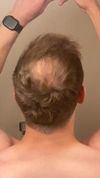
User had a 5000-hair FUT procedure in South Korea in 2014 and is satisfied with results. Uses Minoxidil, dermarolling, and Toppik hair fibers for crown area, and considering Finasteride.
A user who started balding at 20 trying different treatments to combat hair loss before eventually embracing being bald and getting a custom hair piece as an option. Various people commented on his looks with and without the wig, generally agreeing that he looked better bald.
Hair loss treatments, including minoxidil, dermarolling, finasteride, dutasteride, hair transplants, hair systems, and shaving the head. The conversation covers various opinions on these treatments and mentions possible side effects as well as alternatives like wigs, vitamins, and lifestyle changes. The post expresses disappointment that there has been no major breakthrough in the field of hair loss treatments despite decades of research.
A user experienced significant hair loss after 6 months of using 0.5mg finasteride daily. Suggestions from others included trying Dutasteride and Minoxidil, getting professional help from a dermatologist, and addressing high iron levels that could be contributing to the hair loss.
The conversation discusses hair loss linked to BDNF-increasing nootropics like Semax and Lions Mane. Suggested topical treatments include capsaicin, beta-glucan, and ginseng to counteract TGF-B activation.
The user is considering switching from liquid to foam minoxidil for hair loss at the crown, while already using finasteride pills. They are also contemplating a hair transplant due to ongoing hair thinning.
The conversation discusses preventing hair loss during detransitioning, with suggestions to use finasteride or dutasteride as DHT blockers. The user is also considering rosemary oil and monitoring testosterone levels.
A 20-year-old user shared impressive hair regrowth results after 2.5 months on 1.2 mg finasteride and 3 mg minoxidil, noting the treatment costs around $30-40 monthly. Users discussed the effectiveness, potential side effects, and personal experiences with these treatments.
Young people are using hair loss treatments like finasteride and dutasteride without having hair loss, influenced by social media trends. Concerns are raised about the potential long-term effects of taking these medications at a young age.
A user shared their hair transplant update, having received 4,300 grafts and choosing not to use medications like finasteride or minoxidil due to potential side effects and personal reasons. Many commenters expressed concern that without these medications, the user might experience further hair loss, suggesting that preventative treatments are important for maintaining transplant results.
A user is considering starting finasteride at a lower dose to prevent hair loss but is concerned about potential side effects. They seek advice on whether others have had positive experiences with minimal side effects.
The user shared a four-month update on their hair regrowth journey using 1mg daily finasteride, 5mg daily oral minoxidil, and weekly dermarolling, noting significant improvement in hair thickness and uniform growth. They reported no side effects from minoxidil except increased hair growth on arms, fingers, and eyelashes.
PRP treatments for hair density show mixed results, with some users seeing minor improvements but not significant regrowth or halting of hair loss. Combining PRP with treatments like minoxidil, finasteride, or dutasteride may enhance results, but it is not a miracle solution.
The user experienced significant hair regrowth using finasteride, minoxidil, and other treatments but faced side effects like reduced libido and erectile issues. They are considering switching to Adgain Plus to improve hair health without affecting sexual health.
Cold shock therapy may promote hair growth, but cold alone is not effective. Combining treatments like minoxidil, finasteride, cold showers, spicy foods, and exercise may enhance results.
OP is pausing hair loss treatments to focus on mental health due to anxiety and side effects from RU58841. They plan to try topical finasteride and minoxidil after recovering from pneumonia.
User shared 9-month hair regrowth progress using a Fin/Min spray from HIMS, with additional microneedling. Other users praised the results and discussed the effectiveness of topical treatments.
A user proposed genetically engineering scalp stem cells to stop androgen receptors from causing hair loss. Others discussed the feasibility, existing research, and potential issues with this approach, including targeting the correct cells and unintended effects.
After 9 months of using Dutasteride, oral and foam Minoxidil, Zinc, Vitamin D, Nizoral shampoo, and microneedling, combined with reduced stress, an individual restored their hair. They saw significant improvement despite initial worsening, and had low Vitamin D levels which they corrected with supplements.
Hair loss treatments, including microneedling, minoxidil, finasteride and RU58841; the efficacy of these treatments; criticisms of Kevin Mann's content related to his selective data presentation and biases towards certain treatments; and other topics such as DHT being labeled a "trash hormone" and critiques of other hairloss YouTubers.
.
This conversation was about hair loss treatments, with suggestions ranging from topical minoxidil and coconut oil to finasteride and microneedling. Several users suggested shaving off the remaining hair as a last resort.
A user's experience with an expensive hair loss clinic that failed to produce the desired results, and advice from other users on treatments such as Minoxidil, Finasteride, and RU58841.
Stress can lead to hair loss by affecting hair-follicle stem cells, and this loss is harder to recover from if one has male pattern baldness (MPB). Treatments like finasteride and minoxidil are used to address hair loss, but stress-related hair loss differs from androgenic alopecia.
The emotional impact of hair loss and the risks associated with common treatments such as finasteride, dutasteride, minoxidil, RU58841, and Fluridil. People discussed their personal experiences with these treatments, including potential side effects and lowered fertility. Hair transplants were also mentioned as a possible solution.
The conversation is about whether stopping Redensyl, unlike Minoxidil, allows you to maintain hair growth benefits. The user is considering Redensyl as an alternative to Minoxidil due to concerns about hair loss upon cessation of Minoxidil.
User started finasteride at 18, added minoxidil later but stopped due to side effects. Hair loss continued despite treatments, considering dutasteride but hesitant. Others suggest trying dutasteride and discussing with a dermatologist.
Finasteride can help extend the hair growth cycle and improve hair density, allowing for long hair despite initial shedding. Periodic shedding may occur, but it typically does not affect healthy hair significantly.
Finasteride and minoxidil are used together for hair regrowth, as finasteride blocks DHT and minoxidil enhances blood flow. Some hair types require both treatments for regrowth, while others may only need one.
Hair loss is linked to DHT, with treatments like finasteride and minoxidil being common but not definitive. Economic interests influence research, and there is potential for new treatments like PP405 and RU58841.