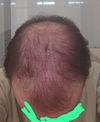
Hair regrowth after 13 weeks using topical minoxidil, oral finasteride, peptide shampoo, serum, and a red light hat. Some growth is attributed to a recent hair transplant.
A user is seeking help to purchase and ship Alpecin DMG to the United States due to issues with eBay sellers. They prefer Alpecin DMG over minoxidil because of concerns about minoxidil's effects on insulin production, as they have diabetes.
Adding non-prescription topicals like alfatradiol and Zix to a standard fin/min/niz regimen may help with scalp inflammation and shedding, but their long-term effectiveness varies. Zix is recommended for reducing scalp inflammation and enhancing the effectiveness of other treatments.
User is using a homemade topical treatment with .015% finasteride, 5% minoxidil, and microneedling at .75mm depth. They also use 2% ketoconazole shampoo, various oils, and are considering increasing finasteride concentration due to mixed results.
The conversation is about the effectiveness and safety of a hair loss treatment called Pyri, with users discussing its availability and comparing it to other treatments like RU58841, fluridil, and alfatradiol. Some users are waiting for FDA approval before using Pyri, while others share their positive experiences with RU58841 and suggest additional treatments with minimal side effects.
The solution contains minoxidil, finasteride, azelaic acid, caffeine, retinoic acid, and procapil. Users suggest minoxidil with tretinoin and a 5-alpha reductase inhibitor, while dismissing retinoic and azelaic acids as unnecessary.
A dermatologist prescribed a topical solution with 7% minoxidil, 0.1% finasteride, and 0.015% tretinoin from Medrock pharmacy. The user is asking if anyone has tried it and if it contains alcohol.
Mixing ketoconazole 2% shampoo with coal tar and salicylic acid for seborrheic dermatitis is discussed, with users sharing experiences and alternative treatments like sulfur soap and scalp massage. Some users report success with these methods, emphasizing the importance of avoiding irritants and maintaining scalp health.
Pyrilutamide is a selective AR antagonist with a high binding affinity, making it effective in competing with DHT for androgen receptors. The 1% concentration is more effective than the 0.5%, but the latter may suffice for mild hair loss; the drug is considered a good option for those avoiding 5AR blockers due to side effects.
Exosomes combined with fractional picosecond laser treatment were effective in treating androgenetic alopecia and promoting repigmentation in white hair patches. The role of exosomes in hair repigmentation, particularly in conditions like poliosis, is not well-studied.
FOL-005 claims to be more effective than Minoxidil and Finasteride but lacks anti-DHT properties, leading to potential reduced efficacy over time. Concerns are raised about misleading marketing and the safety of alternative treatments like Pyrilutamide and Clascoterone.
RU58841 and Pyrilutamide (Kx-826) are both topical anti-androgens, but neither is effective for hair regrowth. RU58841 has more anecdotal support, while Pyrilutamide has progressed further in trials, though both have limitations.
The conversation is about a person using dutasteride and minoxidil for hair loss, considering adding RU58841 and PP405 for more density. They are seeking advice on using these treatments and exploring other options like GT20029.
Hair follicle stem cells remain in bald individuals, but progenitor cells do not, raising questions about hair regrowth claims by Pelage. PP405 is discussed as a potential treatment, with skepticism about its effectiveness compared to existing treatments like Minoxidil and Finasteride.
Rosemary oil is compared to minoxidil 2%, but its effectiveness and safety are questioned. Minoxidil 5% is considered safer and more reliable for hair loss prevention.
The conversation discusses using rosemary oil, finasteride, and oral minoxidil for hair loss. Rosemary oil's effectiveness is debated, but it may improve scalp blood flow and hair appearance.
A user is considering switching from regular 5% minoxidil foam to a compounded 5% minoxidil spray with added caffeine, melatonin, and tretinoin for easier application and potentially better results. Another user mentions that tretinoin can enhance minoxidil's effectiveness by converting it to its active form.
The user is seeking a topical minoxidil and finasteride combination without propylene glycol due to scalp irritation. They are looking for a supplier in the US.
He Shou Wu (fo-ti) is discussed as a potential treatment for hair regrowth, with mixed opinions on its effectiveness. Some users report positive results, while others remain skeptical or have not noticed any changes.
The user is using a hair regrowth treatment plan that includes finasteride, microneedling, minoxidil foam, ketoconazole shampoo, and piroctone olamine shampoo. They are seeking advice on the effectiveness of their regimen and dosage of finasteride, and are curious about others' experiences with piroctone olamine.
The conversation is about testing the effectiveness of RU58841 for hair loss, with the user planning to increase their dose to 30 mg per day along with 20 mg of Minoxidil. The test results showed approximately 70 mg/ml, which the user considers a good result.
The conversation discusses the approval of Kintor Pharmaceutical's AR-PROTAC (GT20029) for clinical trials in China for acne and androgenic alopecia. One user expresses optimism about new treatments being developed and seeks clarification on how the new drug works, specifically if it temporarily degrades the AR protein to reduce DHT sensitivity in hair follicles.
The user noticed baby hair growth and thicker hair after using minoxidil, rosemary, and a dermaroller for two months and plans to start finasteride soon. Another user suggests cutting hair to the same length for better comparison.
The user shared their experience with CB-03-01 (Breezula/Clascoterone) for hair loss, noting reduced shedding and improved hair appearance but experiencing significant sleep disturbances and low energy due to HPA axis suppression. They decided to stop using it due to these side effects and are waiting for GT20029 as an alternative.
Use a dermastamp with rosemary, peppermint, and coconut oil mixture for hair loss. Consider needle length, frequency, and number of passes for effective results.
The user is considering combining finasteride and minoxidil tablets into a topical solution that already includes Garnier Fructis stemoxydine and CB0103. They are seeking advice on whether this combination is effective and safe.
Concerns about the potential systemic effects and safety of PP405 for hair loss, with discussions on its comparison to existing treatments like finasteride and minoxidil. Users express skepticism about untested research chemicals and emphasize the importance of clinical trials to ensure safety and efficacy.
Pelage is recruiting for phase 2 trials, showing promise for treating bald regions. The discussion highlights its potential effectiveness based on its mechanism of action.
The conversation is about the effectiveness and trustworthiness of Pyrilutamide hair loss treatment sold by Hairlisciously, with concerns about product purity and a request for alternative suppliers. No specific treatments were confirmed to be used by participants.