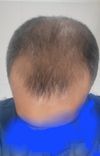
Hair loss discussion involves PRP (platelet rich plasma) treatment. PRP doesn't stop hair loss, only promotes regrowth; minoxidil is suggested as a better alternative.
The user shared progress pictures after 5 months of using 1mg finasteride, weekly 1.5mm microneedling, and daily 2mg copper peptide injections. They discussed their hair loss treatment and results.
PP405 may revive dormant hair follicles but is unlikely to help with long-term baldness where follicles are replaced by scar tissue. It is seen as a potential adjunct to treatments like minoxidil and finasteride, but its effectiveness on deeply fibrotic or scarred areas is doubtful.
A 31-year-old experiencing rapid hair loss is considering whether to shave their head or use treatments. They were prescribed B12, topical finasteride 0.1%, and minoxidil 10% but are unsure about the correct dosage and potential side effects.
The user shared minimal results from using JXL-069 for hair loss, noting a slight lengthening of vellus hairs and plans to switch to a prodrug variant due to limited effectiveness. They also mentioned using finasteride and minoxidil, which have plateaued in results.
The conversation humorously discusses hair loss treatments, mentioning Minoxidil, finasteride, and RU58841. It jokingly credits a person for the potential success of a treatment called GT20029.
A breakthrough in hair follicle cultivation using induced pluripotent stem cells (iPSCs) has been achieved, producing large hair follicles suitable for transplantation. Clinical trials for this hair multiplication technology are planned in partnership with Yinguan Biotechnology.
A 42-year-old had 2,100 grafts transplanted to the frontal third of the scalp, using treatments like Dutasteride, oral Minoxidil, ketoconazole shampoo, dermarolling, and PRP. They plan to add RU58841 and have scheduled SMP to improve cosmetic results.
The user reports a stable receding hairline with new hair growth after using 5% minoxidil, 1mg oral finasteride, D-Biotin daily, derma rolling twice a week, and three PRP sessions per month. They plan to update their progress in four months.
A user shared their successful experience with hair regrowth and transitioning from male to female using minoxidil, finasteride, Nutrafol, microneedling, and hormone replacement therapy (HRT). They expressed gratitude for the results and encouraged others to explore treatments that align with their personal goals.
A user shared a 9-month hair loss treatment update using scalp micropigmentation (SMP), finasteride, minoxidil, derma pen, ketoconazole shampoo, and low-level laser therapy (LLLT), with plans for a hair transplant. Another person suggested increasing the dosage of finasteride and minoxidil and using a derma roller weekly.
A 49-year-old is sharing progress on hair regrowth using PRP sessions and a combination of treatments, including minoxidil, but not oral finasteride or dutasteride. Users suggest adding oral treatments like dutasteride or minoxidil for better results.
The user has been using oral finasteride, oral and topical minoxidil, RU58841, and microneedling to treat hair loss, with recent additions of oral dutasteride, GHK-Cu serum, and increased microneedling. They report visible thickening and new hair growth, expecting significant improvement by next June.
The conversation discusses using RU58841, Minoxidil, and finasteride for hair loss treatment. It focuses on homebrewing RU58841 while using other treatments.
A compound called MTP3 from the Monoterpene family was found to be safe and highly effective at treating hair loss by inhibiting the FGF5 gene, but its identity is undisclosed for commercial reasons. No specific treatments like Minoxidil, finasteride, or RU58841 were discussed.
Hair transplants, oral finasteride, oral minoxidil, and dutasteride mesotherapy are highly effective for treating AGA hair loss. This combination can maintain and improve hair for most people, except those with very aggressive AGA.
A user shared progress pictures showing significant hair improvement using finasteride and minoxidil, expressing satisfaction with the results. Another user accused them of having a hair transplant.
The user stopped using finasteride after two weeks due to gynecomastia symptoms and shared blood work results questioning if they indicate a cause for the side effects. The user is considering restarting finasteride and seeking advice on their blood work levels in relation to gynecomastia.
A 36-year-old had a hair transplant with 6,500 grafts 7 months ago, took 1.25mg of finasteride every other day for 5 months, and recently switched to 1mg daily along with 5% minoxidil spray. They are considering a touch-up transplant and are seeking advice on their progress and future expectations.
The user is hesitant to use finasteride due to potential hormonal side effects and is waiting for the release of pyrilutamide, a new hair loss treatment. Other users suggest trying finasteride, warning about potential regret if hair loss progresses in the meantime.
CB-03-01 is considered a failed treatment for hair loss, with future hopes pinned on PP-405 and GT-20029, expected by 2030. Alternatives like hair transplants and SMP are discussed, while some users express frustration over the slow progress of treatments like Breezula.
A 40-year-old shared their positive experience with a second hair transplant at HDC Cyprus, involving 4148 grafts and costing around 9,000 euros. They used oral minoxidil, Dutasteride, biotin, and vitamins to aid recovery and were pleased with the results.
A user shared progress pictures 7 months after a hair transplant of 4600 grafts at Medart Hair in Istanbul, costing $2850 USD. They are using finasteride, vitamins, Procapil spray, a derma roller, and plan to start minoxidil soon.
The user shared progress pictures and discussed their hair loss treatment routine, which includes minoxidil, finasteride, Nizoral, dermastamping, tretinoin, rosemary oil, hair peptides, biotin, and collagen supplements. They are seeking advice on hair transplantation, minoxidil application, and the impact of testosterone replacement therapy on hair loss.
The user is experiencing hair improvement in the central and back areas after using finasteride, minoxidil, and a galenic lotion, but the temple area is worsening. They suspect the lotion might be causing the issue and are considering stopping its use.
Rotenone, a natural plant extract, may promote hair growth by increasing LDH activity and blocking MPC in the scalp, but it carries risks due to its toxicity. The suggested formulation includes Barbasco extract, DMSO, propylene glycol or PEG-400, ethanol, and a carrier oil.
A user is seeking advice on increasing graft survivability after a hair transplant, mentioning PRP, Mesotherapy, Stem Cell injections, and considering L-Arginine before starting Minoxidil. They are looking for ways to support blood flow before applying Minoxidil.
A 23-year-old male is experiencing diffuse hair loss and miniaturization, possibly due to high IGE levels after using tofacitinib. He seeks advice and has not yet consulted a dermatologist.
The user shared nearly 3 months of progress using topical 5% minoxidil and 1% finasteride, noting a prescription error that will be corrected to 0.25% finasteride soon. Despite the high finasteride dosage, the user experienced no side effects and saw positive results.
The conversation is about making a solution of RU58841 using propanediol instead of propylene glycol due to skin irritation. The user seeks advice on whether this substitution is acceptable.