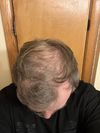
Early hair loss causes emotional distress, and common coping strategies like fitness and fashion are inadequate. Treatments like finasteride, minoxidil, dutasteride, hair systems, and scalp micropigmentation were tried but were unsatisfactory.
A 23-year-old user shares their hair regrowth journey, questioning if genetics or other factors are at play. They use Rogaine, finasteride, vitamin B12, biotin, Thera M Plus, and derma stamping, and seek advice on their regimen and hair growth patterns.
Dermatologists use treatments like oral minoxidil, finasteride, and RU58841 for male-pattern baldness, considering side effects and patient preferences. Photobiomodulation is noted as mildly effective but costly, while PRP is debated for its effectiveness compared to microneedling.
The efficacy of degrading the androgen receptor through dermal application in DP cells, a delivery system for topical drugs that involves dissolving microneedles, and rosemary oil as an alternative anti-androgen.
The conversation is about using micro needling and PTD-DBM for hair loss treatment. The user applies PTD-DBM drops on weekdays and performs micro needling weekly.
Kintor Pharma finished enrolling and dosing participants in a Phase I trial for a hair loss treatment called AR-PROTAC (GT20029). The effectiveness of another drug, pyrilutamide (KX-826), for hair loss will be clearer after a Phase 2 trial expected to complete in January 2023.
PP405 is moving to late-stage trials, showing potential for hair regrowth, with 31% of male patients experiencing a 20% increase in hair density. Veradermics is developing an oral minoxidil version, and there is interest in combining treatments for better results.
Genetic variations influence how people respond to dutasteride for hair loss, with some benefiting more from finasteride. Dutasteride is effective for most, but genetic differences may cause it to be less effective for some.
The user has been using finasteride, dutasteride, and minoxidil without success and is considering a comprehensive blood test to explore other causes of hair loss. They are unsure about the necessity and cost of the extensive tests and are seeking advice on whether to proceed with the full panel or focus on specific tests.
Recruitment for a verteporfin trial and a separate hair cloning trial using verteporfin and other methods is underway, with locations in Jordan, NYC, Beverly Hills, and Memphis. Dr. Bloxham is conducting the hair cloning trial, and interested participants are encouraged to contact him directly.
PP405, a topical LDH inhibitor, has shown to stimulate hair follicle stem cell proliferation in humans with moderate hair loss. They are advancing to more detailed trials this year.
The conversation discusses that genetic analysis of the Iceman Ötzi shows he had male-pattern baldness and dark skin, with a joke about using beards and tattoos to distract from hair loss. No specific hair loss treatments are mentioned.
A 30-year-old is using topical minoxidil 6% and finasteride for hair loss, showing significant progress over five months. They also use dermastamping, nizoral shampoo, and had a hair and scalp treatment.
The user is observing potential hair regrowth at day 46 using 1mg oral finasteride, 2.5mg oral minoxidil, 5% topical minoxidil, biotin, vitamin D, fish oil, and weekly dermal rolling. They are optimistic about the results despite skepticism from others.
The user has been using finasteride for 16 months, minoxidil for 11 months, and started microneedling 2 months ago, experiencing shedding phases. They are questioning whether they are experiencing miniaturization or regrowth.
KX-826, Breezula, PP405, and Stemson are potential future treatments for hair loss, with varying timelines and mechanisms like blocking DHT and stem cell activation. Users express skepticism about the timeline and mention current options like hair transplants and minoxidil.
A 21-year-old is concerned about androgenic alopecia and has been using minoxidil for a year, noticing some stabilization in the hairline but fears using it on the whole scalp due to seborrheic dermatitis. Another person suggests considering a psychiatrist for stress management, using Nizoral shampoo, and possibly trying a small dose of finasteride.
The conversation discusses the variability in effectiveness of medications, including finasteride, and questions whether different manufacturers impact results. The user suggests sharing successful brands to help others identify effective options.
PP405 shows promise in hair regrowth, potentially outperforming existing treatments like finasteride and minoxidil, with significant results in just four weeks. The treatment is still in early stages, with further trials needed to determine its long-term effectiveness and optimal dosage.
The user shared their experience with hair loss treatments, including oral and topical Finasteride and Minoxidil, and detailed various blood test results to track hormonal changes. They noted that while DHT levels initially decreased with topical Finasteride, they later increased, but they observed positive results in hair growth.
ABS-201 shows promise for male hair regrowth by blocking the prolactin receptor, with higher expected efficacy than current treatments. The discussion also covers dosing differences between macaques and humans for hmi115, highlighting a significant dosage disparity.
Various peptides are discussed for treating male pattern baldness, with some available for topical use like GHK-Cu and Ac-KGHK, while others remain in research stages. Users are interested in experiences and sourcing these treatments.
ET-02 is seen as promising for addressing hair loss and graying, but PP405 is more advanced in development and has better publicity. Some users plan to use both treatments alongside minoxidil and dutasteride.
Several new hair loss treatments are in development, with Cosmo Breezula and Kintor KX826 being the furthest along, expected to be commercialized by 2027. Veradermics is the only treatment in pill form, while others like KX/GT/Breezula will be topical.
PTD-DBM is a Korean-developed treatment for hair loss, with limited information available and some users testing it personally. A user purchased PTD-DBM for $115 and plans to test it on their temples, but its effectiveness and authenticity remain uncertain.