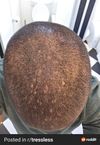
A 33-year-old male is documenting his hair regrowth progress using minoxidil, red light therapy, copper peptides, and micro-needling, with noticeable improvement in hair thickness and coverage. He plans to add a topical finasteride/minoxidil spray and aims for a shadow on his scalp rather than a full head of hair.
A user shared progress pictures showing hair improvement after using oral finasteride and topical minoxidil for two and a half months. They are considering a hair transplant but are advised to wait for full results from the treatments.
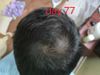
The user noticed small circular hairless spots after a buzz cut and has been using finasteride, dutasteride, and oral minoxidil for hair loss. They are experiencing continuous shedding and thinning, and it is suggested they consult a dermatologist for a scalp examination and possible biopsy to determine if it's alopecia areata or androgenetic alopecia.
The conclusion of the conversation is that the combination of finasteride and minoxidil has helped the user, Shama2, achieve fast and good results in regrowing hair. They have not experienced any side effects and are consistent with their treatment.
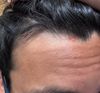
The user is concerned about potential hair thinning after getting a buzzcut and shares photos for comparison. A suggestion is made to consult a dermatologist for a proper diagnosis.
User shared progress pictures after 5 months using 5 mg oral minoxidil, a topical formula with 8% minoxidil, 0.1% finasteride, and 0.01% tretinoin, and a 1.5 mm Dermapen every other week. The conversation discusses the effectiveness of this regimen for hair loss.
A 49-year-old is documenting their hair regrowth journey using tretinoin cream, minoxidil foam, and finasteride. They report thicker hair and improved confidence, though progress feels slow and mentally challenging.
The post is about a user's progress with using minoxidil and finasteride for hair loss. One user suggests that dermarolling may also be contributing to the positive results.
The user shared progress pictures after approximately one year of using finasteride 1 mg for hair loss. They requested opinions on the results shown in the photos.
The conversation discusses the tension theory of baldness, suggesting that over-developed masseter muscles may harm hair follicles. Botox injections to relax these muscles reportedly led to an 18% increase in hair count in men with AGA.
Scientists at UCLA have developed a promising treatment for male pattern baldness using a molecule called PP405, which can potentially stimulate dormant hair follicles. Initial trials showed significant results within a week, but larger clinical trials are needed to confirm its efficacy and safety.
The user shared progress pictures over four months using topical finasteride, topical and oral minoxidil, topical RU58841 daily, and oral dutasteride once a week. The pictures are spaced about a month apart.
A user shared their 16-month progress using a minoxidil and finasteride spray combo, showing significant hair regrowth. The discussion includes praise for the results, questions about treatment specifics, and debates on the effectiveness of topical versus oral finasteride.
The conversation is about a user sharing their positive experience with Scalp Micropigmentation (SMP) for hair loss, highlighting the natural look achieved by a specialized artist. The procedure cost $2600 and was done by Alex Corona in Panama City Beach, FL.
The user's hair appears to have improved, looking thicker and healthier, especially around the temples, after using topical minoxidil, finasteride, dutasteride, and tretinoin. Most participants agree the last picture shows significant improvement, though one disagrees.
The user is experiencing a minoxidil shed after six months of use, noting a significant number of miniaturized hairs compared to mature ones, and has been on finasteride 0.5mg daily for two years with positive results. The user meticulously counts and categorizes shed hairs, sparking reactions ranging from amusement to concern over the level of obsession.
A user's progress after 3 months of using the "big 4" hair loss treatments - liposomal gel minoxidil, finasteride, keto shampoo and microneedling; with people providing advice about their own experiences and asking for more information.
There is no new information on pp405, with data collection expected to finish by the end of 2025. Users are discussing the timeline for data analysis and completion of Pelage Pharmaceuticals' phase 2 study.
A user shared their positive experience with a clinical trial for a new oral medication, VDPHL01, which is a reformulated version of oral minoxidil taken at a high dose of 17mg daily, showing significant hair regrowth after six months. The user noted that this formulation is believed to be more effective and time-released, with fewer side effects compared to regular oral minoxidil.
The post and conversation are about a user's 6-month progress using topical dutasteride, 8% minoxidil, tretinoin, 2% ketoconazole shampoo, microneedling, oral finasteride, pumpkin seed oil, Vitamin D3, a men's multivitamin, rosemary oil, and 5% minoxidil foam for hair loss treatment.
The user experienced significant hair regrowth after starting treatment with 1.2mg finasteride and 5mg minoxidil in January 2026. They also reduced stress and stopped drug use, except for nicotine, which contributed to their progress.
Capilia Longa and Scandinavian Biolabs are discussed, with skepticism about their effectiveness and value. The conversation suggests avoiding these products due to high cost and perceived lack of results.
The user has been using finasteride and minoxidil for five years but continues to experience hair thinning and density loss. They are considering switching to dutasteride for potentially better results.
User experienced significant hair regrowth after 90 days using Dutasteride, oral and topical Minoxidil, RU58841, dermarolling, and Keto shampoo. Others discuss potential side effects and difficulty determining which treatment is most effective.