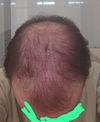
PP405 is a topical gel being tested for hair regrowth in adults with androgenetic alopecia. Volunteers aged 18-55 are needed for a 16-week trial in several US locations.
PP405 is seen as a potential breakthrough for converting vellus hairs to terminal hairs, with users expressing both hope and skepticism. It is compared to treatments like minoxidil and finasteride, with discussions on side effects and marketing concerns.
KX-826 is undergoing Phase III trials in China as a potential treatment for male pattern baldness, with some users considering it as an alternative or addition to finasteride and dutasteride. Opinions on its effectiveness vary, with some users reporting positive results and others finding it expensive and ineffective.
The conversation discusses the completion of a Phase II trial recruitment for Breezula (CB-03-01), a potential treatment for androgenic alopecia. Specific treatments mentioned include Minoxidil, Finasteride, and RU58841.
CRISPR treatments for blood disorders have been approved, leading to discussions about its potential for treating hair loss (AGA). A study showed that editing a gene related to DHT sensitivity could lead to hair regrowth, suggesting CRISPR may eventually be used for AGA, but it's expected to be expensive and not soon available.
The conversation discusses Fevipiprant, an asthma drug that may block CRTH2 and potentially stop male pattern baldness (MPB) without inhibiting DHT. It also mentions the use of finasteride and dutasteride for hair loss.
Analyzing data on pyrilutamide, a potential hair loss treatment, as well as the effectiveness of other treatments such as Minoxidil, Finasteride, and RU58841.
The conversation discusses the safety study of PP405, emphasizing that early trials focus on safety rather than efficacy, and that any efficacy data from such a short study should be viewed skeptically. It also highlights that the information released is primarily for securing funding, and that meaningful efficacy results are expected in later phases.
People are discussing the anticipated release of PP405 phase 2a results, expected by the end of March, with some skepticism about its effectiveness. There is cautious optimism due to past experiences with similar treatments like Breezula, despite concerns about the lack of presentation at the AAD 2026 conference.
Comparing the effectiveness of RU58841, Pyrilutamide and CB-03-01 as treatments for hair loss, with people discussing different aspects such as binding affinity, time of inhibition, safety data and cost.
MCL-1 protein may help maintain hair follicles in the growth phase and prevent miniaturization. There is interest in experimental treatments like exosomes, peptides, or stem cell serums to upregulate MCL-1 for hair loss, especially for those not using minoxidil or finasteride.
The user is using a hair regrowth treatment plan that includes finasteride, microneedling, minoxidil foam, ketoconazole shampoo, and piroctone olamine shampoo. They are seeking advice on the effectiveness of their regimen and dosage of finasteride, and are curious about others' experiences with piroctone olamine.
The post discusses a new hair loss treatment involving an improved pyri formula that has shown promising results, including thicker hair and a restored hairline, with minimal side effects. The author seeks investors to collaborate with Kintor or acquire the pyri patent, offering equity rewards and complimentary samples for verification.
Oral PTD-DBM was discussed as a potential hair loss treatment, but it was deemed ineffective in humans despite promising results in mice. The conversation concluded that trying it without VPA might be unwise.
Verteporfin and FAK inhibitors being looked at as potential treatments for hair regeneration, with updates on the unofficial off-label human trial being discussed.
Considering a hair transplant, using Pyrilutamide, the potential availability of CosmeRNA, and the significance of taking Minoxidil and Finasteride for long-term results.
The group buy for CB-03-01, a topical anti-androgen for hair loss, was postponed and refunded due to issues with the product's form and solubility. The product, also known as Breezula, is an alternative to finasteride with fewer side effects, but its official release is delayed until 2021.
The conversation is about using micro needling and PTD-DBM for hair loss treatment. The user applies PTD-DBM drops on weekdays and performs micro needling weekly.
PP405 (Everychem 3HP) may help with hair regrowth, with mixed user experiences. Users often combine it with minoxidil and finasteride, but there are concerns about its efficacy and side effects.
PP405 is progressing rapidly through trials, with mixed opinions on its potential effectiveness. Current treatments like minoxidil and finasteride are still widely discussed, with some users reporting positive results from new formulations.
Osteopontin, a protein involved in hair growth on moles, may help with hair loss. However, it is also linked to Alzheimer's, cancer, and bone development, so caution is advised.
Chime Biologics and Hope Medicine are speeding up the launch of a first-in-class antibody drug, HMI-115, for endometriosis and androgenic alopecia. The treatment involves a series of subcutaneous injections, has shown promising results in phase 1, and continues to promote hair regrowth even after the treatment is stopped.
Breezula's phase 3 results are expected soon, but its release is likely delayed until 2027 or 2028. The discussion highlights the need for more hair growth stimulants like AMP-303 and PP-405, as current treatments like Dutasteride effectively stop hair loss but don't regrow hair.
Pyrilutamide, a potential topical treatment for male pattern baldness, and the user's anticipation of its Phase 2 trial results. Several users discussed their experiences with Finasteride and RU58841, while others voiced skepticism about the efficacy of Pyrilutamide.
SCUBE3 and GT20029 are potential treatments for hair loss, with SCUBE3 stimulating hair growth and GT20029 protecting against DHT. A combined approach using SCUBE3, finasteride or dutasteride, and later GT20029 could provide a comprehensive treatment for androgenetic alopecia.
A user is interested in Absci's AI-driven antibody platform, ABS-201, for treating androgenetic alopecia, which shows promising preclinical results and potential for hair regrowth and pigmentation restoration. However, concerns are raised about the drug's development timeline and its advantages compared to existing treatments.
The user has DUPA and suspects autoimmune activity as a cause. They have tried various treatments including finasteride, minoxidil, dutasteride, pyrilutamide, estrogel, hydrocortisone, and clobetasol, and are now seeking a long-term immunosuppressant.
Kintor is accused of using fake pictures to promote their product, Pyrilutamide (KX826), which failed Phase 3 trials. Users express disappointment and note similar false advertising has occurred with finasteride and minoxidil.