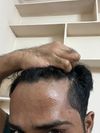
PP405, a topical LDH inhibitor, has shown to stimulate hair follicle stem cell proliferation in humans with moderate hair loss. They are advancing to more detailed trials this year.
A user experienced increased testosterone and estradiol levels after starting finasteride/dutasteride and is asking if these levels will return to normal over time. The conversation focuses on whether these changes are temporary.
The user noticed tiny black hairs after using 5% topical minoxidil for 1.5 months and is unsure if it's due to the treatment. Another user suggests continuing minoxidil for at least 6 months and mentions that combining it with tretinoin and finasteride may improve results.
The conversation discusses hair loss treatments for a 30-year-old female, comparing red light therapy with minoxidil and finasteride. Concerns about hormonal impact and potential pregnancy are raised, with suggestions to consider spironolactone and microneedling, while emphasizing the importance of consulting a dermatologist.
The conversation discusses the lack of public information on the chemical structure of PP405, a hair loss treatment, and the challenges of synthesizing it without a patent. It also explores a patent related to hydrogen-based topical formulations for reducing oxidative stress and inflammation.
The user has seen significant hair regrowth using a routine of minoxidil, finasteride, microneedling, scalp massage, and Nizoral. They are considering adding red light therapy and PRP to their regimen.
The conversation is about the effectiveness of finasteride, oral minoxidil, and RU58841 for hair loss treatment. Opinions vary on improvement after 7 months of treatment, and there are concerns about the safety of using non-approved chemicals like RU58841.
The user's hair appears to have improved, looking thicker and healthier, especially around the temples, after using topical minoxidil, finasteride, dutasteride, and tretinoin. Most participants agree the last picture shows significant improvement, though one disagrees.
Finasteride can affect hormone levels, potentially causing symptoms like puffy nipples and testicular pain, and may result in elevated prolactin and high testosterone. The user is seeking interpretation of these changes after taking finasteride.
User shared 9-month hair regrowth progress using a Fin/Min spray from HIMS, with additional microneedling. Other users praised the results and discussed the effectiveness of topical treatments.
The user shared their 3-year hair loss treatment progress using dutasteride, minoxidil, PRP, micro-needling, and vitamin D supplements, noting improvements and no side effects. They also discussed transitioning from finasteride to dutasteride and increasing minoxidil dosage, while considering the effectiveness of PRP and micro-needling with long hair.
PTD-DBM is being explored for hair regrowth by targeting CXXC5, with clinical trials expected after pre-clinical studies. Users express anticipation and skepticism about its effectiveness.
The conversation discusses Dr. Blake Bloxham's experiment with Verteporfin for hair loss, with one person suggesting more doctors should try it as it seems beneficial. Another comment notes that results at 4-5 months were not very impressive.
The conversation is about a user's progress in treating diffuse hair thinning using a topical regimen including finasteride, minoxidil, ketoconazole, microneedling, saw palmetto, collagen, and vitamins, along with lifestyle changes. The user plans to switch from topical to oral finasteride for potentially better results.
Three months into using Minoxidil, finasteride, dermarolling, tretinoin, and saw palmetto shampoo, the user is seeing baby hairs on their hairline and is hopeful they will thicken. Another user reports that their own baby hairs have been getting thicker and longer over time.
The conversation discusses microneedling for hair loss, with the original poster experiencing pinpoint bleeding after using needles of 1.25mm and 0.5mm, possibly due to adding GHK-Cu to their treatment regimen. They are inquiring if others bleed at similar depths.
The conversation discusses hair loss treatment progress using finasteride for 5 months and a topical solution with 0.1% minoxidil and 7% RU58841 for 11 months, with plans to switch to a stronger topical solution with 0.25% minoxidil, 7% RU58841, and tretinoin. Opinions on improvement are mixed.
The conversation discusses the difference between the commercially available Pyrilutamide and the version in clinical trials. It also mentions treatments like Minoxidil, finasteride, and RU58841 for hair loss.
Pelage plans to release phase 2 results and start phase 3 trials for PP405 in 2050, but skepticism remains due to past delays and unfulfilled promises. Users express frustration over the lack of progress in hair loss treatments, mentioning Minoxidil, finasteride, RU58841, CB-03-01, and Fluridil.
Using Microneedling 1xweek and Minoxidil twice a day as treatments for hair loss, along with DHT blockers such as Finasteride or Dutasteride. Advice was also given to not raise eyebrows when evaluating hair growth progress.
The user has been using topical Minoxidil twice daily for a year and is seeking feedback on whether their hair condition is improving, maintaining, or worsening. They provided photos for comparison from last year and this year.
OP shared a 1-month progress update on using a topical solution with dutasteride, minoxidil, and tretinoin for hair loss. Users noted regrowth and discussed tretinoin's availability.
The user shared impressive hair regrowth results after 11 months using topical finasteride and minoxidil from HIMS. Many users congratulated the progress and inquired about the application method, brand, and potential side effects.
The conversation provides tips to reduce facial skin side effects from Minoxidil, such as changing pillowcases, sleeping on the back, careful application, hydration, and taking breaks. One reply suggests that alcohol in Minoxidil formulations, not Minoxidil itself, may cause skin aging.
A 23-year-old male switched to a topical solution containing Fin 0.1% and Min 5% from a previous solution with Fin 1% and Min 5%, noticing increased hair shedding. He is concerned about losing around 50 hairs while using ketoconazole shampoo.
The conversation discusses hair regrowth after 7 months of treatment, with the recent addition of tretinoin 0.05%. The treatment routine remained the same as before, except for this new addition.
A 23-year-old male showed hair regrowth after using finasteride and minoxidil daily for three months, with no significant side effects. Others shared their experiences and discussed side effects and photo lighting differences.
Korean scientists developed a red light therapy that reduces a hair loss marker by 92%. Users discussed the benefits and drawbacks of natural sunlight versus red light caps for hair health, with some suggesting supplements for vitamin D.
The conversation discusses the use of ethanol and propylene glycol (PG) in topical solutions for hair loss treatments, specifically Minoxidil. The user dislikes the texture of PG and questions the ideal ratio and necessity of PG in these solutions.