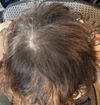
The conversation is about someone's three-year experience with irregular derma rolling, Minoxidil, and Redensyl for hair loss, hoping to thicken areas with fine hair.
Adipose-derived stem cells with ATP improved hair regrowth in male and female mice with androgenetic alopecia. The most effective treatments were low dose stem cells with ATP for males and medium dose stem cells with non-liposomal ATP for females.
The conversation discusses the potential of a new hair loss treatment, GT20029, which may prevent hair loss by destroying androgen receptors on the scalp. Users express hope for the treatment's success and speculate on its usage routine, effectiveness, and possible side effects.
The post discusses Dr. Rassman's advice on microneedling for hair loss, suggesting holding a Dr Pen with 36 needles in one spot for 10 seconds. The conversation includes differing opinions on this method, with one user explaining the importance of dipping the pen rather than swiping to avoid abrasions.
A user shared their experience with DIY PRP scalp injections for hair regrowth, using an EZ Injector and other at-home equipment. Another user reported success with at-home PRP treatments for 1.5 years, noting thicker hair and a stable hairline.
A man shared his hairline improvement after two years on 1.25mg finasteride daily and using piroctone olamine shampoo. He has not had a hair transplant and does not plan to use minoxidil.
A user shared their one-year hair regrowth progress using Minoxidil, Finasteride, T-gel, derma rolling, and biotin, expressing gratitude for the support received and commitment to continue the regimen. They are pleased with the results and plan to maintain their daily routine.
The conversation discusses GT20029, a compound by Kintor Pharma that degrades androgen receptors and is in trials, with potential as a hair loss cure. Another promising treatment mentioned is an antibody that blocks prolactin and has shown positive results in macaques.
A user is considering using compounded Minoxidil with Tretinoin from Medical Wellness Center to improve hair growth. They are also curious about the effects of higher Minoxidil doses and adding Tretinoin to their regimen.
A user's 2 year experience using Minoxidil and Finasteride combined with 20,000mcg of biotin daily and dermarolling for 1 year. The results included thicker hair with some regrowth closer to the hairline, although peak results have not been achieved yet.
The conversation discusses experiences with Haircross Hair Growth Serum, which contains Redensyl, Capixyl, Procapil, Anagain, and Baicapil, as an alternative to Minoxidil and Finasteride. Users report mixed results, with some experiencing no regrowth and others noting slight thickening, but concerns about side effects and effectiveness compared to standard treatments remain.
The conversation discusses potential new treatments for androgenetic alopecia (AGA), including verteporfin, pyrilutamide, and hair cloning. There is optimism about scientific advancements providing alternatives to minoxidil and finasteride.
The user shared progress pictures after 5 months of using 1mg finasteride, weekly 1.5mm microneedling, and daily 2mg copper peptide injections. They discussed their hair loss treatment and results.
A 24-year-old male shares his 5-month progress using 1mg finasteride daily, biotin supplements, multivitamins, 3ml minoxidil daily, and derma rolling twice a week. A user inquires about hair shedding and the type of minoxidil used.
AHK-cu peptides are discussed for hair growth, with users comparing them to GHK-cu peptides and sharing sources to buy. AHK-cu is noted as more expensive, and users express interest in finding cheaper, reliable vendors.
GT20029 and CosmeRNA are both potential hair loss treatments; GT20029 breaks down the androgen receptor, while CosmeRNA prevents its production. Continuous use is needed, but less frequently than current treatments like Minoxidil and Finasteride.
Using lice as an alternative to microneedling for hair loss treatment, with concerns about effectiveness and practicality. Some users humorously suggest genetically altering lice to produce beneficial compounds.
A user shared their positive experience with a hair transplant at Wimpole Clinic, performed by Dr. Malkani, and discussed using finasteride at a reduced dose due to side effects. They also mentioned avoiding minoxidil due to heart pain and taking supplements like biotin, marine collagen, viviscal, and krill oil.
The conversation is about the use of peptide therapies for hair loss, specifically GHK-CU, ZN-Thymulin, and PTD-DBM. The user is seeking feedback on the effectiveness of these treatments from those who have tried them.
A user reports hair regrowth at the temples after starting 0.33g of finasteride every other day in January, combined with weekly microneedling sessions. They experienced sexual side effects at higher doses, which improved with a lower dose and supplements like broccoli extract and l-citrulline.
The user experienced noticeable hair growth after starting dermarolling with a 1mm device, using minoxidil, and nizoral shampoo. They plan to reduce dermarolling frequency to three times a week and are considering additional treatments like finasteride or a hair transplant for increased hair density.
The user regrets not using medication after a failed hair transplant and is now using a combination of minoxidil, finasteride, derma rolling, oils, and ketoconazole shampoo to try to improve hair regrowth. They are seeking feedback on progress and considering further treatment options.
Microneedling with 0.6 mm needles combined with 5% minoxidil is more effective for hair count and thickness than minoxidil alone or with 1.2 mm needles. Biweekly microneedling at 0.6 mm depth is recommended for better results in treating androgenetic alopecia.
PP405 shows initial promise for treating androgenetic alopecia, with safety confirmed in early trials, but skepticism remains due to limited data. Further trials are needed to determine its true efficacy and potential market impact.
The user is pleased with their hair growth progress after 5 months of using Minoxidil, Finasteride, and RU58841, and is curious if the baby hairs at the temple will fully connect with the rest of the hair. It's uncertain if the connection will happen yet.
Pelage is developing a topical hair follicle stem cell therapy, PP405, for non-scarring alopecias like androgenetic alopecia, with Phase III trials planned and a potential market launch by 2027. The treatment may not require continuous use after initial regrowth.
A user underwent a hair transplant with 3500 grafts after trying treatments like finasteride and minoxidil, preferring a local clinic in Toronto over traveling to Turkey. The user plans to continue using finasteride to maintain existing hair, as the transplanted hair is DHT resistant.
The user has been using Minoxidil, Finasteride, and biotin for hair regrowth over four years, recently adding microneedling with a derma pen. They are considering increasing microneedling frequency, trying minoxidil pills, and possibly using Dutasteride for better results.