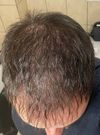
User noticed receding temples, used minoxidil and microneedling with positive results. Added saw palmetto and eucapil, experienced shedding and thinner hairline, but no side effects.
User shared a 5-month progress update on using topical minoxidil 6% and finasteride 0.05% once daily, with microneedling and vitamins. They experienced initial shedding but no side effects, and increased the treatment to twice daily after month 4.
The user has been using topical minoxidil and finasteride for four months, along with microneedling and Nizoral, noticing thicker lashes and eyebrows but not much scalp hair growth. They apply the treatment twice daily with a 5% minoxidil and 0.3% finasteride solution.
Hair cloning and injection of dermal papilla cells are discussed, with skepticism about their availability by 2023. Users mention Minoxidil, finasteride, and hair transplants as current treatments.
A 7-month update of hair regrowth achieved by using daily topical finasteride and minoxidil, combined with weekly microneedling. It is also noted that the results are different for females.
The user has been using 5% Minoxidil foam twice daily, microneedling every two weeks, and Nizoral 2% shampoo weekly for hair loss treatment. They've seen improvements in their hairline and eyelashes, and are considering adding finasteride to their regimen.
Clascoterone 5% topical solution is effective and safe for long-term use in treating male pattern hair loss. Cosmo Pharma aims for EU and US approval, with a potential US release in late 2027 or early 2028.
The user experienced initial shedding but saw regrowth after seven months using oral minoxidil (1.75mg) and a dandruff shampoo. They plan to try Spironolactone and possibly metformin for PCOS-related hair issues.
Minoxidil may cause increased prolactin levels, leading to side effects like puffy nipples and chest tenderness. Users experienced these issues and considered stopping minoxidil while continuing or switching to other treatments like finasteride, microneedling, and supplements.
User shared progress pictures showing significant hair regrowth using a compounded solution of Minoxidil 10%, Finasteride 0.1%, Biotin 0.2%, and Latanoprost 0.005%. They reported no side effects and are satisfied with the results.
The conversation discusses a user's hair regrowth after two months using finasteride, minoxidil, derma rolling, biotin, and ketoconazole shampoo. Some users express skepticism, while others are impressed with the results.
The post discusses the theory that persistent dandruff in areas prone to hair loss could be a sign of hair follicles dying due to DHT, indicating balding. The responses vary, with some users noting improvements in dandruff and hair loss with treatments like Dutasteride, while others experienced hair loss without dandruff.
A user shared an 8-month hair regrowth progress using finasteride, topical minoxidil, and microneedling, and others reacted positively, asking for details about the treatment regimen. The user also mentioned taking cod liver oil and a hair multivitamin with biotin and collagen.
The user has been using 3mg oral Minoxidil and 1.1mg oral Finasteride for 15 months and plans to switch to 5mg oral Minoxidil, 1.1mg oral Finasteride, and 0.1mg oral Dutasteride. They have also used ketoconazole and salicylic acid shampoo for seborrheic dermatitis and hope to see more hair growth with the increased dosage.
The user started using EssenGen 6-Plus, containing 6% minoxidil and 0.05% finasteride, along with 1% Nizoral shampoo, and reported noticeable hair growth in 7 weeks. They experienced some chest tightness but are monitoring it, and they are satisfied with the progress despite using a silicone-containing shampoo.
A 27-year-old has seen hair regrowth over 5 months using 2ml of 5% minoxidil daily, 50mg of RU58841 daily, and occasional microneedling. Commenters think the results are good and ask about microneedling frequency, needle size, and if ketoconazole shampoo is used.
A user is considering ordering topical finasteride with castor and rosemary oil from a Turkish pharmacy. They are debating whether to include the oils or use only PG and ethanol as the carrier.
The conversation is about OP's hair regrowth progress using dutasteride, 5% minoxidil, dermarolling, ketoconazole, adapalene, and vitamin D. Some users doubt the progress, attributing it to longer hair and lighting, while others congratulate OP on the visible improvement.
A user's progress with hair loss treatments such as derma pen, minoxidil/finasteride topical, RU58841, oils and Hims shampoo over 6 months. The replies are full of encouragement for continued progress.
The user is exploring alternatives to finasteride and dutasteride due to concerns about side effects, and is using rosemary and jojoba oil, ketoconazole, minoxidil, microneedling, multi-peptide serum, saw palmetto, and stinging nettle for hair loss. They are also considering CB 03 01 and spironolactone.
A 20-year-old female with PCOS is experiencing hair loss and excessive facial hair. She is using ketoconazole and caffeine shampoos, microneedling, and considering anti-androgens like finasteride, but is cautious about minoxidil due to facial hair concerns.
The user shared progress on hair regrowth using 5% topical minoxidil, 2% keto shampoo, oral finasteride, and recently switched to daily dutasteride. They reported positive results without significant side effects and are hopeful for further improvement.
A user started taking finasteride 1mg/day for hair loss but hasn't seen results yet. They also take vitamins and asked about adding minoxidil and the effectiveness of LLLT.
A user shared progress pictures after 5 months of using 1mg finasteride daily, 1ml minoxidil topically every night, and 1.5mm microneedling weekly. Responses included skepticism and congratulations.
The user is seeking advice on maximizing hair growth while using oral finasteride, topical minoxidil, Nizoral, and microneedling, and is considering adding a laser diode cap, topical finasteride, retinol, and caffeine. Suggestions include using tretinoin with minoxidil for better absorption, switching to dutasteride, and considering RU58841 or pyrilutamide.
A user is considering microneedling to enhance absorption of a prescribed topical hair loss treatment containing Minoxidil, Dutasteride, and Latanoprost, while already taking oral Minoxidil and Dutasteride. They seek advice on the effectiveness and safety of combining these treatments, especially due to the cost and their desire to maximize results.
A peptide-based hair loss treatment, PP405, reportedly increased hair density by 62% in 90 days, but these claims are unverified and met with skepticism. Users compared PP405 to Minoxidil and Finasteride, expressing doubts about its effectiveness without more evidence.
The user experienced excessive scalp oiliness and high testosterone levels after switching from finasteride to dutasteride. They plan to manage their condition with finasteride and are considering spironolactone to reduce testosterone and restore dry skin.
A user shared a hair growth stack using minoxidil sulfate, valproic acid, bimatoprost, blue copper peptide, and other ingredients, emphasizing a gel-based formula for better skin tolerance. Another user suggested adding a 5-alpha-reductase inhibitor like finasteride or dutasteride for more effective long-term results.
A young female diagnosed with Lichen planopilaris (LPP) experienced years of misdiagnosis and ineffective treatments, including a hair transplant and other procedures. She is considering litigation due to the misdiagnosis and has learned that LPP is chronic, hair loss can be stopped with ongoing medication, but lost hair cannot regrow.