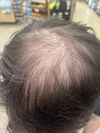
Microneedling for hair loss, with concerns about cost and conflicting information on protocols. The user is unsure about purchasing and reusing microneedling stampers.
Microneedling can promote hair growth, but there is uncertainty about the best practices, including needle length, device, and session frequency. Users discuss using needle lengths between 0.5mm and 1.5mm, with some experiencing pinpoint bleeding, and emphasize the need for more reliable resources and guidelines.
The conversation discusses various methods for applying topical minoxidil to the scalp, including using fingers, a shoe polish bottle, a dropper, a toothbrush, a q-tip, a makeup brush, and a syringe. Users emphasize the importance of massaging the product into the scalp for better absorption.
The conversation discusses the best ethanol and propylene glycol ratio for homemade topical finasteride, with a focus on absorption and drying issues. The user shares their experience using a 50% propylene glycol, 30% ethanol, and 20% water solution, and considers adjusting the ethanol content for better results.
A user is seeking advice on ordering ethanol in the UK to use with topical finasteride, considering switching from isopropyl alcohol. They mention the possibility of purchasing 99.8% ethanol from eBay's 6 Science shop.
A user is seeking advice on using a spray containing 0.3% finasteride and 6% minoxidil for hair loss. Another user suggests applying it in the morning to avoid transferring it to pillows and recommends reading a guide for microneedling advice.
The user is using 0.1% dutasteride, 1% minoxidil with 2% procapil and 0.005% caffeine in the morning, and 1% minoxidil with 2% procapil and 0.01% tretinoin at night. They are concerned about the solution vehicle's effectiveness in preventing systemic absorption and ensuring the products stay around the hair follicles.
The conversation discusses the steps for microneedling, specifically differentiating between medical needling (0.5-1.5mm) and cosmetic needling (0.3mm). It emphasizes the importance of cleaning and disinfecting before microneedling, regardless of needle length.
The conversation discusses microneedling for hair loss, with one user trying 0.3mm daily without feeling pain and questioning its effectiveness. Another user suggests that 0.3mm is too shallow and recommends 0.5mm twice a week or 0.75mm once a week for hair growth.
PP405 is seen as a potential breakthrough for converting vellus hairs to terminal hairs, with users expressing both hope and skepticism. It is compared to treatments like minoxidil and finasteride, with discussions on side effects and marketing concerns.
A user is seeking recommendations for purchasing Minichek 5% solution, a PG-free minoxidil, due to a contact allergy to propylene glycol. They are looking for an affordable option comparable in price to Kirkland or Amazon brand minoxidil.
Homemade topical finasteride solutions are discussed, with one user using 30% ethanol, 50% propylene glycol, and 20% water. Alternatives like dissolving finasteride pills in minoxidil and using stemoxydine are also mentioned.
The conversation discusses microneedling for hair loss, with the original poster experiencing pinpoint bleeding after using needles of 1.25mm and 0.5mm, possibly due to adding GHK-Cu to their treatment regimen. They are inquiring if others bleed at similar depths.
Mixing topical finasteride with essengen f and stemoxydine creates 0.25mg dose in 2ml. Minoxidil max suggests mixing 8.5ml essengen f with 60ml solvent for 0.25mg dose in 1ml.
A breakthrough in hair follicle cultivation using induced pluripotent stem cells (iPSCs) has been achieved, producing large hair follicles suitable for transplantation. Clinical trials for this hair multiplication technology are planned in partnership with Yinguan Biotechnology.
The user is considering starting a topical treatment for hair loss, using a spray containing 0.3% finasteride, 5% minoxidil, and 0.01% tretinoin. They are questioning the dosage and considering reducing the application to achieve 0.15% finasteride and 5% minoxidil.
A user mixed a pyrilutamide solution and noticed undissolved powder at the bottom, questioning if this is normal and how long to wait before applying it. They wished others good luck with their treatments.
User seeks participants for Verteporfin group buy. Verteporfin, FDA approved, may regenerate hair follicles and sweat glands through heavy microneedling.
A user purchased an expensive hair loss treatment called Follicopeptide, which many others in the conversation believe to be a scam, suggesting instead the use of proven treatments like minoxidil and finasteride. Some users report positive effects from Follicopeptide, but skepticism remains high due to lack of transparency about its ingredients and the company's credibility.
The user is using a hair loss treatment with finasteride 0.1%, minoxidil 5%, and tretinoin 0.01%, applied once daily at 1ml. They are questioning if a 60ml bottle used twice daily implies a higher recommended dose despite the same 5% minoxidil concentration.
PP405 is considered a potential new treatment for hair loss, compared to finasteride and minoxidil. There is skepticism about its effectiveness in humans, with anticipation for more information from an upcoming conference.
A hair restoration case involved injecting four different doses of Verteporfin into the mid scalp and using Scalp MicroPigmentation (SMP) around the extraction areas. Photos were taken and an update will be shared soon.
The conversation is about whether finasteride can be mixed with just water for a topical solution and if Isopropyl Alcohol and Propylene Glycol are necessary for effectiveness and faster drying. The user is seeking advice on the formulation of topical finasteride.
A pharmacy error resulted in a finasteride solution being 100 times stronger than prescribed, not 10,000 times as initially feared. OP is advised to contact the pharmacy to clarify the preparation before traveling.
Pp405 is discussed as a potential hair loss treatment, with humorous suggestions about rectal administration for increased effectiveness. Users joke about unconventional methods and express willingness to try anything for hair regrowth.
The user is starting microneedling for hair loss and is concerned about cleaning the needles and post-treatment care, including sun exposure and applying products like rosemary oil. They use a microneedling pen and are seeking advice on timing and technique.
A user shared their hair regrowth success using microneedling with a dermaroller every 6 days and minoxidil, recommending betadine (povidone-iodine) before microneedling to sterilize the scalp and enhance results. Another user noted the potential risks of iodine toxicity.
The conversation is about creating a DIY hair loss treatment solution using pyrilutamide powder, stored in an old minoxidil bottle. The user is seeking advice on how to best replicate Kintor's trials and the ideal storage conditions for the solution.
The conversation is about starting microneedling for hair growth, with questions on needle sizes, session frequency, and reliable purchasing options. The user seeks clarity on FDA regulations and prefers to avoid certain online retailers.
A 20-year-old is using a topical solution with 0.1% finasteride and 7% minoxidil for hair loss, applying about 10 drops daily. They seek advice on the correct dosage to avoid over or under-application.