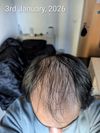
Nicotine use, especially from vaping, may worsen hair shedding and reduce the effectiveness of finasteride and dutasteride. Quitting nicotine seems to improve hair health.
Increased hair loss after starting a 10g daily creatine regimen, possibly linked to elevated DHT levels despite dutasteride use. Stopping creatine reduced shedding, but the exact cause is uncertain, with discussions on exercise and lifestyle impacts.
The user experienced significant hair regrowth over four months using oral finasteride, oral minoxidil, micro-needling, and rosemary oil. They reported no side effects and emphasized the importance of continuing the treatment to maintain results.
Minoxidil alone is often insufficient for treating hair loss because it doesn't address the DHT-related cause. Combining it with finasteride, a DHT blocker, is generally more effective.
Minoxidil with alcohol and propylene glycol was more effective than non-alcohol versions, and RU58841 worked best in a non-water-based solution. Oral finasteride showed better results than topical, despite side effects; microneedling and tretinoin worsened hair loss, and PRP was only helpful when younger.
The treatment for androgenetic alopecia involves using finasteride and minoxidil with intense exercise and cold exposure to boost metabolism and reduce androgenic effects, potentially leading to hair regrowth. This approach may activate biological pathways for improved hair and overall health.
Finasteride and minoxidil can be obtained cheaply through Mark Cuban's Cost Plus Drugs and Costco's Kirkland brand, respectively, costing about $7.53/month combined. Amazon's RXPass and virtual visits at Dr. B. offer additional savings.
The conversation discusses whether it's better to start hair loss treatment with finasteride or dutasteride. Opinions vary, but many suggest starting with finasteride due to its shorter half-life and easier management of side effects, while others argue dutasteride is more effective and has fewer side effects.
A user lost 60% hair density in 4 months, started finasteride and microneedling, and has greasy, flaky, yellowish scalp. They are awaiting biopsy results, and another user suggested trying ketoconazole shampoo.
A user has been using dutasteride and oral minoxidil for hair loss with no change and is considering a hair transplant at age 22. Replies suggest that a transplant is possible if DHT blockers like finasteride are continued, and another user shared a positive personal experience with a transplant at age 20.
The conversation discusses the effectiveness of hair loss treatments, specifically finasteride and dutasteride. The conclusion is that dutasteride significantly reduces DHT levels and may be more effective than finasteride for long-term hair retention, with some users reporting personal experiences and side effects.
The user shared their positive hair regrowth experience using saw palmetto tablets, 5% minoxidil spray, and a Derma Pen. The conversation debates the effectiveness of saw palmetto versus finasteride, with some advocating for natural treatments and others emphasizing the proven results of finasteride and minoxidil, often in combination with microneedling.
The post discusses the rarity of baldness among South Korean men. Users suggest this could be due to early treatment, high beauty standards, accessibility of healthcare, and genetics. Treatments like finasteride and dutasteride are commonly used, and hair transplants are also popular.
The conversation is about someone noticing hair regrowth after using a scalp massager and considering a hair transplant. People suggest using finasteride or dutasteride, but there's debate on their effectiveness and side effects. Some see progress, while others are skeptical without consistent photo evidence.
A 23 year old user who has had success with finasteride and minoxidil, regaining their hair after losing it due to male pattern baldness. They also attribute part of the success to lifestyle changes such as eating better, exercising, sleeping well, and reducing smoking.
A study that outlines the full model for androgenic alopecia (AGA) which links DHT to cellular senescence in dermal papilla cells, and suggests black chokeberry as a source of cyanidin 3-O-arabinoside polyphenol with potential anti-oxidant properties that could reverse this process. The post encourages reaching out to experts in anti-aging and longevity to research treatments involving the polyphenol.
This conversation is about how topical treatments for hair loss, such as Minoxidil and Finasteride, can be replaced by drinking oral versions of the same medications to achieve better results with less hassle. Some users have already been doing this with positive results.
A YouTuber named Kevin, also known as Rider_Of_Roach, who deleted his YouTube channel due to personal attacks and controversy surrounding his views on hair loss treatments. He advocated for FDA-approved treatments like finasteride and minoxidil but faced backlash from those who disagreed with him. The conversation also discusses his past trolling behavior and a lawsuit he filed against a website that published false information about him. Despite some disagreements, many viewers appreciated his research-based content and hope to see him return in the future.
Cutting sugar may not significantly impact hair loss, as DHT and androgen receptors are the main issues. Effective treatments include finasteride, dutasteride, RU58841, and minoxidil, often combined with microneedling.
Hair loss treatments discussed include Propecia, Rogaine, Nizoral shampoo, and dermarolling. Users shared experiences and results, with some noticing improvements in hair growth and maintenance.
The user regrets stopping finasteride and minoxidil due to increased hair loss. They have resumed these treatments and are considering a hair transplant.
Significant hair improvement was achieved using 3mg Minoxidil and 1.2mg Finasteride over six months, with no side effects, leading to reconsideration of a hair transplant. A detailed skincare routine, including tretinoin and SPF, also improved skin appearance.
Some prefer hair systems for better appearance and confidence, while others find them costly and inauthentic. Alternatives like minoxidil, finasteride, and hair transplants are also considered.
PP405 shows promise in stimulating new terminal hair growth by activating dormant follicles, with no systemic adverse effects observed in a short-term trial. However, long-term efficacy remains unproven, and further trials are needed to confirm its potential as a hair loss treatment.
GT20029 is a new hair loss treatment in Phase 3 trials in China, using PROTAC technology to target androgen receptors, potentially with fewer side effects than finasteride and minoxidil. VDPHL01, a second-generation minoxidil, is also mentioned as potentially more effective.
A 28-year-old male is experiencing temple regrowth but crown thinning while using 5mg minoxidil and 0.5mg dutasteride. The shedding phase is seen as a positive sign of treatment effectiveness, with expectations of noticeable improvements around 6 to 12 months.
Topical Clascoterone showed a 539% improvement in hair count compared to placebo, but its effectiveness and safety are debated. Users compared it to minoxidil and finasteride, with mixed opinions on its potential release in 2026 or 2027.
A 23-year-old achieved significant hairline regrowth using minoxidil, saw palmetto, collagen peptides, biotin, omega-3, iron, ketoconazole shampoo, and scalp care techniques, without finasteride or dutasteride. The user attributes success to this combination but is unsure which element is most effective.
A 27-year-old male with androgenetic alopecia has been using finasteride, topical minoxidil, and microneedling for over six months to stabilize hair loss and prepare for a potential hair transplant. While some users suggest switching to dutasteride and increasing minoxidil usage, others note minimal progress, with some hair stabilization but concerns about thinning at the crown.