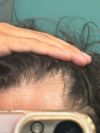
The conversation discusses the differences between KB solution and PG + Ethanol solution for RU58841 in treating hair loss. It compares the effectiveness and properties of these two solutions.
A user shared their experience with hair loss treatments, including I-PRF injections, mesotherapy, and a topical solution containing Minoxidil and Finasteride. After experiencing side effects, they decided to stop the medicinal treatments and focus on natural alternatives like I-PRF, microneedling, and essential oils.
A user's successful hair transplant, with some people questioning the donor area regrowth, and others speculating that hair fibre may have been used to help fill in areas.
The user reports a stable receding hairline with new hair growth after using 5% minoxidil, 1mg oral finasteride, D-Biotin daily, derma rolling twice a week, and three PRP sessions per month. They plan to update their progress in four months.
Green tea extract and soy isoflavones may help with hair loss by inhibiting DHT and providing additional health benefits. Combining these with finasteride and possibly using nizoral shampoo could enhance effectiveness in managing hair loss.
The conversation discusses the delay in the release of a new hair loss treatment, Pyrilutamide, and speculates on potential safety concerns as a reason for the delay. It also mentions GT20029 as another future treatment option, with a release at least five years away, and touches on the avoidance of research chemicals due to uncertainty about their authenticity.
The conversation discusses microneedling for hair loss, with the original poster experiencing pinpoint bleeding after using needles of 1.25mm and 0.5mm, possibly due to adding GHK-Cu to their treatment regimen. They are inquiring if others bleed at similar depths.
Topical pirfenidone is highlighted as an effective anti-inflammatory and anti-fibrotic treatment for hair loss, particularly in addressing perifollicular fibrosis, which may enhance the effectiveness of standard treatments like finasteride and minoxidil. The user also uses calcipotriol, MCT oil, ciclopirox shampoo, and benzoyl peroxide shampoo as part of their regimen.
PP405 may revive dormant hair follicles, and DHT blockers like finasteride or dutasteride could maintain new hair. Combining PP405 with minoxidil might be optimal, but long-term effects and continuous use are uncertain.
PP405 is being discussed as a potential hair loss treatment, possibly more effective than minoxidil. There are concerns about its effectiveness and product contamination, but some users report early signs of hair regrowth.
The conversation discusses the potential of a new hair loss drug, CB-03-01, with users sharing their experiences and seeking advice on dosages and application methods. One user mentions using topical finasteride, minoxidil, dermarolling, and a clean diet for hair maintenance but is interested in CB-03-01 due to side effects from finasteride.
P5P supplementation helped reverse finasteride side effects, particularly by lowering prolactin levels and restoring sensitivity. The user experienced significant improvement within a day and full recovery in a few days.
Carnosic acid in rosemary extract may enhance skin repair and promote hair follicle regeneration. It could be used alone or with verteporfin for scarless healing after dermal wounding.
Placebo hair regrowth might be influenced by propylene glycol in lotions or participants lying about using other treatments like minoxidil, finasteride, or microneedling. Being part of a study can also improve hair health due to lifestyle changes.
A user is experiencing uneven hair thinning and has tried topical minoxidil without success and finasteride with adverse effects. They are considering microneedling and PRP treatments while avoiding finasteride, and another user suggests trying dutasteride as an alternative.
A user in their early 20s is concerned about minor hair thinning and is considering a hair loss regimen involving PRP sessions, mesotherapy with dutasteride injections, and low-dose finasteride. They dislike minoxidil due to its greasiness and prefer a routine that is easy to maintain.
The user is unsatisfied with their hair transplant and is considering another transplant, PRP, exosomes, or stem cells. They currently use topical minoxidil, dutasteride, and tretinoin.
The user is exploring hair loss treatments and is interested in procyanidin B2 and annurca apples but has concerns about the effectiveness and availability of supplements. They cannot use Dutasteride or Finasteride and are considering Minoxidil with microneedling.
Users discussed the effectiveness of Everychem's solution, similar to PP405, with some reporting improved hair thickness and new growth. Concerns were raised about safety and the legitimacy of the product, with some users advising against purchasing research chemicals.
PP405 may reactivate dormant hair follicles but won't replace hair transplants or resurrect dead follicles. Its effectiveness, cost, and impact compared to treatments like minoxidil and finasteride are uncertain.
User discusses using C60 serum with microneedling at 1.75mm and asks if it's safe. Current routine includes daily Pyril on temples, weekly microneedling, and C60 serum on non-Pyril days.
Promising hair loss treatments in clinical trials include Pyrilutamide, GT20029, CB-03-01, and PP405, with potential market releases between 2027 and 2029. Hair cloning remains experimental and expensive, while existing treatments like finasteride, minoxidil, and microneedling continue to be used.
PP405 is viewed skeptically, with some seeing it as overhyped and potentially ineffective compared to existing treatments like minoxidil and finasteride. While it shows some promise in activating dormant hair follicles, many believe it won't replace hair transplants or significantly outperform current options.
New hair loss treatments like GT20029, Clascoterone, and PP405 are being discussed, with concerns about how to apply multiple topicals alongside existing treatments like minoxidil and finasteride. Suggestions include creating a routine, mixing treatments, or minimizing redundancy in treatment stacks.
PP405 updates are seen as vague and lacking substance, causing frustration among users. Some users report positive effects from using minoxidil and dutasteride, while others remain skeptical about new treatments.
Recruitment for a verteporfin trial and a separate hair cloning trial using verteporfin and other methods is underway, with locations in Jordan, NYC, Beverly Hills, and Memphis. Dr. Bloxham is conducting the hair cloning trial, and interested participants are encouraged to contact him directly.
PP405 is being discussed for hair regrowth, with mixed opinions on its effectiveness and legitimacy. Some users report early signs of regrowth, while others are skeptical about its authenticity and results.
The user has been using Dutasteride and oral Minoxidil for hair loss but hasn't seen desired results and is considering Advanced PRP with autologous exosomes. Some users suggest these treatments are scams, while others discuss increasing Dutasteride dosage or exploring other options like low-level laser therapy.