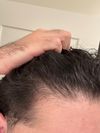
A 22-year-old's experience with receiving a hair transplant and the use of Minoxidil, finasteride, RU58841, Lidocaine shots, and platelet injections to treat hair loss.
The post discusses a theory that hair regrowth after transplant is due to the angiogenesis process (new blood vessels forming), not because the transplanted hair is unaffected by DHT. The responses highlight the established belief in 'donor dominance' (the importance of the hair's origin in transplantation) and skepticism about the new theory.
ABS-201 shows promise for male hair regrowth by blocking the prolactin receptor, with higher expected efficacy than current treatments. The discussion also covers dosing differences between macaques and humans for hmi115, highlighting a significant dosage disparity.
The user shaved their head and noticed some hair regrowth and thickening due to Minoxidil and finasteride. They are content with their hair loss and have accepted it, while also observing that others don't notice the thinning as much as they do.
A user successfully regrew hair using 1mg finasteride, switching to 0.5mg dutasteride, and maintaining 5mg oral minoxidil, with significant improvements noted after switching to dutasteride. The user experienced shedding phases but ultimately achieved regrowth and is now comfortable without wearing a hat.
Some individuals experience hair loss despite using treatments like 2.5 mg dutasteride, finasteride, and minoxidil, suggesting sensitivity to DHT or other factors. Various treatments and lifestyle changes are discussed, but results vary, and some consider hair transplants or other solutions.
Treatments for hair loss, such as using AR receptor blockers and degraders, to see if follicles can regenerate in the long term. The conversation also discusses how hair transplants could be a potential solution.
The user noticed increased hair loss over the past three years and is seeking advice. A suggestion was made to consult a dermatologist or trichologist and consider blood tests, particularly for vitamin D levels, to address potential androgenetic alopecia (AGA).
The conversation discusses unconventional and satirical ideas for hair regrowth, including using umbilical cord cells, stem cells, and other humorous suggestions. It concludes with recommendations for more traditional methods like hair transplants or hair systems.
A user with long-term hair loss has been using topical minoxidil, finasteride, RU58841, ketoconazole, and dermastamping for 8 months. They are unsure if the new hairs are miniaturized or vellus.
A 21-year-old experiencing significant hair loss is considering a hair transplant and has been using finasteride and biotin, with plans to switch to dutasteride and oral minoxidil for better regrowth. They are seeking advice on the number of grafts needed, with suggestions ranging from 2,500 to 6,000, and are exploring different clinics and treatment options.
A user in their mid-30s experienced unexpected hairline regrowth after starting a new supplement stack, despite being on a regimen of finasteride, minoxidil, and Nizoral for over four years. The new supplements include Tongkat Ali, Fadogia Agrestis, Panax Red Ginseng, Vitamin B1, Vitamin D3, Zinc Picolinate, Magnesium Glycinate, Maca, and L-Citrulline.
A 28-year-old male shares his hair loss journey, starting with a hair transplant in February 2024 and using finasteride, later switching to dutasteride in January 2025. He has not used minoxidil and is satisfied with the results, despite some side effects like temporary nipple pain and a spike in libido.
The user experienced an elevated heart rate from using topical Minoxidil and discontinued its use. They found that adding a daily protein shake helped with telogen effluvium.
A 25-year-old is experiencing chronic telogen effluvium (TE) and androgenetic alopecia (AGA) after surgery, using finasteride, red light therapy, and supplements, and considering oral minoxidil despite heart concerns. They are unsure whether to start minoxidil before or after an upcoming surgery, which may trigger another hair shed.
The conversation discusses using hair follicle dermal papilla exosomes for hair loss treatment. It inquires about purchasing options for this treatment.
AnagenInc is ready to produce a hair loss treatment called GT20029 if there is enough demand. People are discussing combining it with other treatments like finasteride and minoxidil, and some are concerned about the legitimacy and safety of gray market products.
Hair loss treatments discussed include microneedling, minoxidil, tretinoin, finasteride, dutasteride, pumpkin seeds, saw palmetto, and scalp massage. The consensus is that finasteride or dutasteride is necessary for significant regrowth, while other methods may only slow hair loss.
The user is using minoxidil, finasteride, dermarolling, and other treatments for hair regrowth, showing promising results in the temple area. Despite some skepticism, there is optimism about potential improvement.
PP405 shows promise in regenerating hair by activating dormant follicles. Other treatments like VDPHL01 and Breezula are also advancing, providing new hope for hair loss solutions.
A 32-year-old male has been dealing with hair loss since 2010 and started treatment 11 months ago. He used dutasteride, finasteride, minoxidil, multivitamins, vitamin D3, PRP, and a laser cap, resulting in improved hair density despite ongoing shedding.
A user shared their 11-year journey with alopecia, using finasteride, dutasteride, and a hair transplant. They encouraged others not to panic, noting that hair miniaturization can take over 15 years to complete.
A 21-year-old male with a thyroid condition noticed his hair thinning uniformly without a receding hairline. He is considering using a 5ARI to prevent further baldness if he starts TRT.
The user had a hair transplant with 2,000 grafts in 2017, and after four and a half months of using finasteride, minoxidil, derma rolling, and Boton shampoo, they are seeing hair regrowth including the return of their widow's peak. They are considering switching to RU58841 and a deeper derma rolling treatment.
Hair follicles can be dormant and potentially revived with treatments like finasteride and minoxidil, but irreversible loss occurs if certain structures are destroyed. Early intervention is more effective, and additional methods like microneedling may help.
A person experienced hair regrowth after reducing testosterone levels and using saw palmetto tincture and Alpecin shampoo. Other users suggested treatments like Nizoral shampoo, Aldactone, and supplements for hair loss.
A user is considering using Bare Anatomy's Advanced Hair Growth Serum, which contains Redensyl, Anagin, Baicapil, Rosemary, and Biotin, for thinning hair. Reviews are mixed, with some users skeptical about its effectiveness compared to minoxidil.
Hair transplant recipients are concerned about whether dormant follicles are permanently damaged by incisions, but some believe undamaged follicles could still regrow if a treatment like PP405 is effective. Opinions vary on the impact of transplants on original follicles, with some suggesting treatments like finasteride can help regrow hair.
A 21-year-old experiencing aggressive hair shedding is considering treatments like Propecia (finasteride) and Rogaine (minoxidil) to slow or stop hair loss. Recommendations include using these treatments along with Nizoral Shampoo, hair vitamins, and a derma roller to maintain and potentially regrow hair.
A 31-year-old male experiencing hair thinning since age 25-26 uses minoxidil, finasteride, a red laser cap, and microneedling to promote hair growth. Users suggest reducing microneedling frequency to once a week to avoid damaging hair follicles.