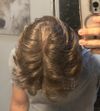
A user experienced worsened hair condition after a PRP session and is considering stopping further sessions. They are using a Dermapen, electric massage, iron, saw palmetto, and plan to start minoxidil, but have had side effects with finasteride and are advised to consider dutasteride under medical supervision.
Microneedling, when combined with finasteride and topical minoxidil, can enhance hair regrowth for male pattern baldness, especially at the temples. Users report varying success with needle depths between 0.5mm and 1.5mm, with stamps preferred over rollers to minimize scalp damage.
The user tried a product labeled as PP405 from Umbrella Labs for hair loss but saw no changes, and it was revealed to be a fake or misidentified product. The user is also using finasteride, minoxidil, and other treatments but is still experiencing hairline issues.
User shows hair loss progress from NW4 to NW2.5 in 2.5 months using RU 8.5-9% daily and topical Dut .1% + RU 5% weekly. Discussion includes managing tension in African American hair and representation of different hair types.
Pyrilutamide's 0.5% solution showed minimal improvement, while the 1% solution appears more promising but costly. The user is currently using finasteride and oral minoxidil and considering adding Pyrilutamide if effective and affordable.
New hair loss treatments, including Breezula, VDPHL01, and PP405, are nearing Phase 3 trials, offering hope for effective solutions. Current treatments like finasteride and minoxidil remain effective, but early intervention is crucial.
The conversation discusses hair regrowth possibilities using finasteride, minoxidil, microneedling, and dutasteride, with the user experiencing improvement from NW4 to NW2. Achieving NW0 is deemed unrealistic, but further regrowth may be possible with patience and potentially a hair transplant.
Hair loss may be linked to the TRPS1 gene and protein, not just DHT. Amplifica's AMP-303 targets mesenchymal stem cells and shows promise in treating hair loss, unlike Pelage's PP405.
PP405 shows initial promise for treating androgenetic alopecia, with safety confirmed in early trials, but skepticism remains due to limited data. Further trials are needed to determine its true efficacy and potential market impact.
Combining PRP with topical minoxidil 5% and finasteride 0.25% for hair loss treatment. One user reported success using minoxidil and finasteride with micro-needling, but not PRP.
PP405 may help with hair regrowth, especially when combined with minoxidil and finasteride, but its long-term effectiveness is unclear. Phase 3 trials are expected to begin soon, with results in a few years.
A user shared progress pictures showing hair improvement after using Minoxidil Foam, Nizoral Shampoo, and microneedling. They plan to add finasteride in a few months.
The user takes 1 mg finasteride three times a week, topical minoxidil daily, and Saw Palmetto both topically and orally on non-finasteride days. They recently added 1 g of pumpkin seed oil daily to improve hair thickness and are seeking advice on dosing and cycling Saw Palmetto.
The FDA will now require only one clinical trial for drug approval, potentially speeding up the release of hair loss treatments like PP405. Pelage is expected to present full results of PP405 Phase 2a trials and move to Phase III in mid-2026.
A user is seeking recommendations for doctors who perform Dutasteride mesotherapy in NJ or PA, as they are having trouble finding one through Google. The conversation focuses on finding a suitable provider for this specific hair loss treatment.
A 26-year-old man shared his positive results after 10 months of treating male pattern baldness using a regimen that includes Estradiol Enanthate, DHPA, Bicalutamide, Dutasteride, oral and topical Minoxidil, and a dermaroller. He experienced mild gynecomastia and reduced body hair as side effects but was satisfied with the outcome.
The conversation is about the anticipation and uncertainty regarding the release of GT20029 Phase 2 results for hair loss treatment. Users express hope for its effectiveness and minimal side effects compared to other treatments like Pyri and HMI115.
Researching the release of phase 2 trials for pyrilutamide, a potential hair loss treatment, and discussing other treatments such as Minoxidil, Finasteride, and RU58841.
Maneup GHK-Cu peptide was used for hair loss, resulting in some hair growth in the receded hairline, but the new hairs were dry and split easily. Users discussed their experiences with this treatment.
The conversation is about the debate over the existence of Post-Finasteride Syndrome (PFS) and its symptoms, with some users skeptical about PFS and others discussing side effects like erectile dysfunction and gynecomastia from hair loss treatments like finasteride. Specific treatments mentioned include finasteride, viagra, and a joke about using a popsicle stick for erectile support.
Scalp micropigmentation as a treatment for hair loss, and the importance of choosing a reputable practitioner to get a natural look. Different treatments such as laser removal were also discussed in relation to long-term maintenance.
The conversation discusses whether a longtime NW7 scalp has vellus hairs under a microscope or is completely smooth. Treatments mentioned include Minoxidil, finasteride, and RU58841.
A user is experimenting with a homemade solution of WAY-316606 for hair regrowth, combining it with other treatments like minoxidil and dutasteride. The community expresses concern over the safety and mental health implications of such drastic measures, with mixed opinions on the effectiveness of WAY-316606.
Addressing hair loss by focusing on posture, blood flow, and craniofacial development. Methods include improving posture, cardiovascular activity, scalp massages, healthy diet, meditation, using minoxidil, and addressing craniofacial issues.
The post argues that Post-Finasteride Syndrome (PFS) is likely not real and suggests symptoms may be due to mental health issues or the nocebo effect. The conversation includes personal experiences with finasteride, highlighting both positive and negative effects, and emphasizes consulting doctors and using reliable sources for medication.
PP405 shows promise in stimulating new terminal hair growth by activating dormant follicles, with no systemic adverse effects observed in a short-term trial. However, long-term efficacy remains unproven, and further trials are needed to confirm its potential as a hair loss treatment.
PP405 is expected to be more expensive than finasteride and minoxidil initially due to patent protection, but not as costly as life-saving medications like Ozempic. The price may decrease after the patent expires, but initially, it might be around $100 per month, making it potentially unaffordable for many.
Genetics mainly cause hair loss, but diet, stress, smoking, and alcohol can worsen it. Treatments include finasteride, minoxidil, and lifestyle changes like a healthy diet and avoiding caffeine.
The user experienced significant hair regrowth using topical Minoxidil and Finasteride but had to stop due to high liver enzyme levels. They plan to pause treatment for a month to see if their liver values return to normal.