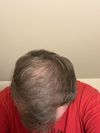
The conversation discusses using P5P (Vitamin B6) supplements to reduce elevated Prolactin levels and concerns about its potential effect on increasing DHT levels. The user is not currently using finasteride or any anti-androgens.
The mechanism of Androgenic Alopecia and practical applications of treatments like Minoxidil, Finasteride, RU58841, dermarolling, scalp massages, anti-fungals, progesterone, estrogen, PPAR-γ activators, reducing oxidative stress, and scalp exercises. It explains why DHT is important in AA and how other factors might be involved such as hypoxia, increased DKK-1 expression, morphological changes to the scalp, skull growth during childhood/puberty, and blood flow.
User shared 2-month progress using 6% minoxidil, seeing some regrowth. Others encouraged consistency and noted significant results typically appear around months 3-6.
The user reported significant hair regrowth after seven months using topical minoxidil 5% combined with 0.1% finasteride and weekly micro needling. The community responded positively, noting visible improvement and discussing the effectiveness of topical versus oral finasteride.
A user shared their 88-day progress using 1.25mg finasteride, topical minoxidil, and weekly 1mm microneedling, noting improvement from NW 4.5 to around NW 3. Another user complimented the progress.
OP is experiencing significant hair loss despite GFC and PRP treatments and has abnormal lab results. They are advised to consult a hair-focused dermatologist for further evaluation.
The conversation is about a user's one-year hair loss treatment using dutasteride, oral and topical minoxidil, ketoconazole, tretinoin, and PRP. Users discuss treatment effectiveness, potential issues with diffuse thinning, and sourcing affordable treatments.
A new hair loss treatment reportedly shows a 539% improvement in hair count, but skepticism remains due to unclear placebo results and potential minimal actual hair growth. Many users doubt its effectiveness and market viability, citing high costs and lack of visual proof.
Significant hair regrowth was achieved using 0.5mg oral finasteride, a topical mix of finasteride and minoxidil, and dermastamping. Initial side effects like achy testicles were managed by adjusting the regimen.
User is using a homemade topical treatment with .015% finasteride, 5% minoxidil, and microneedling at .75mm depth. They also use 2% ketoconazole shampoo, various oils, and are considering increasing finasteride concentration due to mixed results.
The conversation is about someone planning to use cb-03-01 for hair loss because they experience side effects with other treatments like finasteride, minoxidil, and RU58841. They have not found progress pictures online and are considering sharing their own experience with cb-03-01, which is expensive.
The user experienced hairline improvement using microneedling once a month with a 12-pin set at 1.5-2.0mm and taking Tru Niagen, alongside a heavily modified diet. They attribute the slow hairline improvement to environmental factors, particularly diet, rather than solely genetic factors.
Yokohama University and Dr. Fukuda plan human hair multiplication trials in 2023. Users express hope for future hair cloning treatments over current hair transplants.
The user has been using a topical treatment combining finasteride, minoxidil, and caffeine for 9 months without noticing any changes and is inquiring about blood tests to check for finasteride resistance. They had their DHT levels checked, which were 54 ng/dl, and are planning to share progress pictures soon.
Someone's brother tried Platelet-rich plasma (PRP) for hair loss; it had minimal effect on hair but improved skin appearance. Microneedling at home was suggested as a more sustainable alternative.
The conclusion of the conversation is that the user, PirateBeastBaby, had good results with microneedling for hair loss after using oral finasteride and topical minoxidil 20 years ago. They believe that microneedling was the gamechanger for their hair growth.
A 20-year-old user experienced worsening hair loss despite using various treatments including topical and oral minoxidil, finasteride, and dutasteride. Other users suggested additional treatments like JAK inhibitors, RU58841, and lifestyle changes, but the user remains skeptical and frustrated.
The conversation discusses the difference between the commercially available Pyrilutamide and the version in clinical trials. It also mentions treatments like Minoxidil, finasteride, and RU58841 for hair loss.
The post and conversation are about skepticism towards a new hair loss treatment containing 2-deoxy-D-ribose, copper peptides, and exosomes, with concerns about the legitimacy of the product and its website. The treatment's effectiveness and authenticity are questioned due to lack of testing and transparency.
The user used finasteride but stopped due to side effects, then used topical minoxidil for 13 months, and later added KX826/pyrilutamide for 8 months. They experienced shedding after starting pyrilutamide and use minoxidil and KX826 once daily.
The user visited a trichologist due to ineffective topical finasteride treatment for hair loss. The trichologist recommended a new regimen including a two-month course of locoidon (cortisone 0.1%), followed by a solution containing minoxidil, hydrocortisone butirrate, estrone, progesterone, tocopherol acetate, trichosol, and transcutol.
The conversation is about treatments for androgenetic alopecia, focusing on hyperresponders. Treatments include Minoxidil, finasteride, RU58841, leg training, and cold therapy.
The conversation discusses CRISPR-on & CRISPR-off as a potential cure for baldness, contrasting it with hair cloning and other treatments like Minoxidil, finasteride, and RU58841. It also mentions the potential of mRNA for gene expression control and the prioritization of gene editing for severe genetic conditions.
The conversation is about hair loss treatments, specifically Pyrludimide (KX-826) and Breezula (clascoterone), with the user unable to tolerate finasteride and dutasteride. The user plans to use these treatments alongside minoxidil, considering the efficacy and availability of each option.
OP has been using daily oral finasteride 1.25mg for 5 months with noticeable progress and no side effects. They chose this dosage by cutting 5mg pills into quarters due to cost.
The conversation discusses using Bimatoprost for eyebrow regrowth and its potential use on the hairline, with concerns about cost and side effects. Alternatives like topical Minoxidil are mentioned, but the user is worried about aging and acne.