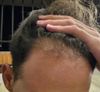
A user shared progress pictures showing improvement from NW 6 to NW 2 after four months of treatment. They are considering using exosomes to further reverse hair miniaturization.
OP is using oral 1mg finasteride, topical minoxidil, and microneedling twice a month at .75mm to regrow hair. They shared progress pictures over two months, noting they were bald for years before starting treatment.
User noticed black dots along the hairline and temples, questioning if it's regrowth. They are using a regimen including Dutasteride, oral and topical Minoxidil, and a compounded topical treatment.
A user is documenting their natural approach to treating a receding hairline using a dermastamp, essential oils (rosemary oil at 3% dilution with pumpkin seed oil), a multivitamin with vitamin D, and daily collagen shakes. They acknowledge the common recommendations of minoxidil and finasteride but prefer to test natural methods and share their results.
User started using stemoxydine with minoxidil for mild hair recession and maintenance. Stemoxydine improves hair appearance and behavior, making it fuller and shinier.
Small hairs around the hairline may regrow with continued use of minoxidil, finasteride, and ketoconazole. The user is hopeful about hairline improvement.
A user's hairline recovery after severe hair loss, which was treated with Dutasteride and Minoxidil; other users offered their opinions on the severity of the hair loss.
Follica's preferred microneedling protocol for hair growth, which includes needle depth, frequency and movement parameters as well as the use of topical treatments such as minoxidil and finasteride.
A 35-year-old MTF individual shared their hair recovery journey, using Minoxidil, Dutasteride, Estradiol, Spironolactone, Microneedling, and Exosomes. They recently had a hair transplant and are documenting the healing process.
Exosomes combined with fractional picosecond laser treatment were effective in treating androgenetic alopecia and promoting repigmentation in white hair patches. The role of exosomes in hair repigmentation, particularly in conditions like poliosis, is not well-studied.
A 19-year-old is using oral dutasteride, topical minoxidil, and dermastamping to address hair loss and enhance facial hair growth, experiencing minimal side effects and increased body hair. They report positive results in hairline thickness and temple closure.
The user is using RU58841, finasteride, dutasteride, and minoxidil to slow down aggressive hair loss but is still experiencing hair shedding due to high testosterone levels. They plan to use ostarine to lower testosterone and prevent hair loss while maintaining muscle mass, and will continue using the other treatments.
The conversation discusses the potential of Verteporfin for hair regeneration and improving hair transplant surgery to leave no scars. Specific treatments mentioned include Minoxidil, Finasteride, and RU58841.
Hair follicle stem cells remain in bald individuals, but progenitor cells do not, raising questions about hair regrowth claims by Pelage. PP405 is discussed as a potential treatment, with skepticism about its effectiveness compared to existing treatments like Minoxidil and Finasteride.
OP is considering adding dutasteride to their regimen of finasteride and minoxidil to address hair loss plateauing. Users suggest oral minoxidil, microneedling, and possibly a hair transplant, with mixed opinions on dutasteride's effectiveness for temple regrowth.
The user discusses using Follics FR5, FR10, and FR15, which combine Minoxidil, Adenosine, Procapil, Azelaic acid, and Procyanidin B2, to address hair loss. They have previously used Minoxidil, Finasteride, and Dutasteride with varying success.
A 19-year-old is experiencing hair thinning and recession above the temples, causing stress and consideration of starting finasteride despite financial constraints. They are unsure whether to begin treatment immediately or wait to assess the situation further.
A user's progress with hair loss treatments, including Dutasteride, Minoxidil (oral and topical), Microneedling, and RU58841, which resulted in positive results after 5 months. Another user commented on the faster growth at the front compared to the crown.
The post discusses a hair loss treatment regimen including oral finasteride, topical minoxidil, a rejuvenating scalp serum with caffeine, rosemary, and ginger, topical ketoconazole, saw palmetto, and derma rolling. The user seeks advice for scalp pimples and irritation.
A user shared 3-month hair regrowth results using a combination of oral Dutasteride, daily Minoxidil, RU58841, micro-needling, Keto shampoo, scalp massages, and supplements. Positive progress was noted, and encouragement to continue was given.
The user treated traction alopecia for over a year using Nutrafol, rosemary oil, topical and oral Minoxidil, dermarolling, biotin, collagen, and vitamin D, and shared progress photos to inspire others on their hair growth journey. They also acknowledged the community and a specific person for support and encouragement.
The user updated their hair loss treatment to include daily dutasteride, oral minoxidil, topical dutasteride with minoxidil and tretinoin, and RU58841. Commenters feel the extensive treatment is unnecessary for the user's level of hair loss.
Minoxidil was applied to a single miniaturized hair follicle over four months, resulting in less miniaturization but not yet terminal growth. The user used a 5% minoxidil solution, specifically the Regaine brand, and observed changes using a handheld WiFi microscope.
A user shared an extensive hair loss treatment regimen including dutasteride, minoxidil, tadalafil, RU58841, microneedling, and various topical and oral supplements. Responses varied, with some suggesting the regimen is excessive and others offering additional advice or expressing skepticism about its practicality and effectiveness.
The user is experiencing chronic folliculitis with scalp sores and is concerned about a receding hairline. They have tried various treatments including antibiotics, Nizoral 2% shampoo, and lifestyle changes, but are seeking further advice.
The user is considering adding a topical treatment to their current regimen of finasteride and oral minoxidil to protect their temple area, with options like piro, RU58841, or topical finasteride or dutasteride. They are advised against overcomplicating their treatment, but another user suggests a topical with 8% minoxidil/dutasteride for better results.
8 months post hair transplant, OP experiences asymmetrical shedding despite using finasteride and starting minoxidil. The doctor suggests it might correct itself or be due to transplant trauma, recommending a wait-and-see approach.
Why androgenic alopecia affects the scalp rather than other body parts, potential explanations for this phenomenon, treatments available to combat hair loss, and the implications of male attractiveness in modern society.
DUPA and retrograde alopecia may not be solely DHT-based, and a biopsy is crucial for accurate diagnosis and treatment. Treatments mentioned include dutasteride, oral minoxidil, pioglitazone, clobetasol, calcipotriol, ketoconazole, and doxycycline, depending on the specific condition.