Search
for
Sort by
Community Join
120-150 / 1000+ resultscommunity Update to losing hair at 16
User has seborrhoeic dermatitis causing hair loss. They are using Ketoconazole shampoo and may use selenium sulfide shampoo.
community My scalp is dry and scaly feeling 2 weeks after microneedling
A user experienced a dry, scaly scalp two weeks after microneedling with a dermapen at 1mm and applying Rogaine foam. They tried moisturizers and coconut oil without success and are seeking advice.
community This shedding fase is absolutely brutal
The user is experiencing severe hair shedding despite using minoxidil, finasteride, ketoconazole shampoo, and dermarolling. They are considering changing treatments after stopping dermarolling and switching finasteride brands worsened the shedding.
community Is anyone else experiencing hyper-trichosis' from oral Castor Oil?
The conversation is about experiencing hyper-trichosis from taking oral Castor Oil. The user reports increased hair growth on the stomach and legs but is not concerned as it is harmless and will stop when the treatment stops.
community Question about seborrheic dermatitis and keratin
The conversation discusses hair thinning potentially caused by seborrheic dermatitis, with the user considering over-the-counter treatments like Head and Shoulders, Selsun Blue, and Nizoral, while maintaining keratin-treated hair. A suggestion is made to use raw organic honey as a hair mask to treat seborrheic dermatitis without affecting keratin treatments.
community Would appreciate some thoughts on the “dht itch”
The user is experiencing scalp itching despite using finasteride and Ketoconazole shampoo for hair loss and seborrheic dermatitis. They are unsure if the itch is due to their treatments, diet, or mental factors.
community five months dermaroller on penis
The conversation is a satirical discussion about using a dermaroller on the penis, with mentions of adding finasteride and doing exercises like cock pushups and planks. Some users joke about side effects and the absurdity of the topic.
community Second shed and more abnormalities
The user has been using oral finasteride for 15 months and oral minoxidil for 6 months, and developed alopecia areata, for which a dermatologist prescribed calcipotriol/betamethasone. The treatment is helping, but the user is experiencing another shedding phase and is concerned about the effects of the steroid cream and the cause of hair loss.
community Scalp Sunburns can cause permanent hair loss. UPF hats protect you.
Scalp sunburns can cause permanent hair loss, so wearing UPF hats is essential. Tretinoin and Tacrolimus users should be cautious of increased photosensitivity and potential scalp issues.
community Fixed redness & itching with tea tree oil shampoo. Hair also became thicker. Demodex may be the cause.
Tea tree oil shampoo resolved redness, itching, and increased hair thickness for the user, suggesting demodex mites as a possible cause. Nizoral was ineffective, but tea tree oil showed significant improvement over several months.
community Vitamin E and K deficiency (F,25)
Vitamin E and K deficiencies due to exocrine pancreatic insufficiency may affect hair growth. A scalp biopsy is recommended to check for autoimmune-related hair loss.
community Anyone have an alternative solvent for pyrilutamide??
The user is seeking an alternative solvent for pyrilutamide due to skin irritation from ethanol and propylene glycol. They experienced similar issues with topical minoxidil.
community Hairline Slowly Growing Back On It's Own After Seborrheic Dermatitis
The user treated seborrheic dermatitis by cutting sugar, improving sleep, using four different shampoos, and occasionally using steroids. Their hair is growing back thicker and new hair is appearing.
community I just got a dermaroller and don’t know how to use it.
A user discusses using a 1.5mm dermaroller daily in the shower for hair loss, noting redness but no bleeding, and applying coconut oil afterward. They are concerned about a receding hairline and slight hair loss near the temple.
community DUPA, Non Responders and Connective Tissue Disorders
A 27-year-old male with diffuse hair loss, including the donor area, did not respond to finasteride, dutasteride, or minoxidil. He suspects his hair loss may be linked to a mild connective tissue disorder, possibly affecting the structural support of hair follicles, rather than being purely hormonal.
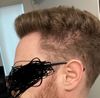
community What kind of balding is this?
A 34-year-old male is experiencing hair loss on the sides of his head, with inflammation and itchiness, while the top remains thick. He is using topical dutasteride and keto shampoo to address the issue.
community Sweet Lord my DHT itch is finally gone
Hair loss itch stopped by adding RU58841 to treatment. Topical Finasteride and Pyrilutamide also mentioned as potential itch solutions.
community Shedding hair like crazy idk why
An 18-year-old male is experiencing significant hair shedding, particularly from the back of his head, despite normal blood test results except for slightly low vitamin D. A dermatologist prescribed minoxidil for receding temples, but the cause of the shedding remains unclear.
community 8 months minoxidil + dermaroller 0.5 mm (M50)
community Post Low-Level Laser Light Therapy Syndrome (PLLLTS )
Hair loss discussion includes LLLT treatments and a satirical condition called PLLLTS, causing patients to resemble lighthouses and attract moths. Some users express concern about others taking the satire seriously.
community Scalp Micropigmentation while having hair
User discusses scalp micropigmentation for denser hair appearance and its benefits compared to lifelong treatments. Special ink is used, which can fade and blur over time but can be topped up.
community Pictures that demonstrate Minoxidil aging?
The conversation is about the potential aging effects of oral minoxidil on the skin. Users discuss their experiences, with some attributing skin changes to aging rather than minoxidil, and mention using tretinoin to improve skin appearance.
community Metal particles abraded from dermapen (or dermaroller) needles. Is it possible?
Concerns about metal particles from dermapen or dermaroller needles potentially entering the skin and lymph nodes, similar to tattoo needles. Discussion includes the possibility of using Minoxidil, finasteride, and RU58841 for hair loss treatment.
community Help with hair loss due to Seborrheic Dermatitis
A 19-year-old male with seborrheic dermatitis (SD) experienced significant hair loss and uses keto shampoo, zinc, and Nizoral to manage it. He inquires about the potential for regrowth and whether adding finasteride would help.
community Pirfenidone - The answer to fibrosis and baldness
Pirfenidone is suggested to treat fibrosis and baldness by blocking inflammation markers and reducing collagen. It is also available as a gel for scar removal.
community Oral min 12 months dut 8 months still shedding a lot and itching 20yo severe diffuse thinning. Sub won’t let me upload pics so please read..
A 20-year-old is experiencing severe diffuse thinning and shedding despite using oral minoxidil for 12 months and dutasteride for 8 months, after previously trying finasteride. They are frustrated with the lack of improvement and considering trying RU58841.
community DHT Oily Scalp Dangers: Theory of an Oily Scalp and PPAR-GAMMA Dysregulation
Excessive scalp sebum, worsened by DHT, can lead to inflammation and hair loss, with clascoterone mentioned as a treatment. Diet changes seem ineffective for scalp sebum, and treatments like minoxidil and finasteride are suggested.
community possible treatment of AGA and change in sebaceous gland condition and oil production using sulfur soap
Sulfur soap may help with hair thickening and reducing scalp inflammation, but it can cause dryness. Nizoral, containing ketoconazole, is noted for its potential to reduce seborrheic dermatitis but may also cause scalp dryness and hair loss.
community Are there any vellus hairs in a longtime NW7 scalp under a microscope or is it completely smooth?
The conversation discusses whether a longtime NW7 scalp has vellus hairs under a microscope or is completely smooth. Treatments mentioned include Minoxidil, finasteride, and RU58841.